
Fluorescent Sensor Offers Rapid Detection of Nicotine Exposure, Cotinine Biomarkers
Iron-based nanomaterial enables low-cost, real-time screening in cells and aqueous environments New Delhi: Scientists at the Institute of Nano Science and Technology have developed a novel fluorescent sensor capable of
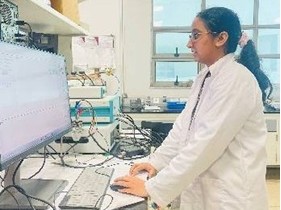
Researchers used intracellular imaging and confocal microscopy to track the uptake of these molecules in living cells, confirming the sensor’s effectiveness in biological environments.

Iron-based nanomaterial enables low-cost, real-time screening in cells and aqueous environments
New Delhi: Scientists at the Institute of Nano Science and Technology have developed a novel fluorescent sensor capable of rapidly detecting nicotine and its key metabolite cotinine, offering a potential breakthrough in public health monitoring and tobacco exposure screening.
Nicotine, a highly addictive substance, and cotinine, its long-lasting biomarker found in blood, saliva and urine, are critical indicators for assessing smoking and second-hand smoke exposure. However, existing detection methods such as gas chromatography–mass spectrometry and high-performance liquid chromatography are expensive, time-intensive and require specialised expertise.
The newly developed sensor is based on an iron metal-organic framework (Fe-MOF) nanosphere, a porous, sponge-like microscopic structure designed to trap nicotine and cotinine molecules. When these molecules enter the nanosphere’s pores, the material emits a stronger fluorescent signal with a visible shift towards blue, enabling easy detection.
Researchers used intracellular imaging and confocal microscopy to track the uptake of these molecules in living cells, confirming the sensor’s effectiveness in biological environments.
The study, published in the journal Nanoscale, highlights that the fluorescence enhancement is driven by host–guest interactions and electron transfer, resulting in a stronger emission signal.
The sensor is designed to be simple, cost-effective and functional in aqueous environments, making it suitable for real-time applications. Its iron-based composition ensures low toxicity and high biocompatibility, enhancing its potential for medical and research use.
The development could pave the way for non-invasive health monitoring tools, rapid screening kits for tobacco exposure, and broader biosensing platforms for detecting other biomarkers related to addiction and metabolic processes.