Zydus Drug for Rare Liver Disease Gets US FDA Priority Review
Saroglitazar shows strong Phase 3 results in treating Primary Biliary Cholangitis; FDA decision expected by November 2026
Saroglitazar is being evaluated for use in combination with ursodeoxycholic acid (UDCA) in adults who have not responded adequately to standard therapy, as well as a standalone treatment for patients unable to tolerate UDCA.

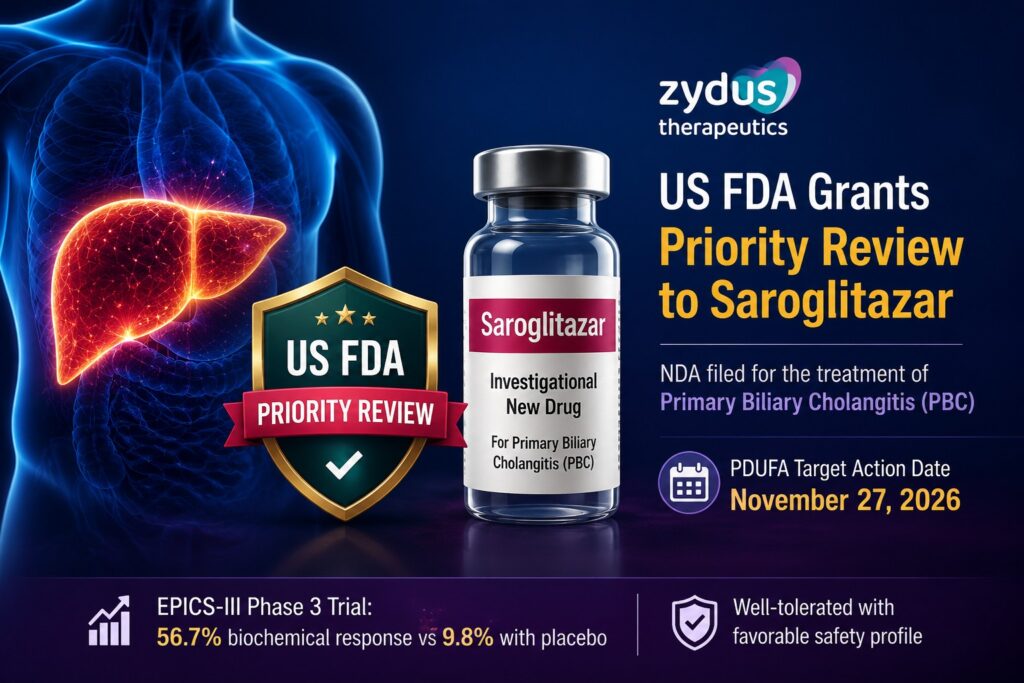
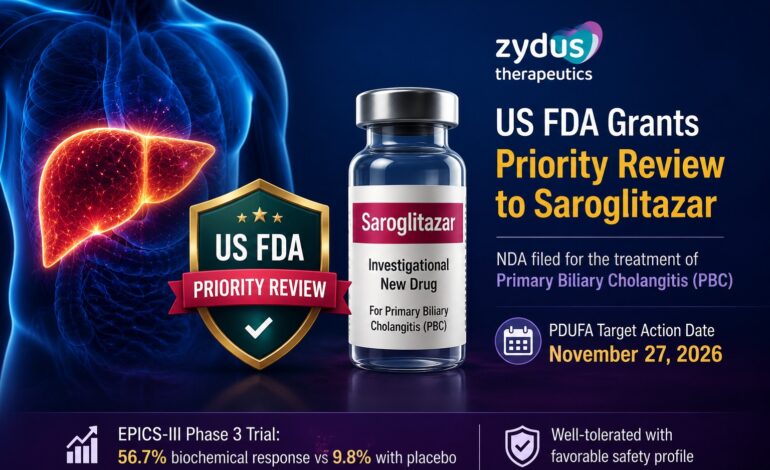
Ahmedabad: Zydus Therapeutics, a wholly owned subsidiary of Zydus Lifesciences, has received Priority Review designation from the US Food and Drug Administration (FDA) for its New Drug Application (NDA) seeking approval of saroglitazar for the treatment of Primary Biliary Cholangitis (PBC), a chronic autoimmune liver disease.
The FDA has assigned a Prescription Drug User Fee Act (PDUFA) target action date of November 27, 2026, accelerating the regulatory review process for the drug candidate.
Saroglitazar is being evaluated for use in combination with ursodeoxycholic acid (UDCA) in adults who have not responded adequately to standard therapy, as well as a standalone treatment for patients unable to tolerate UDCA.
The NDA submission is supported by results from the Phase 3 EPICS-III trial, a randomised, double-blind, placebo-controlled study involving patients with PBC who had an inadequate response to or intolerance of existing treatment options.
According to the trial results, saroglitazar met its primary endpoint, with 56.7 percent of treated patients achieving a biochemical response compared with 9.8 percent in the placebo group, representing a treatment difference of 48 percent.
The drug also demonstrated significant reductions in alkaline phosphatase (ALP), an important biomarker associated with disease progression. Patients receiving saroglitazar recorded a 33.5 percent reduction in ALP levels, while patients in the placebo arm experienced a 6.5 percent increase.
Sharvil Patel, Managing Director of Zydus Lifesciences, said the FDA’s acceptance of the application with Priority Review reflects the unmet medical need among patients suffering from PBC.
“The acceptance of our NDA with Priority Review highlights the significant unmet need that exists for patients with PBC and represents an important step in the path to making saroglitazar available in the US,” Patel said.
The company said it is simultaneously strengthening its medical affairs and commercialisation capabilities in preparation for a potential US launch in the fourth quarter of FY27 if regulatory approval is granted.
Raj Vuppalanchi, Professor of Medicine at Indiana University School of Medicine and Global Principal Investigator for the EPICS-III study, said the trial demonstrated clinically meaningful biochemical responses alongside a favourable safety and tolerability profile.
The Phase 3 results will be presented as a late-breaking session at the European Association for the Study of the Liver (EASL) Congress in Barcelona on May 30, 2026.
Saroglitazar was generally well tolerated during the study, with most adverse events reported as mild to moderate. Serious adverse events occurred less frequently in the treatment group than in the placebo arm, and no treatment-related deaths were reported.
If approved, saroglitazar could provide a new treatment option for patients with Primary Biliary Cholangitis whose disease continues to progress despite current standard therapies.