India Positions for Global Clean Energy Leadership with Hydrogen, Nuclear Push: Jitendra Singh
₹19,744 crore hydrogen mission, 100 GW nuclear target and innovation-led strategy anchor multi-pronged energy roadmap New Delhi: Union minister Dr Jitendra Singh said India is positioning itself as a global
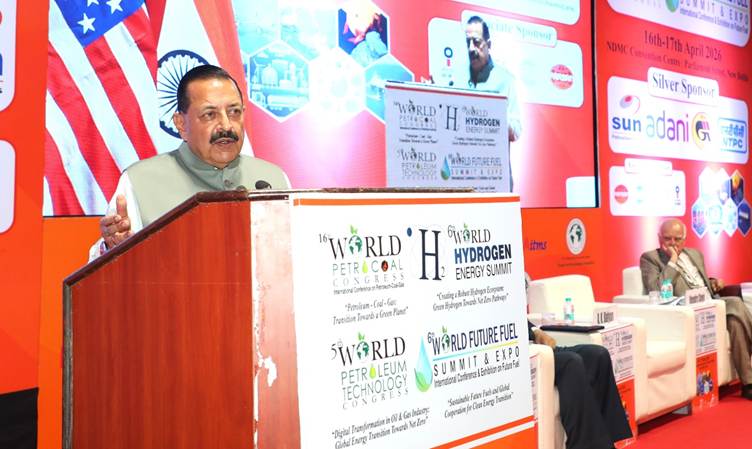
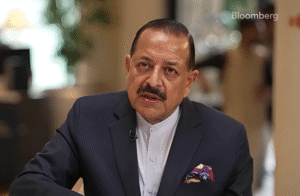
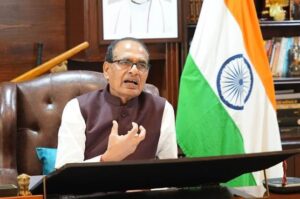
Union minister Dr Jitendra Singh addresses the World Hydrogen Energy Summit in New Delhi on Thursday.

₹19,744 crore hydrogen mission, 100 GW nuclear target and innovation-led strategy anchor multi-pronged energy roadmap
New Delhi: Union minister Dr Jitendra Singh said India is positioning itself as a global player in the clean energy landscape through an integrated push spanning green hydrogen, nuclear power and renewable energy, backed by policy support, innovation and industry participation.
Addressing the World Hydrogen Energy Summit alongside the World Petrocoal Congress in New Delhi on Thursday, the minister said India is pursuing a multi-dimensional energy strategy that balances sustainability with energy security, while building indigenous capabilities in critical technologies such as electrolysers.
He said the government is scaling efforts through public-private partnerships and enhanced research funding to create a self-reliant, innovation-driven ecosystem.
India has launched the National Green Hydrogen Mission with an outlay of ₹19,744 crore, positioning itself among global frontrunners in alternative fuel development. The minister said green hydrogen will play a key role in decarbonising hard-to-abate sectors such as steel and cement, with efforts underway to reduce production costs through domestic manufacturing.
On nuclear energy, he said the recently announced Nuclear Energy Mission aims to achieve 100 GW of nuclear power capacity by 2047, marking the next phase of India’s atomic energy programme driven by indigenous technologies.
He added that India plans to develop five small modular reactors by 2033, with work already underway on three, including a Bharat Small Modular Reactor, a Bharat Small Reactor based on heavy water technology, and a hydrogen-linked small reactor. These are expected to provide flexible and decentralised clean energy solutions while supporting emerging hydrogen applications.
Highlighting policy reforms, the minister said the government has opened the nuclear sector to private participation and rationalised liability provisions to encourage wider industry engagement, including startups and MSMEs.
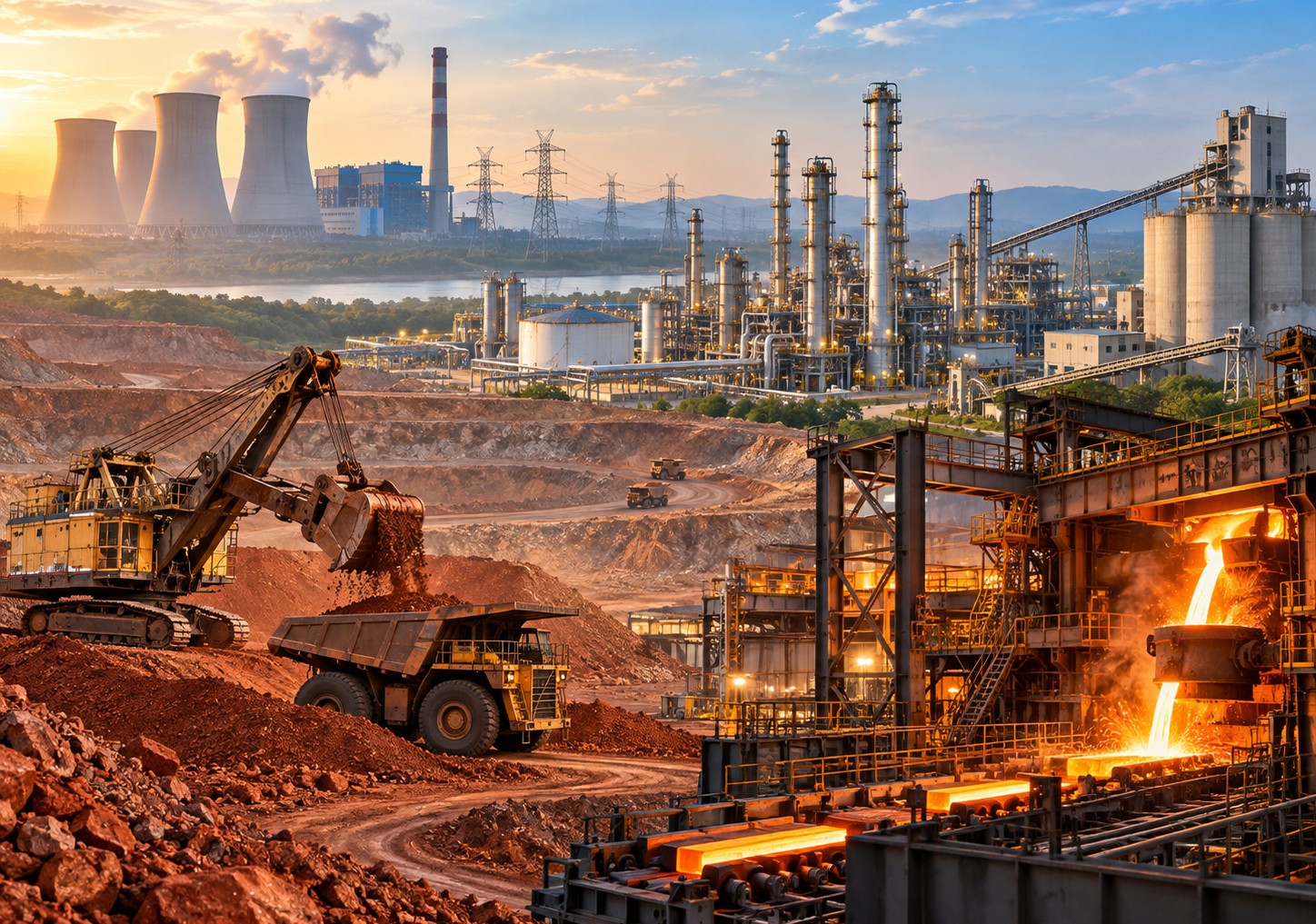
India is also expanding its conventional energy base, targeting nearly $100 billion in oil and gas investments, increasing exploration areas to 1 million square kilometres, and raising the share of natural gas in the energy mix to 15%.
The minister said emerging sectors such as electric mobility, battery recycling, grid management and renewable manufacturing are generating new employment opportunities, alongside circular economy initiatives including biofuel production from used cooking oil and agricultural residue.
He added that India’s demographic strength, technological capabilities and policy direction position it to play a significant role in global decarbonisation while ensuring sustainable growth and energy access.