Mission Vatsalya Emerges as India’s Quiet Digital Child Protection Revolution
Revamped portal, foster care expansion and data-driven monitoring position Mission Vatsalya as a key pillar of India’s child welfare architecture
The biggest recent shift came with the launch of the revamped Mission Vatsalya Portal in March 2026, integrating services such as TrackChild and Khoya-Paya into a unified national digital platform.

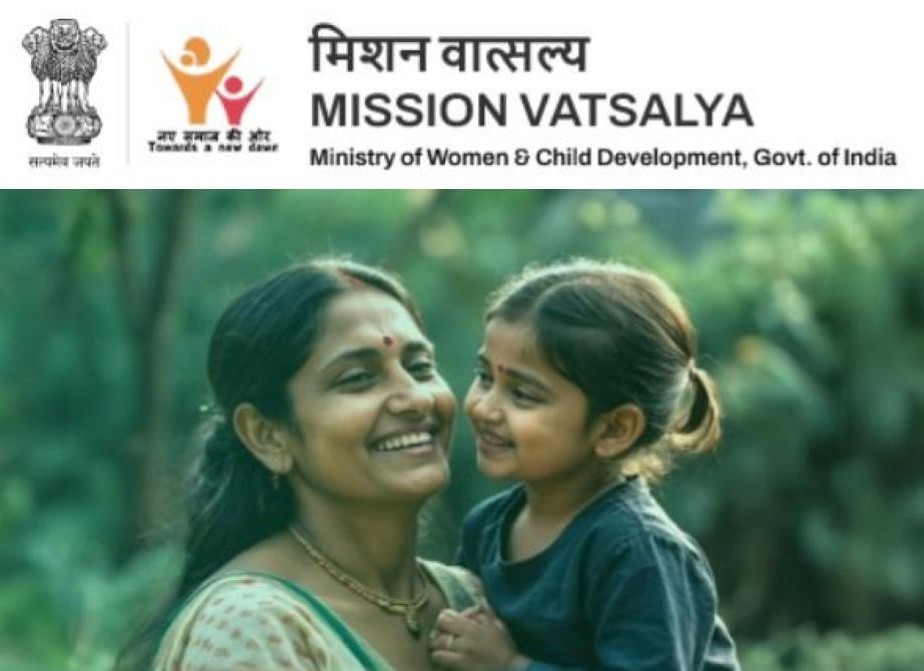
New Delhi: While flagship welfare programmes often dominate headlines, Mission Vatsalya is quietly emerging as one of India’s most significant digital governance and child protection transformations, combining technology, foster care, rehabilitation and institutional reform into a nationwide child welfare ecosystem.
Originally evolved from the Integrated Child Protection Scheme (ICPS), Mission Vatsalya has now moved far beyond being a conventional welfare programme. The Ministry of Women and Child Development is increasingly positioning it as a technology-enabled child protection infrastructure designed to identify, monitor, rehabilitate and support vulnerable children across India.
The biggest recent shift came with the launch of the revamped Mission Vatsalya Portal in March 2026, integrating services such as TrackChild and Khoya-Paya into a unified national digital platform. The upgraded system enables secure coordination among district authorities, child welfare committees, juvenile justice boards, police, child care institutions and adoption agencies.
The move reflects a broader governance trend in India where social welfare delivery is increasingly becoming data-centric and interoperable. In Mission Vatsalya’s case, this digital integration could significantly improve the tracing of missing children, foster care monitoring and rehabilitation tracking.
According to official data, the scheme now supports both institutional and non-institutional child care services across states and Union Territories. These include child care institutions, open shelters, adoption support, sponsorship programmes, foster care and after-care services for children transitioning into adulthood after leaving institutional systems.
The scale of the programme is substantial. The Mission Vatsalya platform currently supports more than 5,400 child care institutions nationwide, making it one of India’s largest coordinated child welfare networks.
Policy experts say one of the scheme’s most important shifts is its emphasis on family-based non-institutional care rather than long-term institutionalisation. This aligns India more closely with global child rights frameworks that prioritise family environments over institutional care wherever possible.
The model is now gaining momentum at the state level as well. Jharkhand recently announced plans under Mission Vatsalya to extend sponsorship and foster care support to nearly 9,000 vulnerable children during 2026-27.
Government officials also view Mission Vatsalya as an important convergence platform connecting child welfare with education, skilling, nutrition, mental health and social justice systems. The scheme supports vocational training, counselling, healthcare and rehabilitation services for children in difficult circumstances.
As India rapidly digitises public services, Mission Vatsalya may become one of the country’s most consequential but under-recognised governance platforms — not merely as a welfare scheme, but as a national child protection intelligence and rehabilitation network.
The challenge ahead, however, will be ensuring consistent implementation across districts, improving trained human resources, strengthening foster care ecosystems and maintaining child data privacy as the platform scales further.
Still, the programme’s growing visibility in search trends and policy discussions signals that Mission Vatsalya is increasingly being recognised not just as a social welfare initiative, but as a foundational pillar of India’s future child protection architecture.