Amit Shah Declares Bastar Naxal-Free, Launches Development Push Through ‘Seva Dera’ Model
Union Home Minister says next phase will focus on prosperity, tribal livelihoods and six-fold increase in Bastar’s income over five years
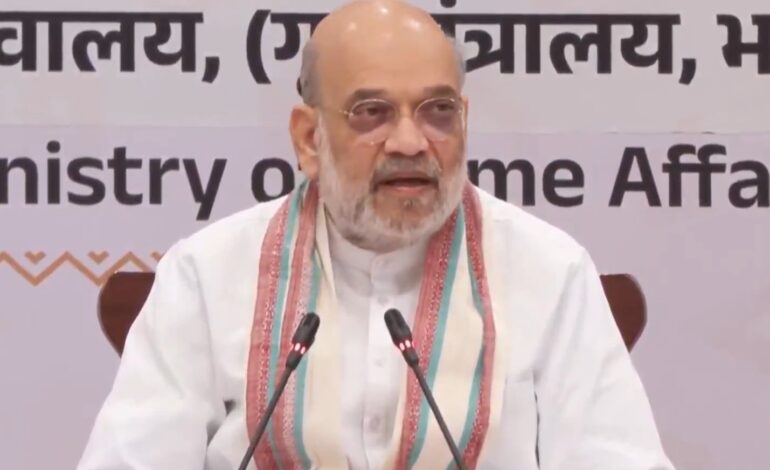
Addressing a press conference in Jagdalpur, Chhattisgarh, Amit Shah said the country had achieved the goal of eliminating Naxalism before the March 31, 2026 target due to the efforts and sacrifices of security forces and their families.

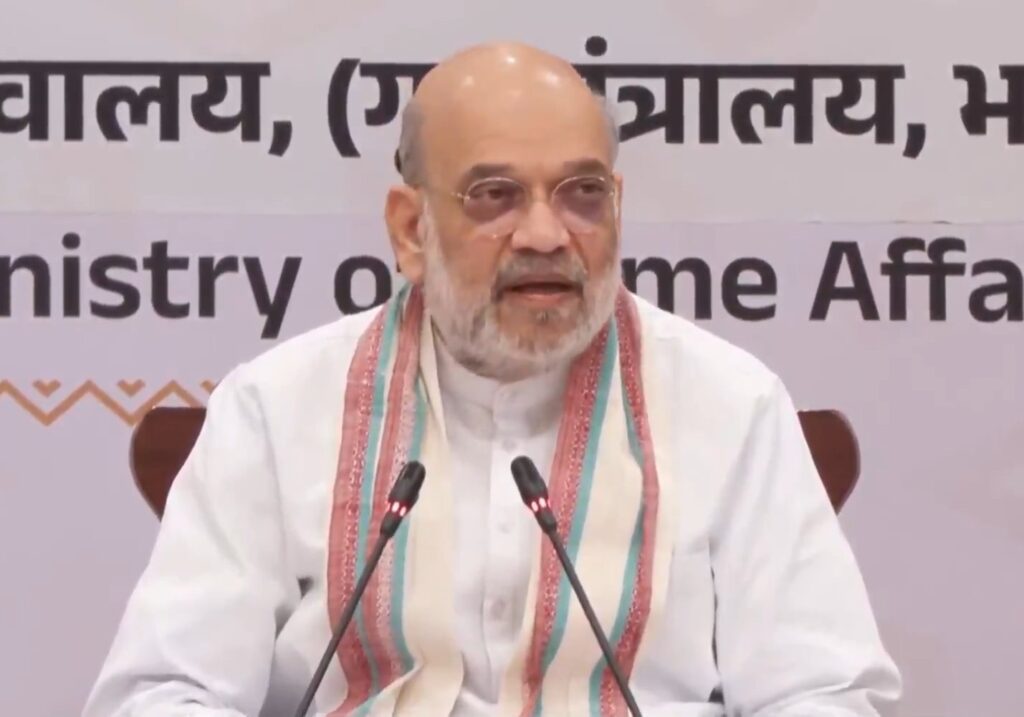
Jagdalpur: Union Home Minister Amit Shah on Tuesday declared that Bastar has become free from Naxalism and announced a major development roadmap aimed at transforming the tribal region into one of India’s most developed tribal divisions over the next five years.
Addressing a press conference in Jagdalpur, Chhattisgarh, Amit Shah said the country had achieved the goal of eliminating Naxalism before the March 31, 2026 target due to the efforts and sacrifices of security forces and their families.
He said the focus would now shift from security operations to development, trust-building and prosperity in Bastar.
“Under the leadership of Prime Minister Narendra Modi, Bastar has become Naxal-free. Now, the journey from security to trust, trust to development, development to prosperity, and prosperity to fulfillment must be completed within the next five years,” Shah said.
Amit Shah said the government aims to increase Bastar’s income up to six times in the coming five years while ensuring saturation of welfare schemes and strengthening livelihoods for tribal communities.
He announced that nearly one-third of the 200 security camps established to combat Naxalism in Bastar would now be converted into “Veer Shaheed Gundadhur Seva Deras” to deliver government services directly to villages.
According to Shah, the Seva Deras will provide banking facilities, Aadhaar services, digital services and access to 371 central and state government welfare schemes under one roof. The centres will also include Primary Agricultural Credit Societies (PACS) and dairy facilities to support rural livelihoods.
He said every tribal woman in Bastar would be provided one cow and one buffalo under a cooperative dairy network being developed across the region over the next six months.
The Union Home Minister said Naxalism had deprived Bastar of roads, schools, hospitals, banking services and welfare schemes for decades. He added that the new development model would ensure tribal communities directly benefit from forest produce processing, agriculture and cooperative-based businesses.
Highlighting infrastructure expansion in Naxal-affected regions, Shah said the government had constructed 12,211 km of roads at a cost of ₹20,557 crore and installed 5,000 mobile towers out of a planned 13,000 towers across affected areas. He added that 1,804 bank branches, 1,321 ATMs and 890 post offices had also been established.
The government has additionally opened 259 Eklavya Model Schools, 46 ITIs and 49 skill development centres, while more than 90,000 youth and women have received skill training, he said.
Amit Shah also highlighted cultural and youth engagement initiatives such as “Bastar Pandum” and the “Bastar Olympics,” which saw participation from nearly 3.94 lakh athletes, including surrendered former Naxals.
He cautioned that Maoist elements could attempt to return under new identities and urged people not to fall prey to misleading propaganda. He stressed that democratic governance and development, not violence, would determine Bastar’s future.
Shah said the government’s long-term objective was not only to eliminate Naxalism but to establish a fully developed Bastar by 2031, demonstrating how extremism had hindered the region’s progress for decades.