India rules out US ethanol imports, reaffirms domestic sourcing for fuel blending programme
India has rejected reports of importing U.S. ethanol for fuel blending, stating no such imports or trade concessions exist and reaffirming that the Ethanol Blended Petrol Programme relies entirely on
According to an official statement issued on Thursday, ethanol used under India's Ethanol Blended with Petrol Programme is sourced entirely from domestic producers in accordance with the country's established policy framework.

NEW DELHI: The Government of India has categorically denied reports suggesting that the country is planning to import ethanol from the United States for its ambitious Ethanol Blended Petrol (EBP) Programme, reaffirming that the entire fuel-blending initiative will continue to rely exclusively on domestically produced ethanol.
The clarification comes amid speculation in sections of the media that ethanol imports from the US could become part of the ongoing India-US trade negotiations. The government has dismissed these claims as “baseless and factually incorrect”, stating that neither any imports are taking place nor has India made any concession or commitment on the issue during bilateral trade discussions.
According to an official statement issued on Thursday, ethanol used under India’s Ethanol Blended with Petrol Programme is sourced entirely from domestic producers in accordance with the country’s established policy framework.
“There is no import of ethanol for fuel blending from the US. Further, no concessions or commitments relating to the import of ethanol for fuel blending from the US have been made in the India-US trade discussions,” the government said.
The clarification assumes significance as India and the United States continue negotiations on a broader bilateral trade agreement, with agriculture and energy among the sectors closely watched by industry stakeholders. Speculation over possible market access for US agricultural and biofuel products had triggered concerns among Indian sugar mills, grain-based distilleries and farmer organisations, which have made substantial investments to support India’s ethanol blending programme.
The government reiterated that India’s fuel blending programme will continue to be governed exclusively by domestic policy priorities rather than trade negotiations.
“Any suggestion of a policy change to permit large-scale imports of fuel ethanol from the US is misleading,” the statement said.
Ethanol blending central to India’s energy security strategy
India’s Ethanol-Blended Petrol Programme has emerged as one of the country’s flagship energy transition initiatives, aimed at reducing dependence on imported crude oil, improving energy security, lowering greenhouse gas emissions and creating additional income opportunities for farmers.
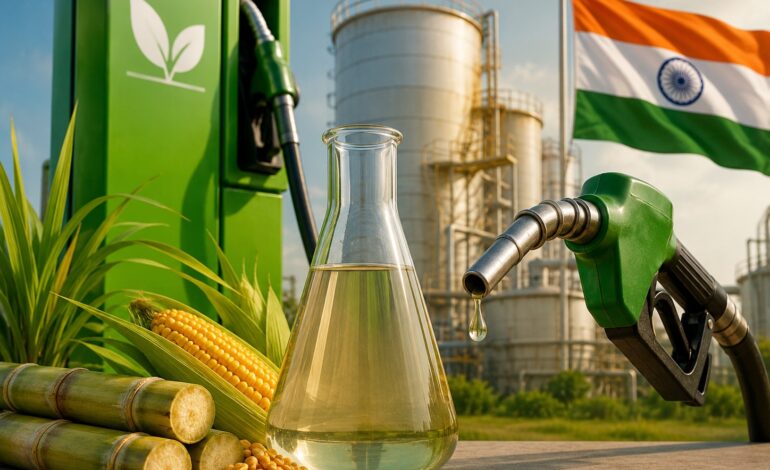
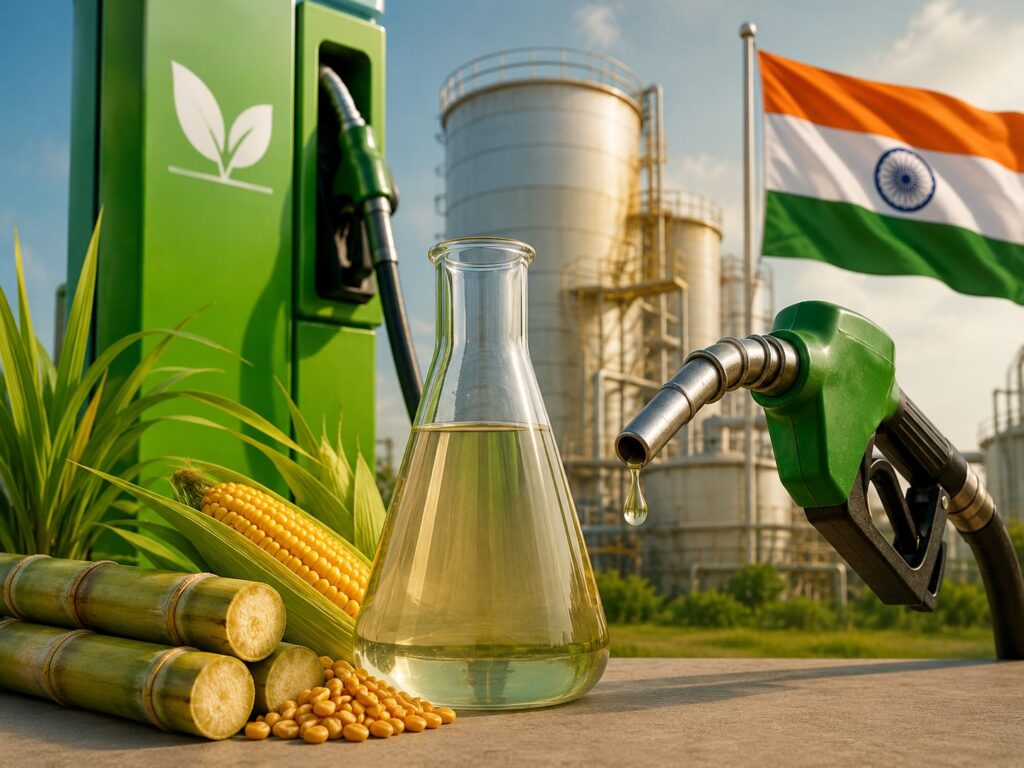
The programme encourages the blending of ethanol with petrol, with ethanol being produced primarily from sugarcane molasses, sugarcane juice, damaged food grains, surplus rice and maize. The initiative has also helped divert excess sugar stocks, providing financial stability to sugar mills while generating timely payments to sugarcane farmers.
Over the past few years, the government has significantly expanded ethanol production capacity by encouraging grain-based distilleries alongside traditional sugar-based production, thereby diversifying feedstock availability and reducing dependence on a single agricultural crop.
The ethanol blending programme has simultaneously become an important pillar of India’s biofuel policy and rural economy by creating new markets for agricultural produce while supporting cleaner transportation fuels.
Domestic industry has invested heavily
The government’s clarification is expected to reassure domestic ethanol producers, who have invested thousands of crores of rupees in expanding production capacity under policy incentives announced over the past several years.
Sugar companies, grain processors and biofuel manufacturers have established new distilleries and upgraded existing facilities based on the government’s long-term commitment to achieving higher blending targets using indigenous feedstock.
Industry observers note that allowing large-scale imports of cheaper fuel ethanol could have disrupted investment plans, affected domestic capacity utilisation and weakened incentives for farmers supplying feedstock for ethanol production.
By reiterating that procurement for the Ethanol-Blended Petrol Programme will continue to be sourced entirely from Indian producers, the government has reinforced policy certainty for the domestic biofuel ecosystem.
Trade talks remain separate from fuel policy
The statement also underscores India’s negotiating position that domestic energy security and biofuel policies will remain independent of bilateral trade negotiations.
While India and the United States continue discussions on expanding trade and investment across multiple sectors, the government has made it clear that the country’s ethanol procurement framework remains guided solely by national policy objectives.
The clarification is likely to allay concerns among stakeholders in the sugar, agriculture and biofuel sectors that India’s ethanol blending programme could be altered through international trade commitments.
With India’s biofuel roadmap closely linked to energy security, rural development and climate goals, the government has reaffirmed that domestic producers will continue to remain at the centre of the country’s ethanol blending strategy.