NLC India scales up mining and renewables to strengthen energy security and sustainability
NLC India is expanding mining, thermal generation, renewables and energy storage as it targets 10 GW of renewable capacity by 2030 and a 50% clean energy mix while strengthening India’s
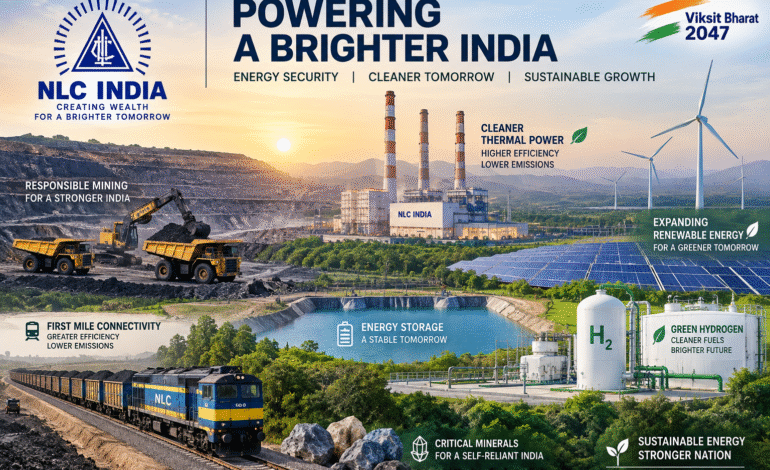
With an existing power generation capacity of 8,405 MW and mining capacity of 59.10 million tonnes per annum (MTPA), the company is positioning itself as a diversified energy enterprise aligned with India’s long-term energy security and decarbonisation objectives.

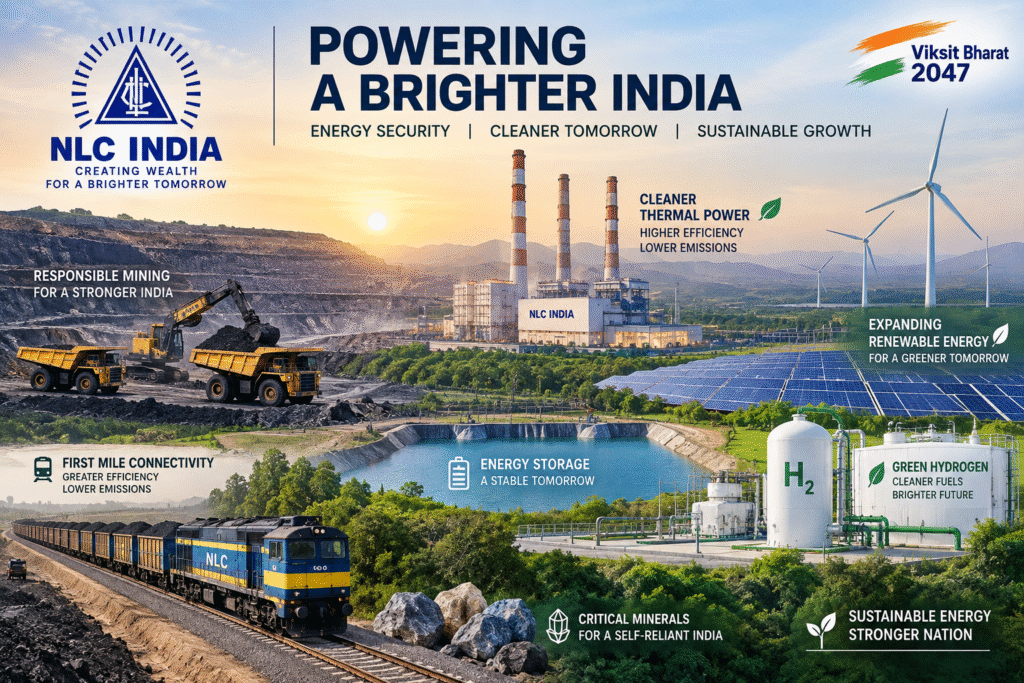
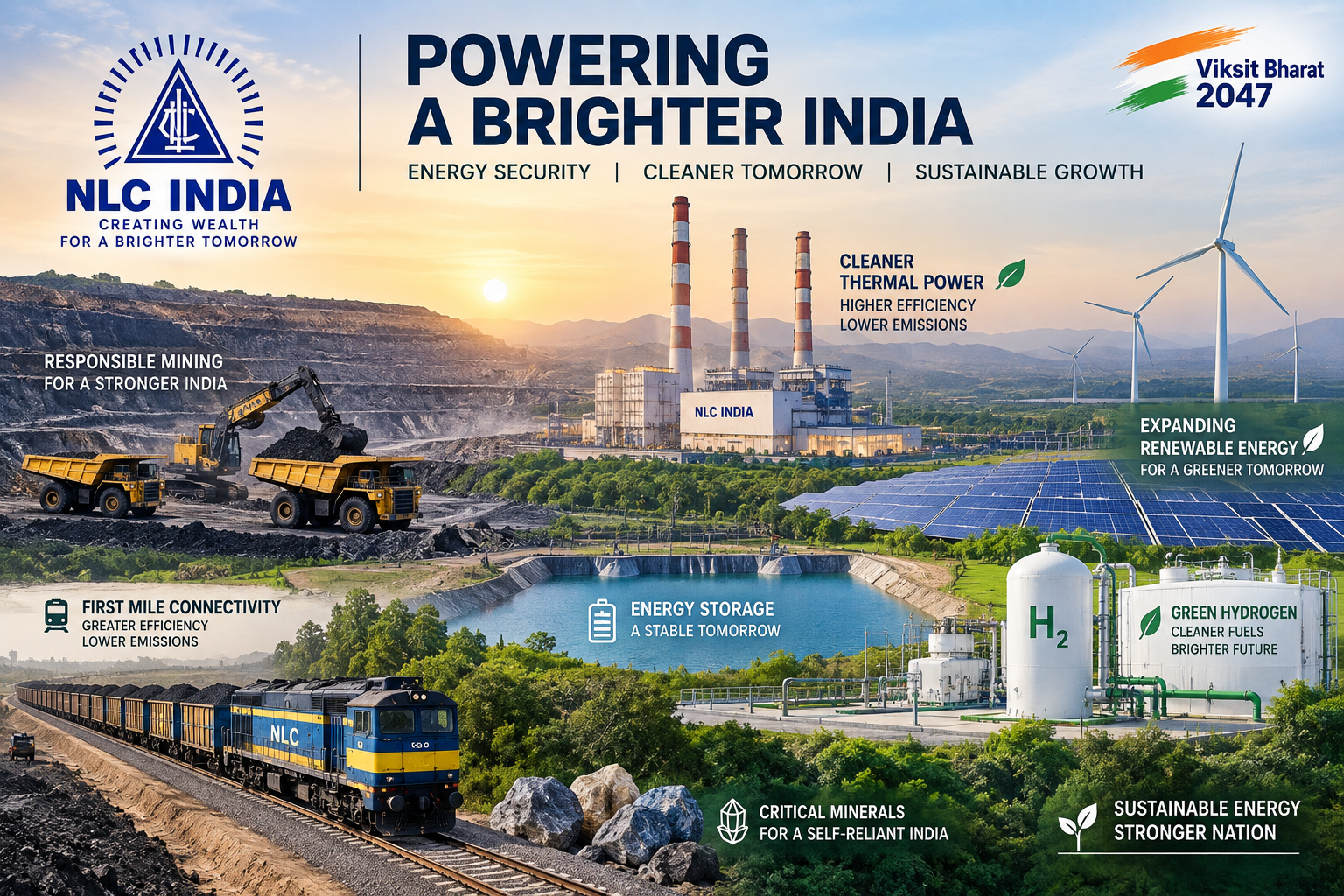
NEW DELHI: NLC India Limited (NLCIL), a Navratna company under the Ministry of Coal, is expanding beyond its traditional mining and thermal power operations to build an integrated energy portfolio combining baseload generation, renewable energy, storage and emerging low-carbon technologies, according to an official release on Saturday.
With an existing power generation capacity of 8,405 MW and mining capacity of 59.10 million tonnes per annum (MTPA), the company is positioning itself as a diversified energy enterprise aligned with India’s long-term energy security and decarbonisation objectives.
The company is seeking to balance the continuing requirement for reliable baseload electricity with the expansion of clean energy capacity, while reducing dependence on imported fuel and strengthening domestic resource security.
Mining capacity to cross 100 MTPA
NLCIL plans to increase its total mining capacity from the current 59.1 MTPA to 104.35 MTPA by 2030 and further to 115.85 MTPA by 2047.
The expansion is aimed at supporting domestic energy requirements and reducing dependence on imported fuel.
Alongside increasing mining capacity, the company is adopting high-efficiency, low-emission technologies in its thermal power portfolio.
Supercritical units with a combined capacity of 1,980 MW are being developed at Ghatampur, while ultra-supercritical pit-head thermal power projects are planned at Talabira with 2,400 MW and Machhakatta with 4,000 MW.
These technologies are designed to improve thermal efficiency, reduce specific coal consumption and lower emissions compared with conventional thermal generation.
Rail connectivity to reduce transportation dependence
NLCIL is also investing in First Mile Connectivity (FMC) infrastructure to improve the movement of mined material and reduce dependence on road transportation.
The company is commissioning 63.5 MTPA of FMC capacity through rail corridors covering Pachwara South, North Dhadu (West), Talabira, Machhakatta and New Patrapara (South).
The rail-based infrastructure is intended to reduce road transportation, associated emissions and oil consumption while improving the efficiency of the company’s mining-to-power supply chain.
Renewable capacity targeted at 10 GW by 2030
NLCIL is expanding its renewable energy portfolio through its dedicated green-energy arm, NLCIL Renewables Limited (NIRL).
The company plans to increase its operational renewable capacity from around 1.8 GW currently to more than 10 GW by 2030. The portfolio is projected to reach 32.7 GW by 2047.
The expansion is expected to help the company achieve a 50% clean energy share in its generation mix ahead of the longer-term target.
The renewable strategy is being complemented by investments in large-scale energy storage, which will be important for balancing the variable generation from solar and other renewable sources.
Battery storage projects across four states
NLCIL is developing several Battery Energy Storage System (BESS) projects.
The projects include a 250 MW/500 MWh system in Tamil Nadu, a 300 MW/1,800 MWh project with SECI in Rajasthan, a 275 MW/550 MWh project with GUVNL in Gujarat, and a 50 MW/200 MWh project with WBSEDCL.
The company is also targeting large-scale Pumped Storage Projects in Tamil Nadu and Odisha to provide additional storage capacity and help manage fluctuations in renewable generation.
Green hydrogen and carbon capture
NLCIL is also exploring technologies that could support the transition towards lower-carbon industrial operations.
At Neyveli, the company is constructing a pilot 4 MW solar-powered PEM electrolyser-based green hydrogen plant.
The company is also working with IIT Madras on advanced Carbon Capture Systems, seeking to develop technologies that could help reduce emissions from industrial and energy operations.
Focus on critical minerals
NLCIL is expanding into strategic minerals as part of its diversification strategy and efforts to strengthen domestic supply chains.
The company has secured domestic composite exploration licences for phosphorite and limestone in Chhattisgarh, and vanadium and titanium in Telangana.
It is also pursuing international opportunities in critical minerals through KABIL, reflecting the growing importance of secure supplies of minerals required for clean-energy technologies and advanced industrial applications.
From mining company to integrated energy enterprise
The expansion represents a broader transformation in NLCIL’s business model.
While coal and lignite-based energy remain important to its current operations and India’s baseload power requirements, the company is simultaneously building capabilities in renewable generation, battery and pumped storage, green hydrogen, carbon capture and strategic minerals.
This combination is intended to allow NLCIL to support India’s energy requirements in the near term while developing new, lower-carbon sources of revenue and energy infrastructure for the longer term.
By combining domestic mining resources with high-efficiency thermal generation, renewable energy and storage, NLCIL is seeking to build an integrated energy portfolio that can contribute to energy security while progressively increasing the role of cleaner technologies in its future growth.