Health Ministry tightens regulation of stem cell therapy, restricts ASD use to approved clinical trials
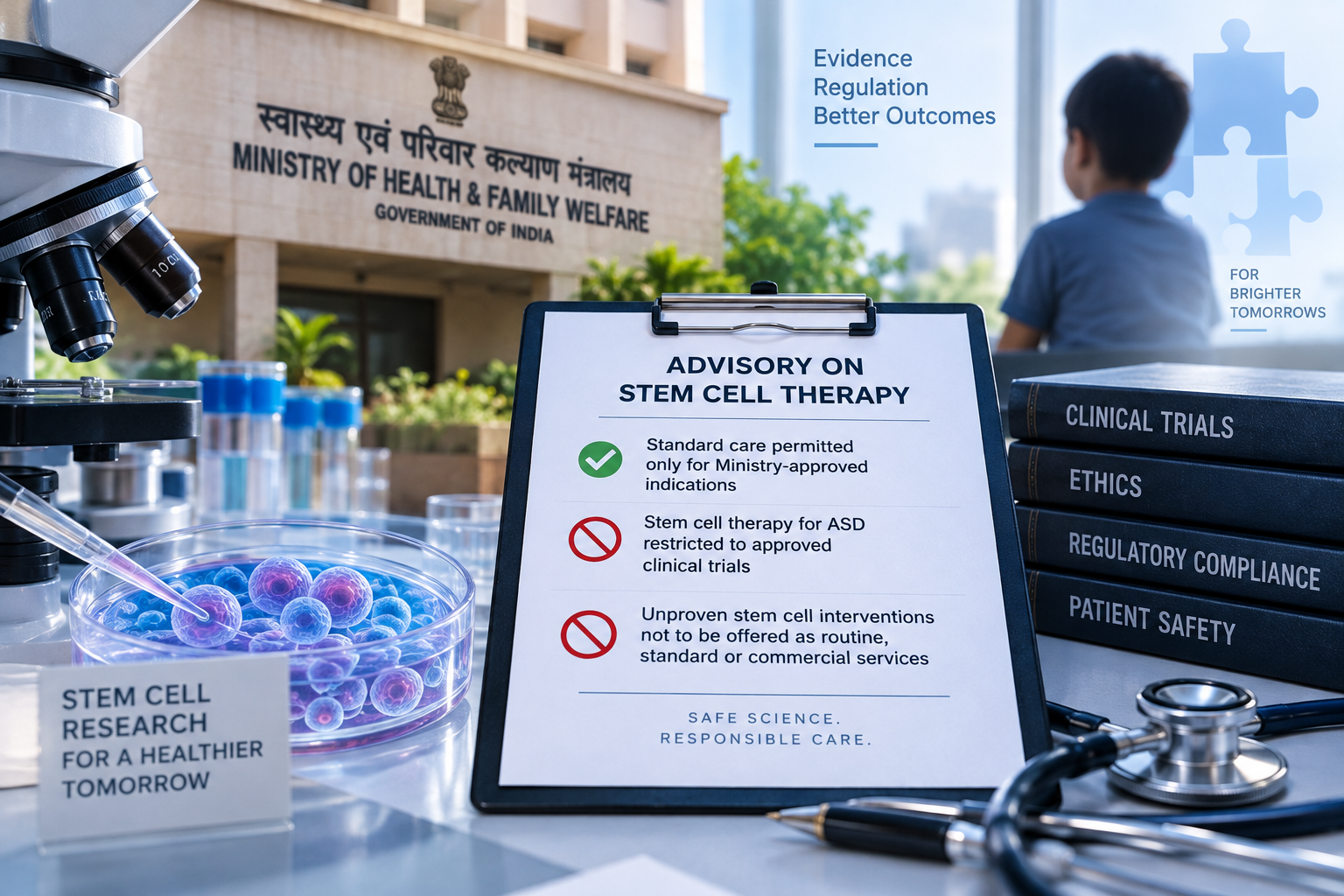
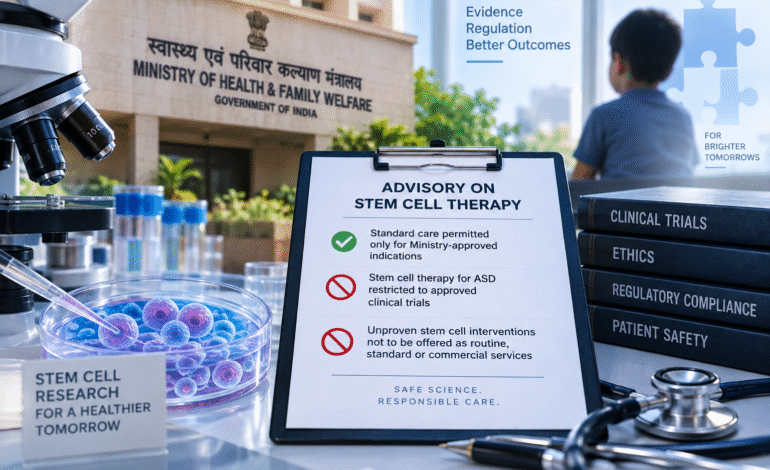
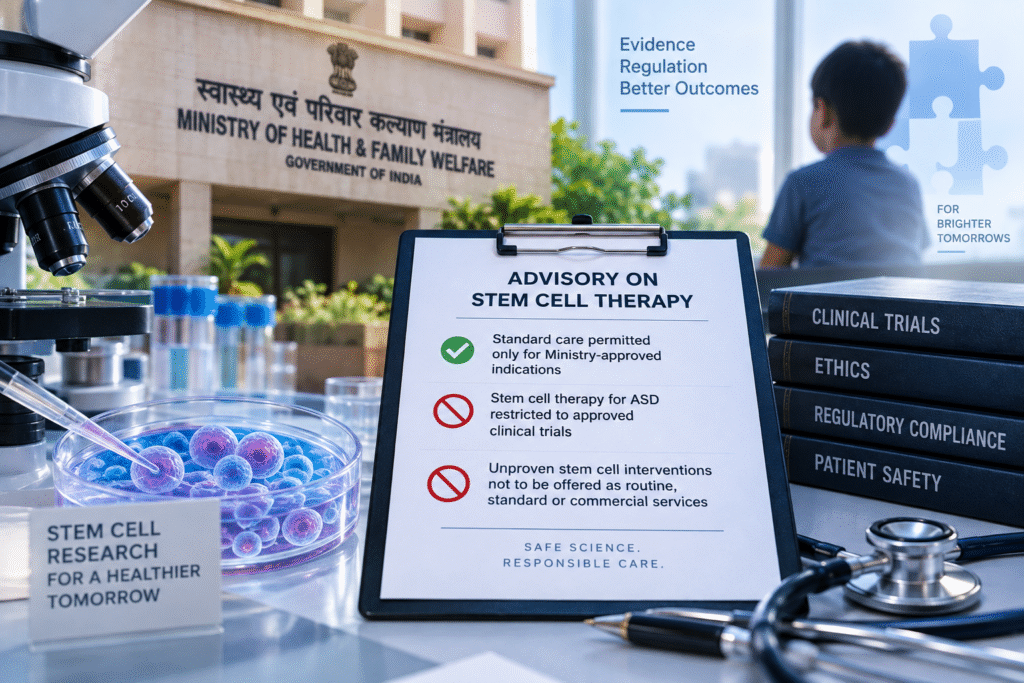
The Health Ministry has directed States and UTs to ensure stem cell therapy is offered as standard care only for Ministry-approved indications, with use for autism restricted to duly approved
The advisory, dated September 16, 2026, has been issued to States and UTs that have adopted the Clinical Establishments (Registration and Regulation) Act, 2010.

NEW DELHI: The Union Ministry of Health and Family Welfare has issued an advisory to states and Union Territories on the regulation of stem cell therapy, reiterating that the treatment can be offered as standard clinical care only for disease conditions and indications included in the list approved by the Ministry.
The advisory, dated September 16, 2026, has been issued to States and UTs that have adopted the Clinical Establishments (Registration and Regulation) Act, 2010. It follows the Supreme Court judgment of January 30, 2026, in Yash Charitable Trust & Ors. v. Union of India & Ors.
The Ministry has specifically clarified that the therapeutic use of any type of stem cell for Autism Spectrum Disorder (ASD) must remain restricted to duly approved clinical trials.
Such trials must comply with the National Guidelines for Stem Cell Research, 2017, issued jointly by the Indian Council of Medical Research (ICMR) and the Department of Biotechnology (DBT), along with other applicable government instructions.
The advisory also makes clear that unproven stem cell interventions, including stem cell therapy for ASD, are not to be offered as routine, standard or commercial clinical services.
The Ministry has asked states and UTs to disseminate the Supreme Court’s directions to State and District Regulatory Authorities as well as government and private clinical establishments involved in stem cell research, treatment, promotion or administration.
Non-compliance can invite action
The advisory draws attention to the consequences of violating the regulatory framework governing stem cell therapy.
The Supreme Court, in paragraph 151(xiii) of its January 30 judgment, held that non-compliance with the statutory mandate must attract consequences, including professional misconduct under Regulation 7.22 of the IMC Regulations, 2002.
Action may also be taken under Sections 32 and 40 of the Clinical Establishments (Registration and Regulation) Act, 2010, which provide for cancellation of registration and penalties.
The Health Ministry has accordingly asked regulatory authorities and clinical establishments to ensure strict compliance with the applicable framework.
NMC reiterates approved-use requirement
The National Medical Commission (NMC), in an advisory dated September 5, 2026, has also reiterated that stem cell therapy may be offered as standard clinical care only for approved indications.
The NMC said unauthorised administration, prescription, promotion or advertisement of stem cell therapy beyond the approved indications would constitute professional misconduct.
State Medical Councils have been advised to examine cases of alleged violations brought to their notice. Where professional misconduct by a Registered Medical Practitioner is established following due process, appropriate disciplinary action may be taken under the applicable statutory and regulatory provisions.