Semicon 2.0 widens India’s semiconductor push from chipmaking to a full-stack ecosystem
India's next phase of semiconductor development is set to focus on design, equipment, fabs, advanced packaging, R&D and talent, with nearly 1 lakh jobs expected.
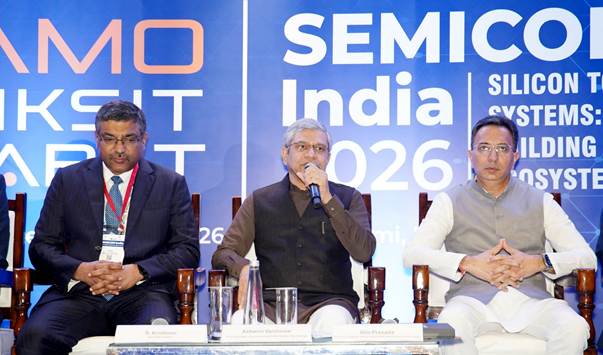
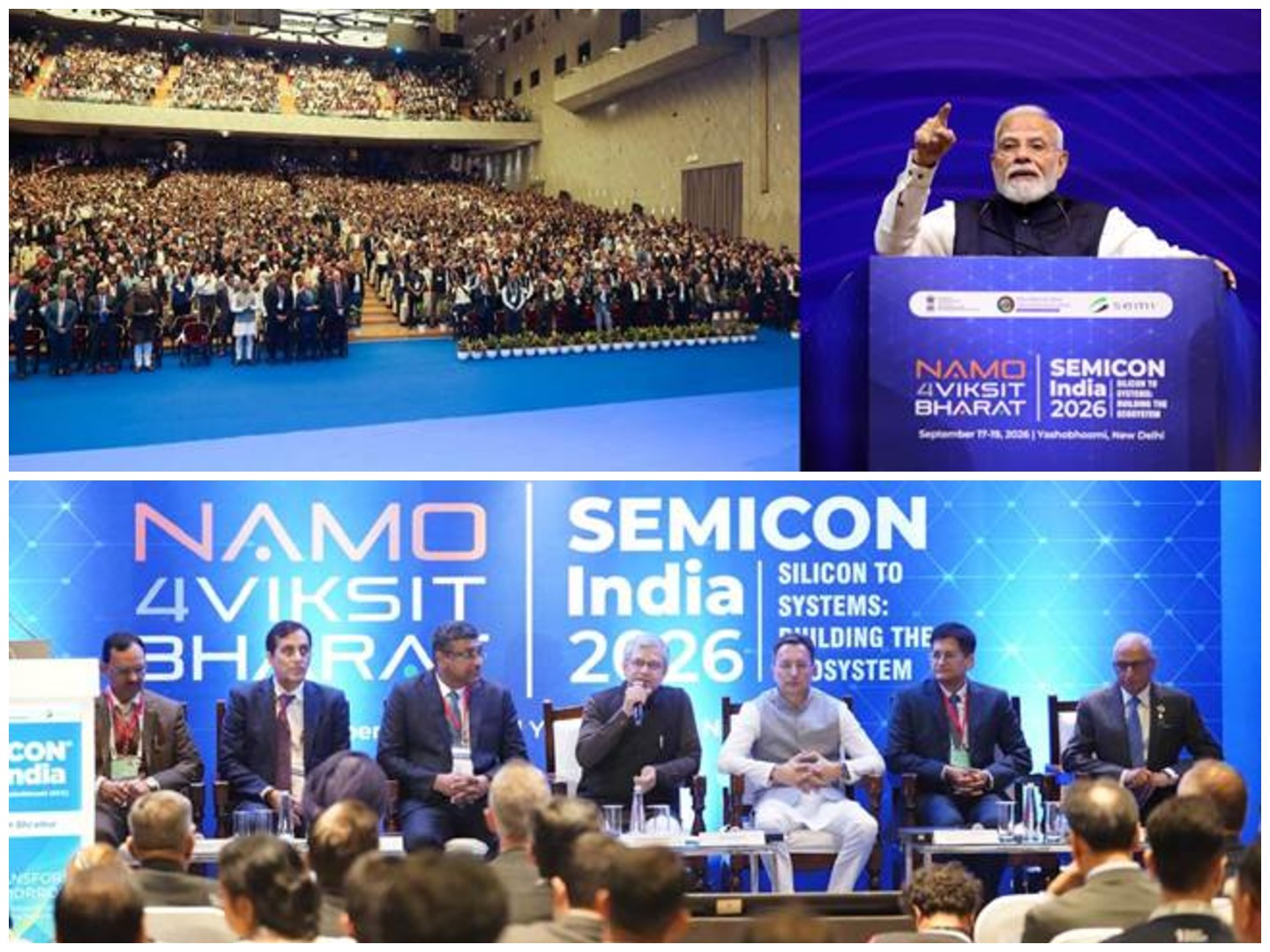
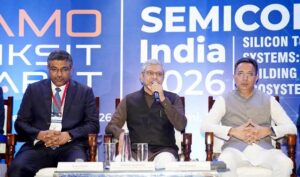
Union Minister for Electronics and IT Ashwini Vaishnaw, MoS Jitin Pasada and MeitY Secretary Shri S. Krishnan at SEMICON India 2026 in New Delhi on Thursday.

NEW DELHI: India’s semiconductor ecosystem is set for a major expansion under Semicon 2.0, with investment commitments of around ₹1 lakh crore and close to 1 lakh new employment opportunities expected across the value chain, Union Minister for Electronics and IT Ashwini Vaishnaw said at SEMICON India 2026 on Thursday.
The investment commitments, estimated at around $11–12 billion, are expected to materialise over the next two to three years, subject to the respective board and shareholder approvals of the companies involved.
Vaishnaw said Semicon 1.0 focused on establishing the foundation for India’s semiconductor industry, while Semicon 2.0 is aimed at building the wider ecosystem and scaling capabilities across the semiconductor value chain.
Six pillars of Semicon 2.0
The new phase will focus on six broad areas — design, machines and materials, fabs, advanced packaging, R&D and talent development.
Under the design pillar, the government is targeting 200 semiconductor design startups, building on the 105 startups supported during the first phase. Of these, 20 have already secured venture capital funding, according to the minister.
The programme will also encourage companies to move beyond individual chip design towards systems design, allowing Indian companies and engineers to address more complex technology requirements.
The machines and materials pillar will focus on developing domestic capabilities in semiconductor manufacturing equipment, precision manufacturing and critical materials. The government expects India’s existing design capabilities and precision-manufacturing base to help attract global equipment companies.
Push for fabs and advanced packaging
Semicon 2.0 will support semiconductor fabrication across technologies including display, memory, silicon, compound and logic fabs.
Advanced packaging has been identified as another key area, with the government seeking to build capabilities that can improve chip efficiency and system-level performance.
The R&D pillar will promote applied research involving industry, government and academia. Industry will be encouraged to propose projects, with funding contributions from both industry and government and participation from academic institutions.
One lakh technicians to be trained
Talent development will be another major focus. Around 400 universities and institutes are already engaged in semiconductor chip-design education under the first phase, according to the minister.
Semicon 2.0 aims to upgrade curricula so that students with foundational chip-design skills can progress towards systems design.
The government has also set a target of training 1 lakh technicians over five years, through partnerships with industry and international institutions, including Taiwan’s ITRI.
Building the ecosystem around fabs
The government is looking beyond individual semiconductor manufacturing plants to create supporting capabilities in capital equipment, materials, gases, chemicals, precision manufacturing and supply chains.
Vaishnaw also highlighted the importance of resilient global supply chains and said India is seeing increased interest from semiconductor companies seeking to diversify and strengthen their supply networks.
Global competitiveness in terms of quality and cost will remain a key consideration from project selection through construction and commercial production, he said.
11 MoUs and five announcements
SEMICON India 2026 also saw a series of agreements and announcements covering manufacturing, packaging, materials, equipment, design and talent development.
Key developments included:
- Suchi Semicon and eInfochips exchanged the first batch of commercial devices.
- Tata Electronics and Nexperia signed an MoU covering wafer manufacturing, assembly and testing, technology collaboration and innovation.
- Tata Electronics and Ascendas First Space agreed to develop a 363-acre vendor park for the semiconductor supplier ecosystem in Dholera.
- Tata Electronics signed agreements with Fujifilm and JSR Corporation for localisation of critical materials, photoresists and advanced chemicals.
- Tata Electronics and BESI Singapore agreed to collaborate on advanced semiconductor packaging.
- Tata Electronics and Semiconductor Laboratory signed an MoU covering design services, process technology, supply-chain localisation and talent development.
- Kaynes Semicon and partners announced initiatives covering advanced packaging, System-on-Module solutions, assembly and testing.
- India Semiconductor Mission and Intel India launched an “Introduction to Semiconductors” course.
- Six ChipIN Regional Centres were announced to expand access to chip-design capabilities across India.
- Commercial production of CDIL semiconductors was announced, along with an association with Japan’s Shindengen Electric Manufacturing Company for package development.
The government said Semicon 2.0 is intended to establish capabilities across the full semiconductor value chain and position India as a trusted and resilient participant in the global semiconductor industry while generating high-quality employment.
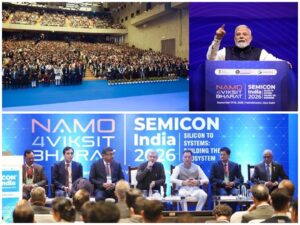
SEMICON India 2026 is being held at Yashobhoomi, New Delhi, from September 17 to 19, with more than 600 participating companies, representatives from 52 countries, over 400 executives and more than 150 speakers.