Beyond ‘Melodi’: How Modi and Meloni Are Reshaping India–Italy Relations
The growing diplomatic warmth between Prime Minister Narendra Modi and his Italian counterpart Giorgia Meloni has emerged as one of the most discussed examples of leadership-driven diplomacy in contemporary global
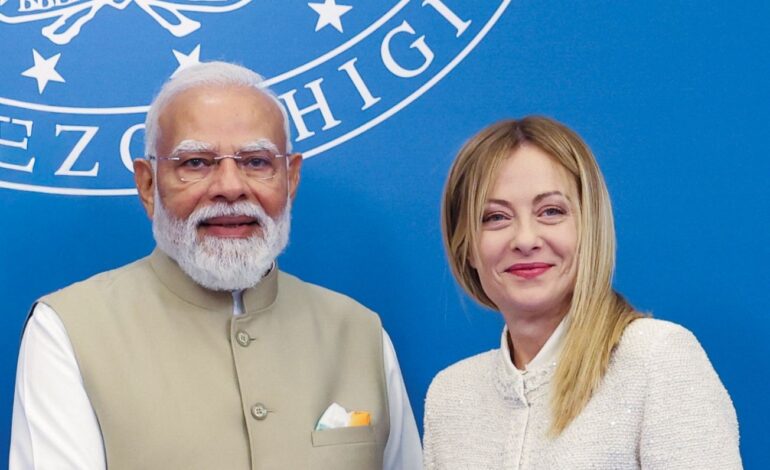
Their visible comfort during international summits, spontaneous public interactions and mutual political respect have attracted considerable global attention.

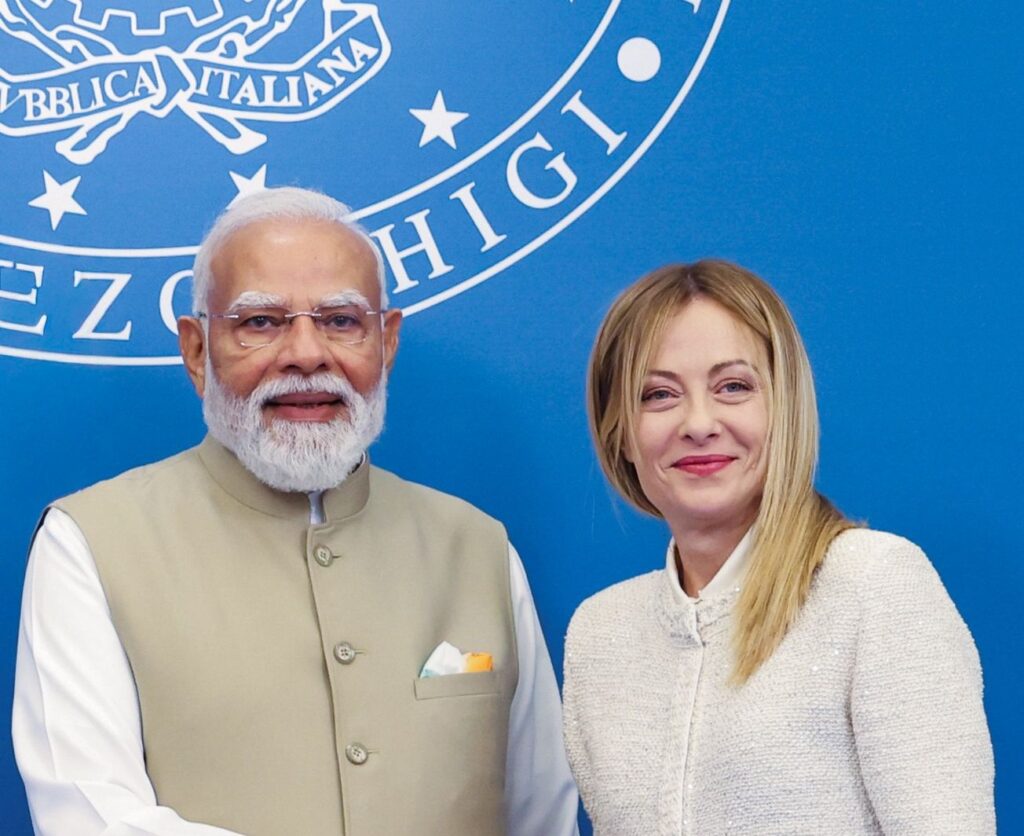
In modern geopolitics, personal rapport between leaders is increasingly shaping the direction of bilateral relations. The growing diplomatic warmth between Prime Minister Narendra Modi and his Italian counterpart Giorgia Meloni has emerged as one of the most discussed examples of leadership-driven diplomacy in contemporary global politics. Their visible comfort during international summits, spontaneous public interactions and mutual political respect have attracted considerable global attention.
What makes this relationship politically significant is that it extends beyond optics. A closer examination suggests that the Modi–Meloni engagement reflects a deeper convergence of strategic interests, national priorities and political leadership styles. At a time when diplomacy is increasingly influenced by trust-based leadership equations, the India–Italy partnership appears to be entering a more substantive and strategic phase.
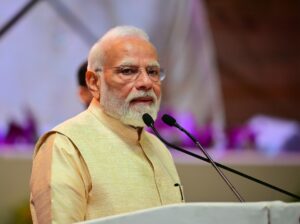
Both leaders represent political journeys rooted in modest social backgrounds rather than elite political inheritance. Narendra Modi’s rise from a humble family background to becoming the leader of the world’s largest democracy remains one of the most widely discussed democratic success stories of the 21st century. His early struggles, organisational discipline and long political apprenticeship shaped a leadership model centred on development, national confidence and mass communication.
Similarly, Giorgia Meloni’s political evolution has transformed the Italian political landscape. Emerging from a middle-class background and beginning as a youth activist, she steadily built her political identity through ideological clarity, grassroots mobilisation and political persistence. Her rise as Italy’s first woman Prime Minister represents a significant shift in European politics at a time when traditional political establishments across the continent face growing public dissatisfaction.
The similarities between Modi and Meloni are politically striking. Neither inherited political power. Both spent years building support from the grassroots level. Both relied heavily on direct communication with ordinary citizens. Most importantly, both converted public sentiment into long-term political legitimacy.
Modi’s political appeal has largely been built around development, governance reforms, nationalism and national pride. Meloni, meanwhile, consolidated support around Italian identity, family values, economic stability and sovereign political decision-making. Their political messaging differs in context, yet shares a common feature — the ability to emotionally connect with citizens while projecting decisive leadership.
The evolution of Meloni’s “Brothers of Italy” party itself represents a remarkable political case study. What began as a relatively marginal political force gradually transformed into Italy’s dominant ruling party. Through disciplined organisational expansion, strong ideological positioning and sustained voter outreach, Meloni succeeded in attracting middle-class voters, youth and sections seeking political stability and cultural identity. Her ascent reflects the broader global trend in which leadership-centric politics increasingly dominates electoral democracies.
The diplomatic chemistry between Modi and Meloni became particularly visible during recent G7 interactions and bilateral meetings. Their public exchanges generated enormous traction across international media and social platforms. One widely discussed moment was the selfie video shared by Meloni during an international summit, which quickly went viral worldwide. Reuters reported that the video attracted millions of views within hours, becoming one of the most talked-about diplomatic moments online.
Another symbolic gesture that drew widespread attention was Modi presenting “Melody” sweets to Meloni during bilateral engagements. Since the term “Melodi” had already become a popular social media expression combining their names, the gesture further reinforced public perceptions of a naturally evolving diplomatic camaraderie.
However, beneath these highly visible moments lies a far more important strategic reality. India and Italy are currently deepening cooperation across trade, defence, technology, manufacturing, maritime security and supply-chain diversification. In a rapidly changing geopolitical environment marked by economic fragmentation and concerns over excessive dependence on China-centric supply chains, trusted democratic partnerships are becoming increasingly important.
India–Italy bilateral trade has shown steady growth in recent years. Bilateral commerce during 2024–25 reportedly touched nearly $13.76 billion, reflecting expanding economic engagement between the two countries. India’s exports to Italy include engineering goods, pharmaceuticals, steel products, textiles, electrical equipment and automotive components, while Italy remains an important source of advanced industrial machinery, precision manufacturing systems and specialised engineering technologies.
More significantly, the relationship is evolving beyond economics into a broader strategic framework. Recent bilateral discussions elevated India–Italy ties towards a strategic partnership focused on defence manufacturing, critical minerals, maritime cooperation, research collaboration, healthcare, clean energy and emerging technologies.
In many ways, the Modi–Meloni equation also reflects a larger transformation in global diplomacy itself. Traditional statecraft is increasingly being complemented by leadership credibility, personal trust and direct political communication. In democratic systems, leaders who maintain strong domestic legitimacy often carry greater international influence.
Both Modi and Meloni represent a style of politics centred on political resilience, disciplined messaging and sustained public engagement. Despite criticism and ideological opposition, both leaders consolidated support through long-term political consistency rather than short-term populist experimentation. Their ability to maintain direct public communication has also strengthened their international visibility.
Importantly, the growing India–Italy partnership should not be viewed merely through the lens of political symbolism or viral social media moments. It reflects a broader geopolitical recalibration in which democratic nations with converging economic and strategic interests are building stronger partnerships in response to an increasingly uncertain global order.
The Modi–Meloni relationship therefore carries significance beyond personality-driven diplomacy. It signals how leadership trust, strategic convergence and national interest-driven cooperation can collectively reshape bilateral relations in the contemporary world.
As global politics becomes increasingly fragmented and leadership-centric, the India–Italy partnership may well emerge as an important example of how personal diplomatic chemistry can evolve into long-term strategic alignment between democratic powers.