Industrial Parks Emerge as Key Drivers of Smarter Infrastructure and Industrial Growth in India
New Delhi, December 23: India’s industrial parks are playing an increasingly central role in strengthening the country’s manufacturing base, attracting investment, and advancing sustainable infrastructure, according to a recent analytical
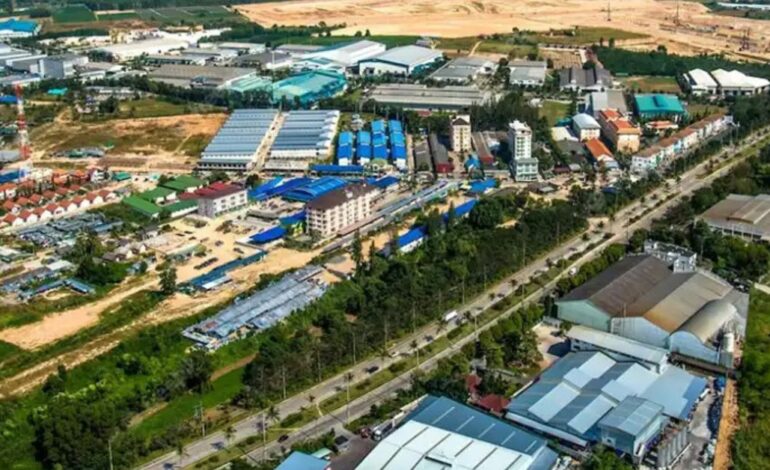
As of December 23, 2025, more than 4,500 industrial parks have been mapped on the India Industrial Land Bank, covering around 7.70 lakh hectares of land, of which nearly 1.35 lakh hectares remain available for industrial development.

New Delhi, December 23: India’s industrial parks are playing an increasingly central role in strengthening the country’s manufacturing base, attracting investment, and advancing sustainable infrastructure, according to a recent analytical note on industrial parks and industrial land availability.
As of December 23, 2025, more than 4,500 industrial parks have been mapped on the India Industrial Land Bank, covering around 7.70 lakh hectares of land, of which nearly 1.35 lakh hectares remain available for industrial development. The parks collectively comprise over 6.45 lakh industrial plots, with more than 1.25 lakh plots currently vacant, offering significant opportunities for new investments in manufacturing, logistics, and allied sectors.
The report highlights that industrial parks have emerged as a critical policy instrument for accelerating India’s industry and innovation agenda. Developed through partnerships between state governments and the private sector, these parks provide planned industrial land supported by shared infrastructure, regulatory facilitation, and dedicated management, enabling industries to scale efficiently while balancing economic growth with environmental and social responsibility.
A growing emphasis is being placed on plug-and-play industrial parks, which offer ready-to-use infrastructure tailored to industry needs. In the Union Budget 2025–26, the government allocated ₹2,500 crore for the development of such parks. Currently, 306 plug-and-play industrial parks are operational across the country, while 20 additional parks and smart cities are being developed under the National Industrial Corridor Development Corporation, with projects at various stages of completion and construction.
The India Industrial Land Bank, developed by the Department for Promotion of Industry and Internal Trade, has become a key enabler for investors by providing a GIS-enabled, centralised platform with real-time spatial and non-spatial data on industrial land. States such as Maharashtra, Gujarat, Tamil Nadu, Rajasthan, and Telangana account for a significant share of industrial parks and available land, positioning them as major hubs for future industrial expansion.
The report also underscores the importance of quality benchmarking through the Industrial Park Rating System. Under the IPRS 2.0 framework, 41 industrial parks have been classified as ‘Leaders’, 90 as ‘Challengers’, and 185 as ‘Aspirers’, offering transparent insights to investors and encouraging competition among states. In September 2025, the launch of IPRS 3.0 introduced new assessment parameters such as sustainability, green infrastructure, logistics connectivity, digitalisation, skill linkages, and tenant feedback, further aligning industrial parks with global best practices.
Industrial parks are also closely linked to India’s broader ease of doing business reforms, including the national business reforms action plan, GST implementation, startup India, and compliance reduction measures. Together, these reforms have improved investor confidence and helped industrial parks act as engines of foreign direct investment and regional development.
With India ranking among the world’s top destinations for greenfield and project finance investments, industrial parks are expected to play an even larger role in integrating domestic industries into global value chains. The report concludes that sustained investment in plug-and-play infrastructure, digital land access systems, and sustainability-focused governance will be critical to ensuring industrial parks remain globally competitive and continue to drive inclusive industrial growth.