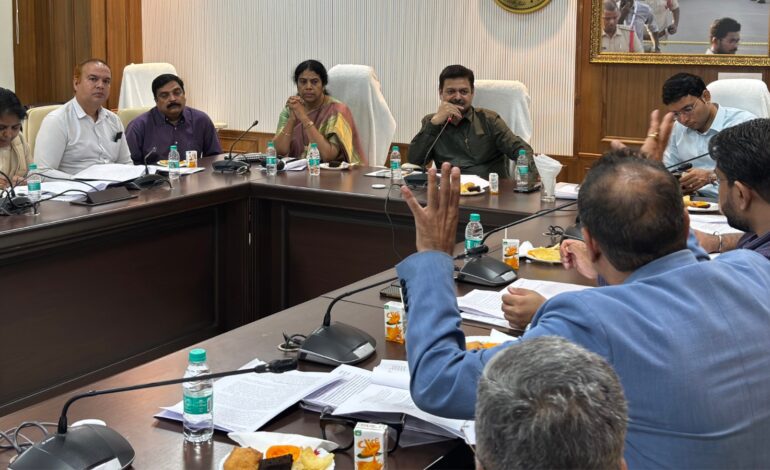
India’s Nuclear Waste Management Strategy to Continue with Closed Fuel Cycle Approach, Government Tells Parliament
New Delhi: The Centre on Thursday said that management of nuclear waste arising from India’s planned expansion of nuclear power capacity to 100 GW by 2047 will continue to follow
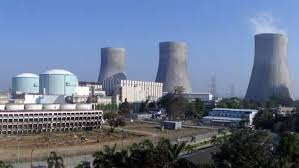
In a written reply to a question in the Rajya Sabha, Union Minister of State for Science and Technology Dr Jitendra Singh said the waste management philosophy adopted by the Department of Atomic Energy ensures that no radioactive waste, in any physical form, is released or disposed of into the environment unless it is cleared, exempted, or excluded from regulatory control.

New Delhi: The Centre on Thursday said that management of nuclear waste arising from India’s planned expansion of nuclear power capacity to 100 GW by 2047 will continue to follow established waste management practices currently in use.
In a written reply to a question in the Rajya Sabha, Union Minister of State for Science and Technology Dr Jitendra Singh said the waste management philosophy adopted by the Department of Atomic Energy ensures that no radioactive waste, in any physical form, is released or disposed of into the environment unless it is cleared, exempted, or excluded from regulatory control.
Closed nuclear fuel cycle
India follows a nearly closed nuclear fuel cycle, under which spent nuclear fuel from domestic reactors is reprocessed to recover usable fissile material for recycling and reuse. This approach significantly reduces the overall burden of radioactive waste.
The fissile material recovered during reprocessing is recycled as fuel for future reactors. The remaining high-level radioactive waste—constituting a very small fraction of the original spent fuel—is immobilised in a stable glass matrix through vitrification and stored in Solid Storage Surveillance Facilities for interim storage.
Alignment with global standards
The government said India’s nuclear waste management practices, covering interim storage, treatment, and disposal, are aligned with international norms and follow guidelines issued by the International Atomic Energy Agency.
With the planned expansion of nuclear capacity, the government said waste management infrastructure will be scaled up as required. Depending on site-specific conditions, capacities of existing facilities will be enhanced or new facilities will be constructed to ensure public and environmental safety.
The reply also noted that the existing Near Surface Disposal Facilities at nuclear power plant sites have adequate capacity to safely manage the waste currently being generated.
Reducing long-term waste burden
The government said research and development is underway on advanced partitioning technologies to further manage high-level radioactive waste. These technologies aim to separate long-lived radioactive constituents, including actinides, and extract useful radioisotopes for societal applications.
Such processes are expected to significantly reduce waste volumes before vitrification, and as a result, the establishment of a deep geological repository is not anticipated in the near future.
India is also pursuing research on technologies to neutralise long-lived actinides by converting them into inactive or short-lived radioactive waste using high-energy accelerators and fast reactors. These programmes form part of the DAE’s Amritkal targets and are expected to further reduce long-term disposal requirements.
Small modular reactors
The government said slightly enriched uranium is being considered as a potential fuel for small modular reactors. The broader waste management philosophy for domestic fuel used in such reactors will remain unchanged, focusing on recycling, recovery of useful radioisotopes, waste volume reduction, vitrification, and interim storage in Solid Storage Surveillance Facilities.