CAQM Reviews State Preparedness to Eliminate Stubble Burning Ahead of 2026 Paddy Season
Commission stresses stronger enforcement, crop residue management and coordinated action across Punjab, Haryana and Uttar Pradesh
Following the review, CAQM directed Punjab, Haryana and Uttar Pradesh to submit revised and comprehensive action plans by May 11.

New Delhi: Commission for Air Quality Management (CAQM) has directed Punjab, Haryana and Uttar Pradesh to intensify preparedness measures for eliminating paddy stubble burning during the 2026 harvesting season, emphasising stronger enforcement, coordinated action and improved crop residue management systems.
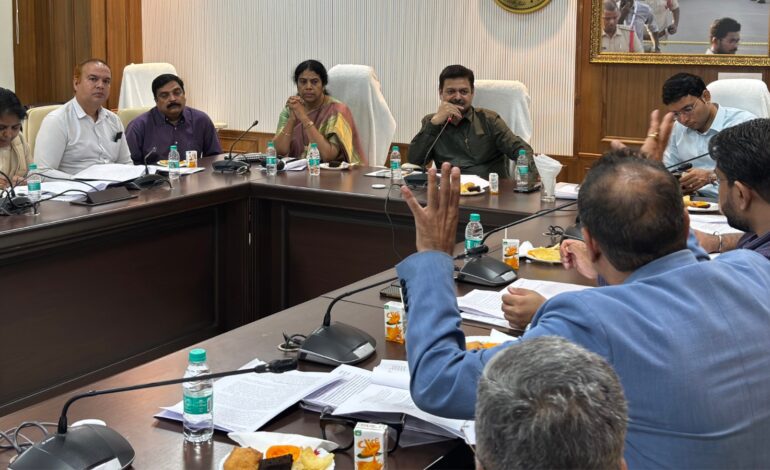
The review meeting, chaired by commissioner Rajesh Verma, was held on May 6 and attended by senior officials from the three states, including deputy commissioners, district magistrates from hotspot districts and representatives of state pollution control boards.
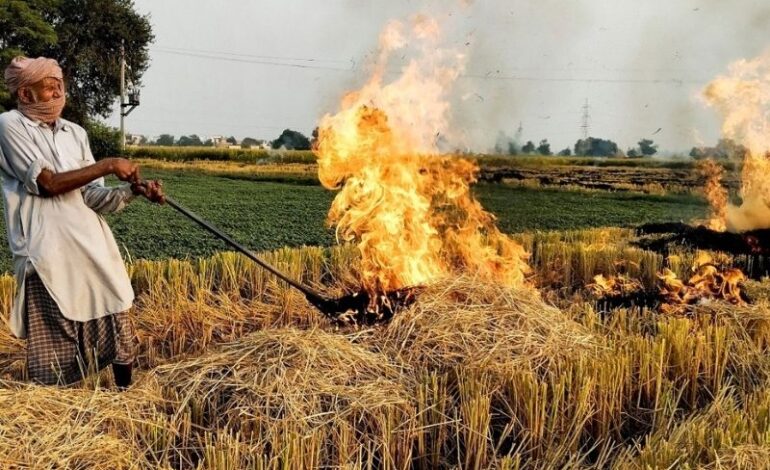
The Commission underlined that stubble burning is not merely a seasonal issue but a major air pollution challenge affecting ambient air quality across the National Capital Region and adjoining areas throughout the year.
CAQM stressed the need for systematic planning before the upcoming paddy harvesting season, with focus on both in-situ and ex-situ crop residue management mechanisms, field-level enforcement and awareness campaigns.
State governments presented their action plans for 2026, outlining strategies for crop residue management, utilisation of paddy straw and compliance with Direction No. 92 related to co-firing of paddy straw-based biomass pellets and briquettes in brick kilns.
Discussions also covered operational preparedness, including availability of Crop Residue Management (CRM) machines, promotion of zero stubble burning villages through incentives, Information, Education and Communication (IEC) campaigns and enforcement measures.
The Commission additionally reviewed implementation of Direction No. 96 concerning wheat stubble management.
According to CAQM data, Punjab recorded 3,729 fire incidents between April 1 and May 6, 2026, while Haryana reported 2,683 incidents and Uttar Pradesh’s NCR districts recorded 176 incidents during the same period.
District-level strategies were presented by officials from hotspot districts including Sangrur, Firozpur and Bathinda in Punjab; Jind, Jhajjar and Sonipat in Haryana; and Gautam Buddha Nagar and Meerut in Uttar Pradesh.
Following the review, CAQM directed Punjab, Haryana and Uttar Pradesh to submit revised and comprehensive action plans by May 11, 2026. States were also asked to provide detailed reports on functional CRM machines within two months.
Punjab and Haryana have been instructed to submit district-wise reports on co-firing activities in brick kilns for the period between November 1, 2025 and April 30, 2026, along with monthly progress updates thereafter.
The Commission further called for stronger preventive mechanisms to avoid accidental fires, intensified awareness campaigns and better compliance monitoring systems. Punjab was specifically advised to develop a dedicated portal for monitoring implementation of Direction No. 92, similar to Haryana’s existing digital monitoring system.
Officials from the participating states assured the Commission that coordinated efforts would be undertaken to effectively implement the action plans and eliminate stubble burning during the forthcoming harvesting season.