India’s FTAs move from signing agreements to delivering export gains
India is shifting its focus from expanding free trade agreements to using them more effectively, with UAE and Australia showing early export gains and wider market access for Indian goods
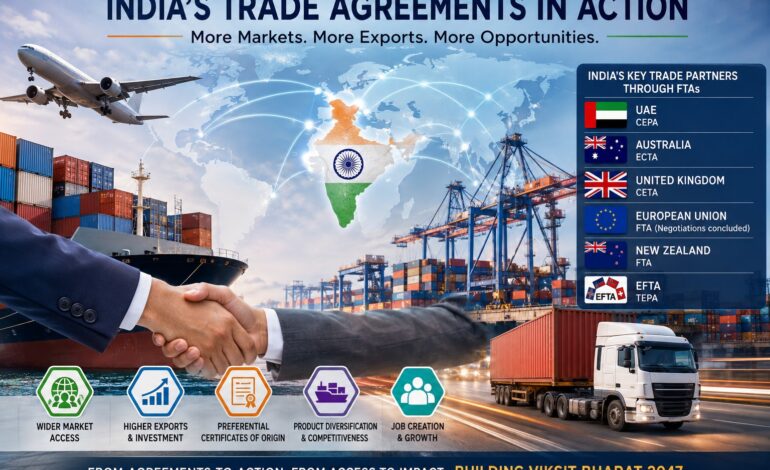
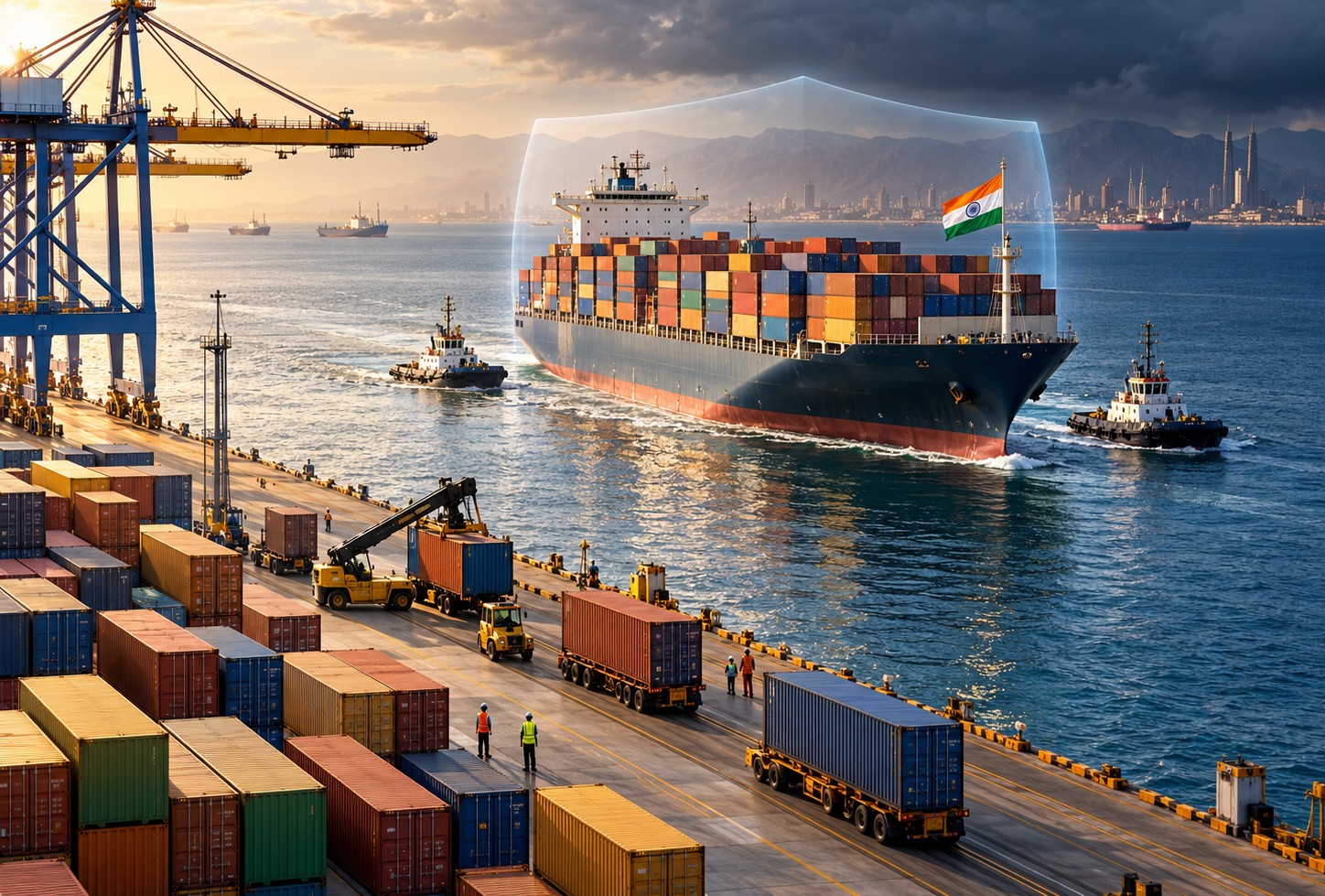
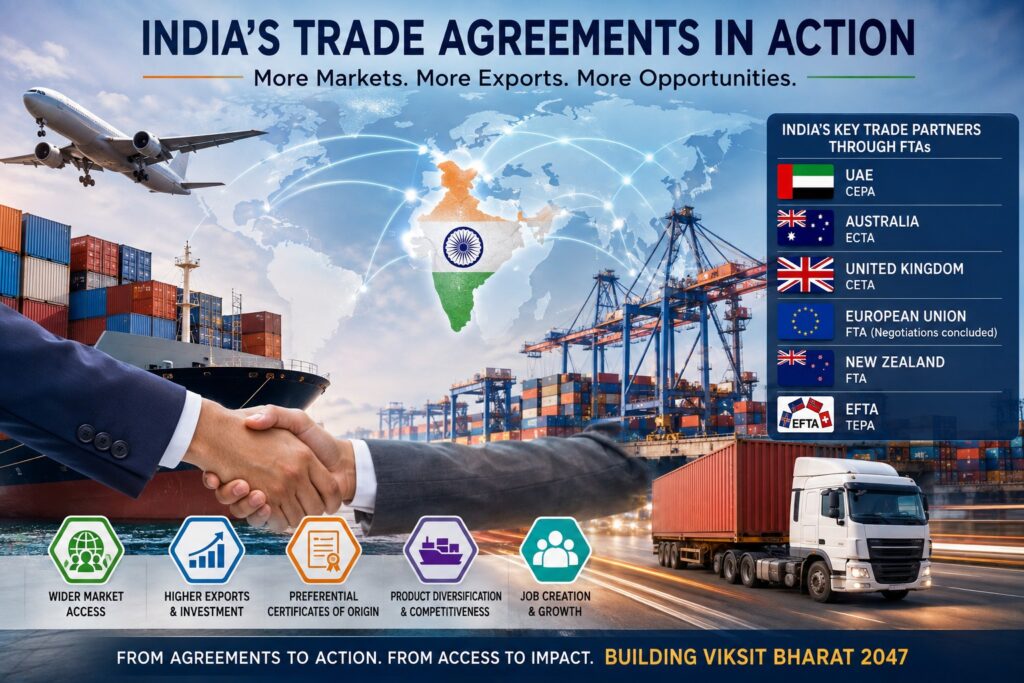
India has expanded its network of trade agreements over the past decade, covering markets including Mauritius, the UAE, Australia, the European Free Trade Association (EFTA), the UK, Oman, the European Union and New Zealand.

NEW DELHI: India is moving into a new phase of its free trade agreement (FTA) strategy, with the focus shifting from signing new agreements to making greater use of preferential market access to expand exports, according to a government statement released on Tuesday.
The government said recent export trends point to the growing commercial importance of FTA partner markets, with early export gains, increased use of preferential Certificates of Origin (CoOs) and a wider range of products reaching these markets.
India has expanded its network of trade agreements over the past decade, covering markets including Mauritius, the UAE, Australia, the European Free Trade Association (EFTA), the UK, Oman, the European Union and New Zealand. The government statement says the emphasis is now on translating market access into wider participation in exports, investment and employment while safeguarding domestic priorities.
India’s combined merchandise and services exports reached a record US$863.1 billion in FY 2025-26, including merchandise exports of US$441.8 billion. During April-June 2026, combined exports were estimated at US$232.73 billion, an increase of 11.37% over the corresponding period of the previous year.
Among individual FTA partner countries, the UAE was the largest destination for India’s merchandise exports in FY 2025-26, with exports valued at US$37.36 billion. The UK accounted for US$13.44 billion, while Singapore, Nepal and Australia recorded exports of US$11.86 billion, US$7.45 billion and US$7.28 billion, respectively.
The India-UAE Comprehensive Economic Partnership Agreement (CEPA), which came into force in May 2022, is cited as an early example of the impact of an FTA. India’s merchandise exports to the UAE reached US$37.36 billion in FY 2025-26, while bilateral trade crossed US$100 billion in FY 2024-25.
India and the UAE have subsequently set a target of doubling bilateral trade to US$200 billion by 2032.
The India-Australia Economic Cooperation and Trade Agreement (ECTA), which entered into force in December 2022, has also been highlighted for its export gains. India’s exports to Australia increased from US$4 billion in FY 2020-21 to US$7.28 billion in FY 2025-26, representing growth of more than 80%.
Australia has provided immediate zero-duty access across 98.3% of its tariff lines, with all Indian exports becoming eligible for zero-duty access from 2026 onwards, according to the backgrounder.
A key indicator of the growing utilisation of FTAs is the increased issuance of preferential Certificates of Origin. The India-UAE CEPA has generated 4.45 lakh preferential CoOs, while India-Australia ECTA has generated 2.73 lakh. The India-EFTA TEPA has generated 7,885 CoOs, India-Mauritius CECPA 1,956 and India-Oman CEPA 783.
The government has also introduced measures aimed at making it easier for exporters, particularly smaller businesses, to access FTA benefits. The e-CoO 2.0 system enables end-to-end digital issuance of preferential and non-preferential Certificates of Origin, with Aadhaar-based electronic signatures and QR-code verification.
The Trade Connect platform complements these measures by providing exporters with trade information, tariff schedules and guidance on using FTA benefits.
The expanding agreements are also opening access for a wider range of Indian products. Export opportunities have grown across labour-intensive sectors including textiles, agriculture and processed food, leather and footwear, marine products, gems and jewellery, carpets and handicrafts.
The agreements are also creating opportunities for Indian services and professionals. Services exports stood at US$421.3 billion in FY 2025-26, while the sector accounts for nearly 30% of India’s employment.
The India-New Zealand FTA, for instance, provides a pathway for up to 5,000 skilled Indians to stay for up to three years in fields including IT, engineering, healthcare, education, construction, AYUSH, yoga, culinary arts and music. The India-EU FTA covers 144 services sub-sectors, while other agreements provide market access across a range of professional and business services.
The government said India’s FTA strategy is entering a deeper phase of implementation. Around 10 trade agreements are under discussion, including negotiations with the Eurasian Economic Union, Peru, Chile, Israel, Canada and the Maldives, while existing agreements such as those with Korea and Sri Lanka are being upgraded.
The emerging strategy therefore places greater emphasis on converting negotiated market access into actual export participation, enabling Indian businesses to reach more markets while supporting the broader objective of strengthening India’s position in global trade.