Shivraj Chouhan calls for water-based crop planning, timely procurement for Rabi 2026
The Centre has asked states to align Rabi crop plans with water availability, expand pulses and oilseeds, ensure timely seed and fertiliser supply and strengthen procurement and weekly crop monitoring.
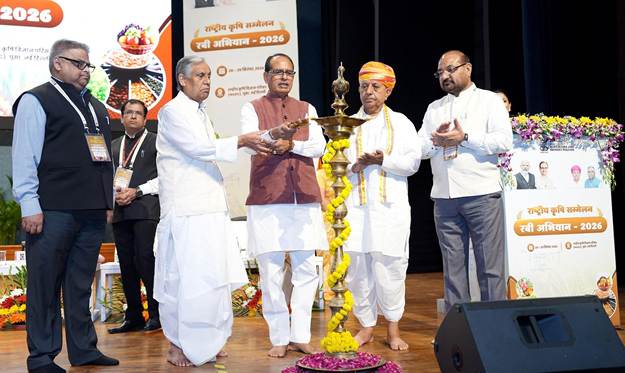
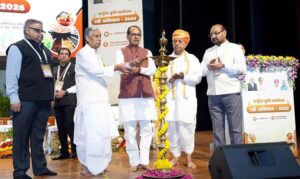
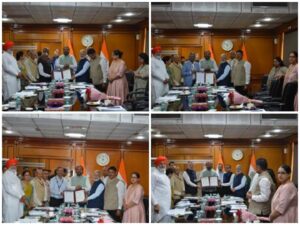
Addressing the two-day National Agriculture Conference – Rabi Campaign 2026 in New Delhi on Monday, Chouhan said climate change, erratic rainfall and water constraints require greater use of data-driven planning, scientific assessment and coordination between the Centre and states to safeguard food security and improve farm incomes.

NEW DELHI: Union Agriculture and Farmers’ Welfare Minister Shivraj Singh Chouhan has asked states to prepare their Rabi 2026 crop plans on the basis of water availability, soil moisture and local agro-climatic conditions, while ensuring timely supply of seeds and fertilisers and putting procurement arrangements in place before production begins.
Addressing the two-day National Agriculture Conference – Rabi Campaign 2026 in New Delhi on Monday, Chouhan said climate change, erratic rainfall and water constraints require greater use of data-driven planning, scientific assessment and coordination between the Centre and states to safeguard food security and improve farm incomes.
Water availability should be one of the key parameters for deciding the cropping pattern, he said. States and districts with limited irrigation water should prioritise less water-intensive crops such as pulses and oilseeds, while areas with assured irrigation can plan other crops accordingly.
He also called for advance assessment of soil moisture and irrigation requirements in vulnerable and rainfed areas, warning that sowing water-intensive crops without adequate water availability could result in crop losses.
Chouhan expressed concern over drought conditions in Maharashtra and Karnataka and said Central teams would undertake ground assessments. A team is scheduled to visit Karnataka on October 3, while another will be sent to Maharashtra.
He said Maharashtra, Karnataka, Telangana and Andhra Pradesh would require crop plans tailored to water availability and soil moisture, with separate strategies for rainfed and irrigated areas.
Pulses and oilseeds in focus
The minister asked states to expand cultivation of pulses and oilseeds, particularly on land that remains fallow after the paddy harvest. He said states should finalise their Rabi plans indicating the area proposed under pulses and crops such as chana, masoor and mustard.
The strategy is intended to support India’s efforts to reduce dependence on imports of pulses and edible oils. Chouhan, however, stressed that increasing production would have to be accompanied by reliable market and procurement arrangements so that farmers have confidence about selling their produce.
He said Central agencies NAFED and NCCF could procure directly from farmers where state governments are unable to undertake procurement on time. The Centre has approved procurement proposals for pulses and oilseeds under the Price Support Scheme, but states would need to facilitate mandi and other operational requirements.
States were asked to prepare an integrated roadmap covering seed availability, distribution, production and procurement rather than treating these as separate stages.
Timely seeds, fertilisers and scientific monitoring
Calling quality seed a critical component of Rabi preparedness, Chouhan asked states to identify suitable crop varieties for different regions and place their requirements sufficiently early to avoid seed reaching farmers after the sowing window.
He also called for balanced fertiliser use, arguing that excessive application increases cultivation costs and can affect soil health. States were asked to extend the Khet Bachao Abhiyan, introduced during the Kharif season, to Rabi.
The Centre currently spends around ₹2 lakh crore on fertiliser subsidies, according to the minister. Farmers receive urea at ₹266 per bag and DAP at ₹1,350 per bag. Pilot initiatives using Farmer ID are also being explored to improve fertiliser distribution and curb diversion and black marketing.
On natural farming, Chouhan asked states to move beyond farmer registration and focus on branding, marketing and certification. He cited initiatives in Andhra Pradesh, Gujarat and Himachal Pradesh where natural farming products have been developed under identifiable brands.
The minister also called for wider Kisan Credit Card coverage, particularly among small and marginal farmers, and faster completion of Farmer ID and AgriStack-related work. Around 9.54 crore farmer families are currently covered under PM-KISAN, according to the government.
States have also been asked to monitor crop conditions, sowing, germination, pest and disease incidence and market prices every week. Chouhan said real-time information could help authorities identify emerging problems and intervene before they become more serious.
ICAR Director General Dr Mangi Lal Jat said self-reliance, crop diversification, climate-resilient agriculture, digital agriculture and risk mitigation would be among the priorities for the Rabi campaign. He also said large-scale demonstrations of green ammonia are planned across 10,000 acres in 37 districts of six states during the coming season.
The conference will conclude with discussions involving state agriculture ministers on weather outlook, fertiliser availability, the Digital Agriculture Mission, Farmer Registry, pulses and edible oil missions, marketing reforms and other aspects of Rabi preparedness.