CTIL Hosts Panel on WTO Ruling on Transnational Subsidies; Experts Examine Legal Implications
A key takeaway from the panel was the WTO’s clarification that the definition of “financial contribution” under Article 1.1(a)(1) of the SCM Agreement constitutes a closed list. New Delhi: The
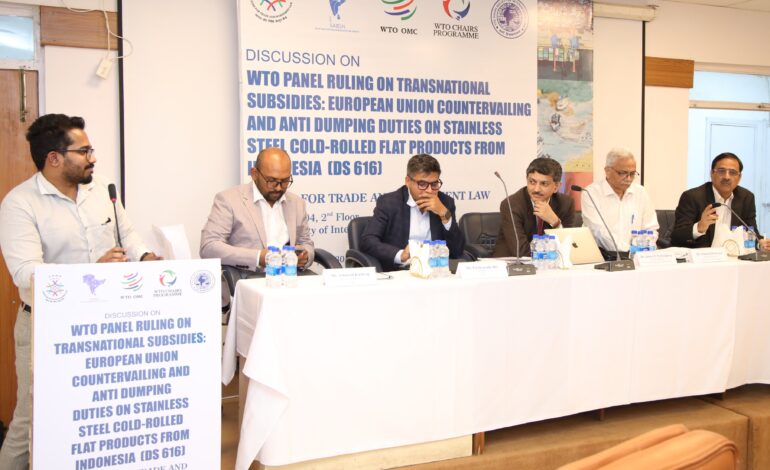
The discussion delved into the legal and policy implications of the ruling, particularly under the Agreement on Subsidies and Countervailing Measures (SCM Agreement).

A key takeaway from the panel was the WTO’s clarification that the definition of “financial contribution” under Article 1.1(a)(1) of the SCM Agreement constitutes a closed list.
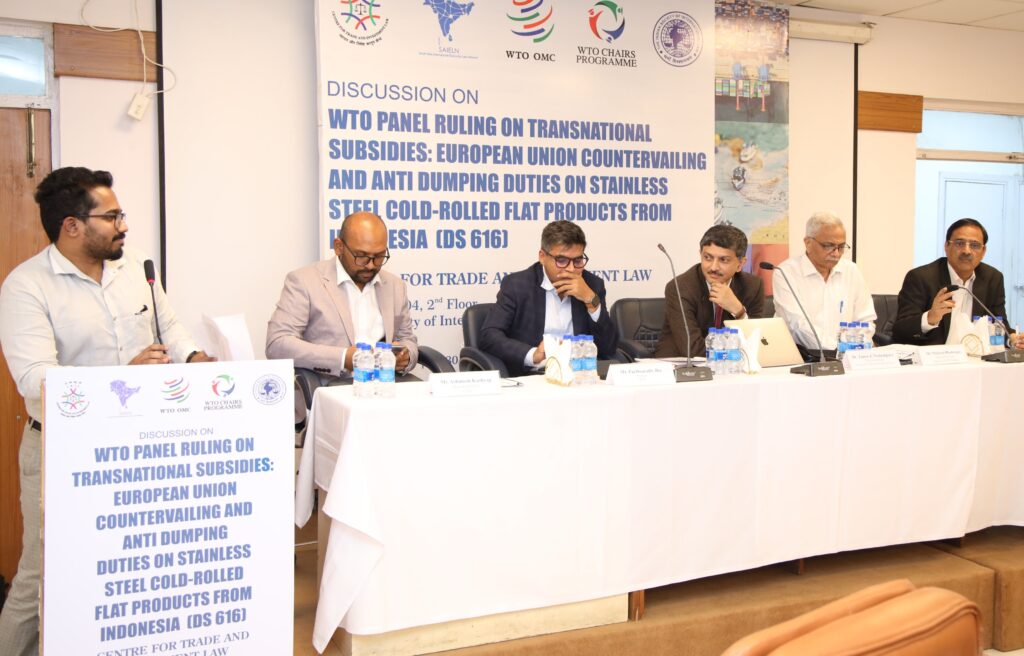
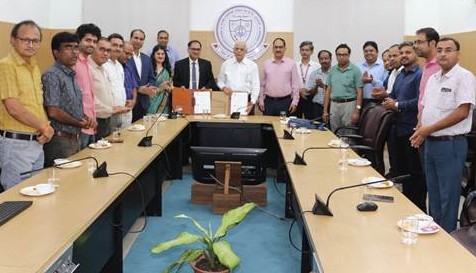
New Delhi: The Centre for Trade and Investment Law (CTIL), under the Indian Institute of Foreign Trade, organised a high-level panel discussion on a recent World Trade Organization ruling concerning transnational subsidies, bringing together leading trade law experts in the capital.
The event, held in collaboration with the South Asian International Economic Law Network and the Indian Society of International Law, focused on the WTO Panel Report in the dispute European Union Countervailing and Anti-Dumping Duties on Stainless Steel Cold-Rolled Flat Products from Indonesia (DS 616).
The discussion delved into the legal and policy implications of the ruling, particularly under the Agreement on Subsidies and Countervailing Measures (SCM Agreement). Experts examined how the European Union attributed financial contributions from foreign entities, including state-linked actors, to the Government of Indonesia and treated them as countervailable subsidies.
A key takeaway from the panel was the WTO’s clarification that the definition of “financial contribution” under Article 1.1(a)(1) of the SCM Agreement constitutes a closed list. This interpretation excludes government-to-government inducement from being classified as a subsidy under the existing framework.
The panel also explored the concept of a “public body,” stressing the need for a substantive evaluation of an entity’s characteristics and its relationship with the government, rather than relying on formal ownership structures.
Opening remarks were delivered by Manoj Kumar Sinha, who highlighted the growing complexity of international trade regulation amid expanding cross-border economic cooperation and evolving industrial strategies.
The session was chaired by James J. Nedumpara and featured insights from Sharad Bhansali, Mukesh Bhatnagar, Parthsarathi Jha, and Ashutosh Kashyap.
Concluding remarks were delivered by Utkarsh K. Mishra, followed by an interactive discussion with participants on the implications of the ruling for future global trade disputes.
Experts noted that the ruling could have far-reaching consequences for regulating transnational subsidies, particularly as governments increasingly deploy cross-border industrial support mechanisms, posing new challenges to the existing WTO framework.