Digital Lending Is Growing Fast, but Trust and Transparency Remain Key Gaps: Adrian Fernandes of Paisawaala
Adrian Fernandes explains how Paisawaala is simplifying personal loans, tackling trust deficits, and expanding access across India’s emerging borrower base. Mumbai: In an increasingly digital lending landscape, Paisawaala is positioning

Adrian Fernandes, Head of Business Operations, Paisawaala

Adrian Fernandes explains how Paisawaala is simplifying personal loans, tackling trust deficits, and expanding access across India’s emerging borrower base.
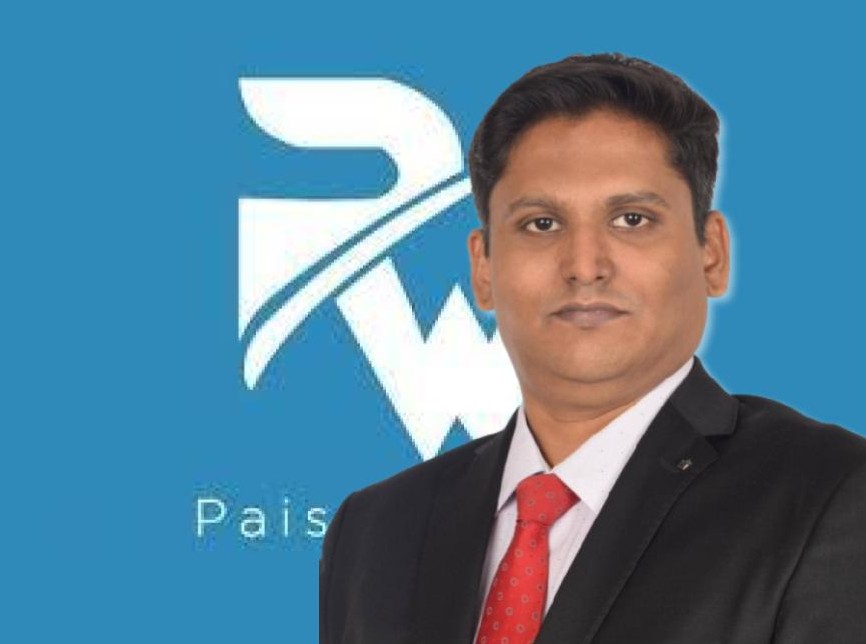
Mumbai: In an increasingly digital lending landscape, Paisawaala is positioning itself as a clarity-first platform that simplifies access to personal loans while addressing persistent challenges like transparency, eligibility uncertainty, and borrower trust. In an interview with Digital India Times, Adrian Fernandes, Head of Business Operations, outlines the company’s vision, market gaps, and growth roadmap in this detailed interaction.
What inspired the creation of Paisawaala, and what gap in the market are you aiming to address?
Paisawaala was born out of a simple observation. Access to credit in India was improving, but the experience around it was still fragmented and confusing. Borrowers often had to navigate multiple websites, fill out repetitive forms, and still remain unsure about whether they would qualify. There was a clear gap between availability of credit and accessibility of the right credit. We built Paisawaala to bridge that gap. The idea was to create a single, intuitive platform where users could discover, compare, and apply for personal loans with clarity and confidence. It’s not just about access; it’s about making that access meaningful and efficient.
What are the biggest challenges borrowers still face when applying for personal loans?
Despite all the progress in digital lending, a few challenges still stand out. The first is lack of transparency. Many borrowers still struggle to clearly understand interest rates, hidden charges, or the true cost of borrowing. The second is uncertainty around eligibility. Users often apply without knowing their chances, leading to multiple rejections, which can impact their credit profile. Another challenge is fragmentation. The process can still feel scattered across different platforms, requiring repeated data entry and effort. And finally, there’s a trust gap, especially among first-time borrowers. People want assurance that they are choosing the right lender and not making a costly mistake.
How does your platform ensure a seamless and user-friendly experience for first-time borrowers?
First-time borrowers need simplicity more than anything else. At Paisawaala, we’ve designed the journey to feel guided rather than transactional. From the moment a user lands on the platform, the experience is structured to be intuitive, with clear steps and minimal friction. We focus on reducing complexity. That means fewer form fields, smart data handling, and showing only relevant loan options based on the user’s profile. We also prioritize clarity in how information is presented, so users understand what they’re applying for. For someone new to credit, the goal is to replace confusion with confidence.
How is digital lending evolving in India, and what key trends are shaping consumer behavior today?
Digital lending in India is moving toward being faster, smarter, and more inclusive. Consumers today expect instant responses. They want to know their eligibility quickly and receive approvals without long waiting periods. This is pushing the entire ecosystem toward automation and real-time decisioning. Another key trend is the rise of mobile-first behavior. A large percentage of users now discover and apply for loans directly through their phones. We’re also seeing a shift toward smaller, more controlled borrowing. Users are becoming more conscious about how much they borrow and how quickly they repay. And importantly, there’s strong growth coming from beyond metro cities. Digital lending is no longer an urban phenomenon, it’s expanding rapidly across the country.
How can fintech platforms contribute to improving financial inclusion in India?
Fintech platforms have a very important role to play in financial inclusion. The biggest contribution is access. By removing physical barriers, fintech platforms make it possible for users in smaller towns to access credit without needing to visit a branch. The second is simplification. Many people are still hesitant to engage with formal financial systems because they seem complex. Fintech platforms can make these processes easier to understand and navigate. Another key area is alternative credit assessment. By going beyond traditional metrics, fintech can help bring more people into the formal credit system, especially those with limited credit history. Ultimately, inclusion is not just about reaching more users, it’s about making financial products usable and relevant for them.
What are your growth plans for Paisawaala over the next 2–3 years?
Our focus over the next few years is on deepening both reach and capability. We want to expand our lender network so users have access to a wider and more relevant set of options. At the same time, we’re investing in technology to make the platform smarter, with better personalization and faster decisioning. Another priority is strengthening our presence in Tier 2 and Tier 3 markets, where we see strong demand and long-term growth potential. Beyond that, we’re looking at building Paisawaala into a more comprehensive financial platform, where users don’t just access loans, but also get guidance to make better financial decisions.
Any final thoughts on the future of financial inclusion in India?
Financial inclusion is not a one-time effort, it’s an ongoing process. Fintech platforms can accelerate this by combining technology with thoughtful product design. That means creating solutions that are not only accessible, but also easy to understand and use. Education will play a big role. As more users come online, there’s an opportunity to help them build awareness around credit, repayments, and financial planning. Collaboration is equally important. Fintechs, lenders, and regulators need to work together to build a system that is both inclusive and responsible. If done right, fintech can bring millions of users into the formal financial ecosystem in a way that is sustainable and empowering.