Caste Gaps Persist Across Indicators: Telangana Survey Flags Deep Structural Inequalities
The findings are likely to intensify debates around sub-categorisation within BCs, targeted welfare delivery, and the need for more granular policy design. Hyderabad: Fresh insights from the Socio, Economic, Educational,
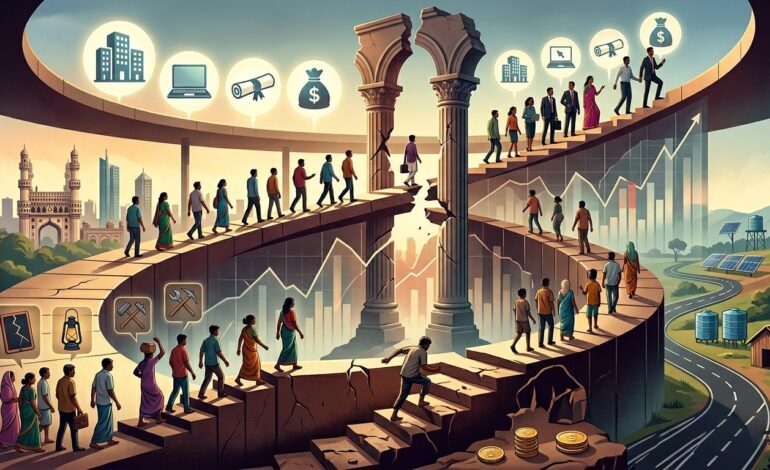
The survey, one of the most comprehensive caste-based datasets released by the state, shows that historically marginalised communities - particularly Scheduled Castes (SCs), Scheduled Tribes (STs), and several Backward Class (BC) segments - continue to lag behind in key development indicators, even as the state has made strides in welfare delivery.

The findings are likely to intensify debates around sub-categorisation within BCs, targeted welfare delivery, and the need for more granular policy design.
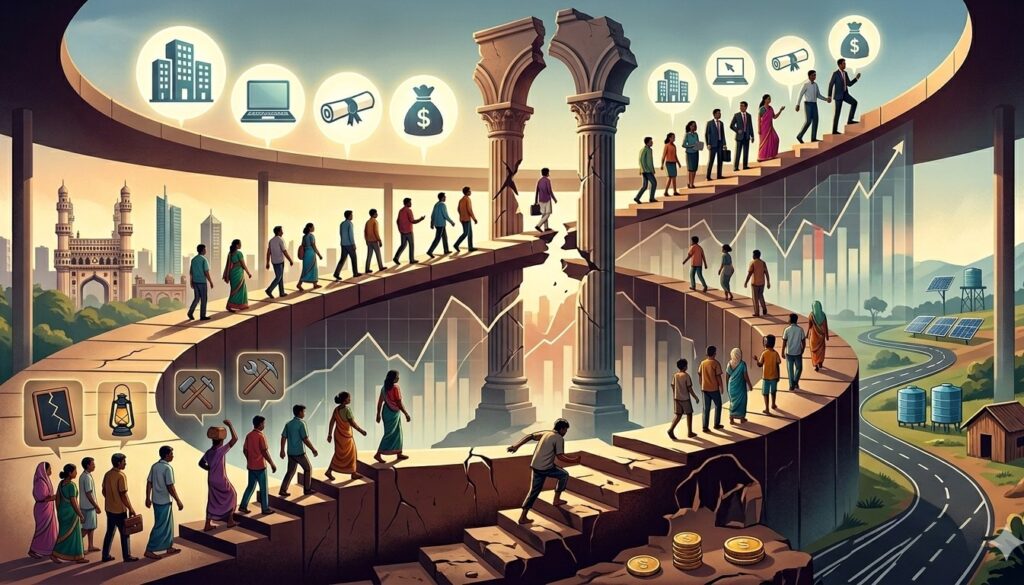
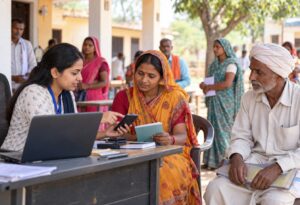
Hyderabad: Fresh insights from the Socio, Economic, Educational, Employment, Political and Caste (SEEEPC) Survey reveal sharp disparities in backwardness indicators across caste groups in Telangana, underlining the continuing link between social identity and access to economic and educational opportunities.
The survey, one of the most comprehensive caste-based datasets released by the state, shows that historically marginalised communities – particularly Scheduled Castes (SCs), Scheduled Tribes (STs), and several Backward Class (BC) segments – continue to lag behind in key development indicators, even as the state has made strides in welfare delivery.
At the aggregate level, SCs account for 17.43% of the population and STs for 10.45%, while BCs constitute the largest share at 46.25% (excluding Muslim minorities), highlighting the scale of communities targeted by affirmative action policies.
Within SC communities, the data points to significant internal concentration. A handful of castes dominate both population and socio-economic vulnerability. The Madiga community alone accounts for over 59% of the SC population, followed by Mala groups at around 24%, indicating that deprivation is not evenly distributed even within constitutionally recognised categories.
Similarly, among STs, a high degree of concentration is evident. Sugalis/Lambadis form nearly 65% of the ST population, followed by Gond communities at around 10%. These dominant tribal groups are likely to shape aggregate outcomes in education, employment, and income indicators within the ST category.
The BC category, often treated as a broad and heterogeneous grouping, emerges as the most internally stratified. Large communities such as Mudiraj, Yadava (Golla), Munnurukapu, Goud, and Padmasali account for significant population shares, while dozens of smaller castes register marginal presence. This uneven distribution suggests that benefits within BC reservations may not be uniformly accessed across sub-groups.
Experts point out that such concentration patterns have direct implications for backwardness indicators. Larger communities tend to have relatively better political representation and access to state resources, while smaller or more fragmented castes remain underrepresented and vulnerable.
The survey also highlights the relative socio-economic positioning of Open Category (OC) groups, which account for about 15.79% of the population. Within this category, dominant agrarian and business communities such as Reddy, Komati, and Kamma show significant population presence, reflecting their historical advantages in land ownership, education, and capital access.
District-level variations further complicate the picture. In tribal-dominated regions such as Adilabad, STs account for over 33% of the population, with Gond and Lambadi communities forming the bulk. In contrast, urban districts like GHMC show higher shares of BC and OC populations, indicating differing development challenges across regions.
While the dataset primarily presents population and distribution patterns, policy analysts argue that these figures must be read alongside indicators such as literacy, employment, landholding, and income to fully assess backwardness. However, the caste-wise population structure itself offers strong clues: communities with high concentration in lower socio-economic strata continue to be clustered within specific caste groups.
The findings are likely to intensify debates around sub-categorisation within BCs, targeted welfare delivery, and the need for more granular policy design. They also reinforce the argument that caste remains a critical determinant of socio-economic outcomes, even in a rapidly urbanising and digitally advancing state.
As Telangana moves towards refining its welfare and reservation frameworks, the SEEEPC survey provides a data-backed foundation for rethinking equity – shifting the focus from broad categories to more precise, caste-level interventions.
State Backward Classes Welfare Minister Ponnam Prabhakar announced that the data of Telangana Socio, Economic, Educational, Employment, Political and Caste (SEEEPC) survey-2024 is posted on the state government’s planning department website. Click the link for complete SEEEPC Survey-2024 https://www.des.telangana.gov.in/