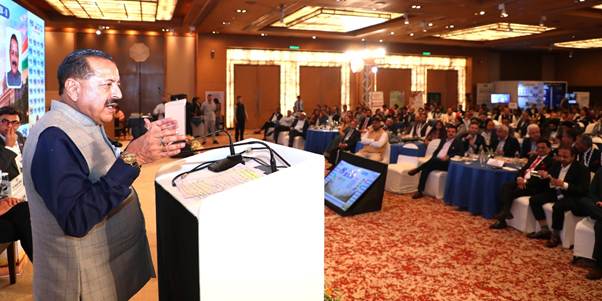
India links land restoration to rural jobs and climate resilience, seeks stronger global finance at UNCCD COP17
India says its restoration drive has already covered 21.76 million hectares and generated 1.22 billion person-days of employment, while calling for predictable international finance to sustain land and drought resilience.
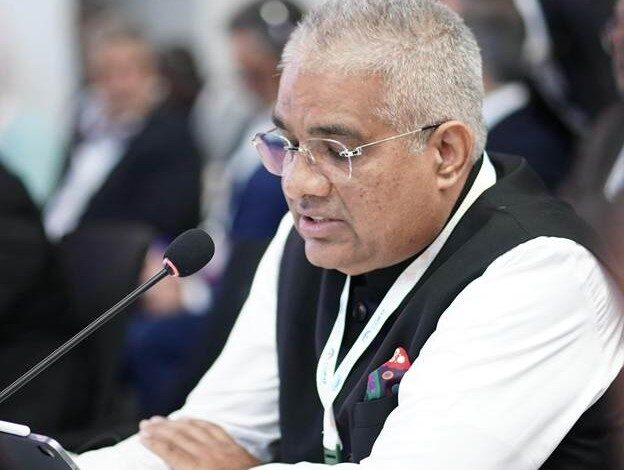
Speaking at an IUCN-organised side event on Monday, Yadav said India had enhanced its Bonn Challenge commitment to restore degraded and deforested land to 26 million hectares by 2030.

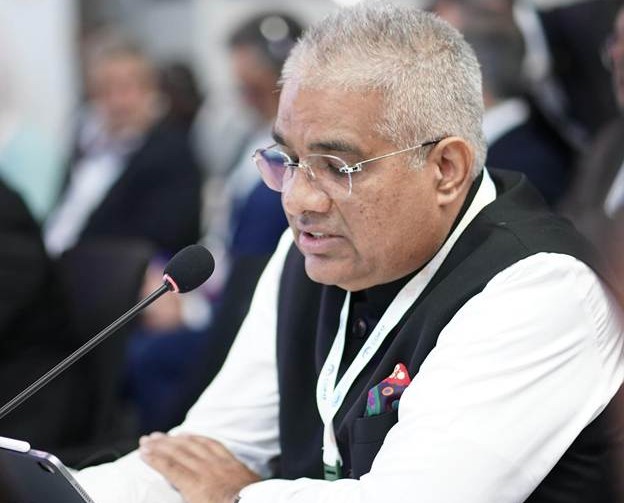
ULAANBAATAR: India has called for stronger and more predictable international financing for land restoration and drought resilience, while highlighting that its restoration efforts between 2011 and 2020 covered 21.76 million hectares and generated approximately 1.22 billion person-days of employment.
Union Environment, Forest and Climate Change Minister Bhupender Yadav made the remarks at the 17th Conference of the Parties (COP17) to the United Nations Convention to Combat Desertification (UNCCD) in Ulaanbaatar, Mongolia, where he outlined India’s approach to land restoration as part of sustainable development, climate action, biodiversity conservation and rural livelihoods.
Speaking at an IUCN-organised side event on Monday, Yadav said India had enhanced its Bonn Challenge commitment to restore degraded and deforested land to 26 million hectares by 2030. He said the country’s Second Progress Report on the Bonn Challenge, covering 2011-2020, showed that 21.76 million hectares had been brought under restoration during the period.
The employment generated through these activities demonstrated that land restoration could deliver both environmental and socio-economic benefits, Yadav said. The assessment covered restoration across forests, agriculture, soil and water conservation and other land-use systems, rather than measuring restored hectares alone.
India is now undertaking the next reporting cycle for 2021-2025 in collaboration with the ICFRE Centre of Excellence on Sustainable Land Management and IUCN. The exercise will track three key indicators — area restored, financial flows and employment generated — while strengthening the country’s evidence base on restoration outcomes.
Yadav said India’s approach was based on the understanding that restoration could not be delivered through a single programme or sector. The country is pursuing a landscape-based approach involving local communities, states and the Union government.
The Green India Mission is being used to strengthen forest and tree cover, ecosystem services and climate resilience, while the Compensatory Afforestation Fund Management and Planning Authority is directing resources towards compensatory afforestation and related restoration activities. The Nagar Van Yojana is extending the restoration agenda to urban and peri-urban areas through urban forestry and green spaces.
These initiatives are complemented by watershed development, agroforestry, soil and water conservation and community-based restoration programmes.
At a separate ministerial dialogue on innovative financial mechanisms for healthy land and drought resilience, Yadav said land restoration should be viewed as an investment in food, water, biodiversity, livelihoods and long-term resilience rather than as a cost.
He called for diversified, adequate, predictable and sustained sources of finance beyond public budgets, along with stronger public-private partnerships to address desertification, land degradation and drought at scale.
Yadav highlighted India’s blended green-finance framework, which supports climate adaptation, sustainable land use, forestry, agriculture, afforestation and biodiversity conservation. Sovereign Green Bonds, he said, provide another avenue for mobilising capital for land restoration, drought resilience and sustainable forestry.
The minister also highlighted the Green Credit Programme, under which public and private entities can finance restoration of degraded forest land. Credits are issued after five years of restoration and after achieving at least 40% canopy density, and can be used once for compensatory afforestation, statutory plantation or corporate social responsibility obligations.
India’s compensatory conservation framework also channels payments linked to forest diversion towards compensatory afforestation and ecosystem restoration, while corporate funding is integrated through environmental regulatory processes.
Yadav said bringing public and private finance together on the same landscapes, alongside citizen participation, represented a whole-of-government and whole-of-society approach to restoration.
At the same time, he stressed that domestic financing mechanisms could not substitute for additional international finance. He called for international support that is continuous, verifiable and connected to local communities, particularly for countries seeking to strengthen resilience against land degradation and drought.
Looking beyond 2030, Yadav said India’s objective would be not only to restore more land but also to improve the quality of restoration, strengthen financing and deliver measurable and lasting outcomes.
He said India would continue sharing its experience, institutional arrangements, safeguards and lessons with international partners, while working towards restoration programmes backed by strong institutions, sustained financing, science-based approaches and robust monitoring.