Beyond Hashtags: Why India’s Democracy Is More Complex Than Viral Narratives
India’s democratic behaviour has historically remained socially layered, regionally diverse and electorally complex — often extending far beyond the emotional cycles of digital discourse.
The distinction between social media influence and democratic mandate remains fundamental within a parliamentary system.

In recent weeks, social media platforms have witnessed the rapid spread of a digital campaign loosely associated with the “Cockroach Janata Party” or CJP narrative. Viral videos, sarcastic political messaging, emotionally charged commentary and calls for political disengagement online have generated significant traction, particularly among sections of urban youth.
However, equating online visibility with the collective sentiment of India’s 1.45 billion people may be politically simplistic and analytically fragile. India’s democratic behaviour has historically remained socially layered, regionally diverse and electorally complex — often extending far beyond the emotional cycles of digital discourse.
One important aspect frequently overlooked in discussions surrounding the campaign is that CJP is not a registered political party. Its founder, Abhijit Dipke, has also not formally positioned it as an electoral organisation seeking recognition from the Election Commission. At present, it functions primarily as a social media-driven platform. Consequently, treating viral engagement, online followers or trending hashtags as direct indicators of electoral strength risks oversimplifying the realities of Indian democracy.
Indian politics has repeatedly demonstrated that digital popularity does not automatically translate into political legitimacy. Several online campaigns and personalities have generated massive engagement over the years, yet failed to establish meaningful electoral relevance. The distinction between social media influence and democratic mandate remains fundamental within a parliamentary system.
Political analysts argue that criticism of governments is both legitimate and necessary in any healthy democracy. Concerns related to unemployment, rising aspirations, examination pressures and economic anxieties deserve serious public discussion. Democracies thrive on dissent. However, there remains an important distinction between democratic criticism and the systematic construction of political despair or institutional distrust.
Some observers believe that sustained attempts to portray the entire political system as illegitimate or permanently dysfunctional risk weakening public confidence in democratic institutions themselves. Democracies function not only through elections, but also through trust in constitutional processes, administrative systems and civic participation.
A recurring pattern visible across many digital narratives is the tendency to aggregate isolated frustrations into sweeping claims of national decline. Every administrative shortcoming, economic challenge or social grievance is often projected as evidence of systemic collapse, while parallel developments in infrastructure, welfare delivery, digital governance, manufacturing and India’s expanding international profile receive comparatively limited attention.
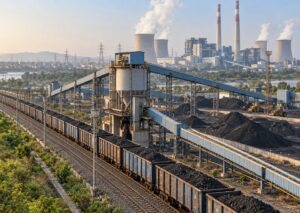
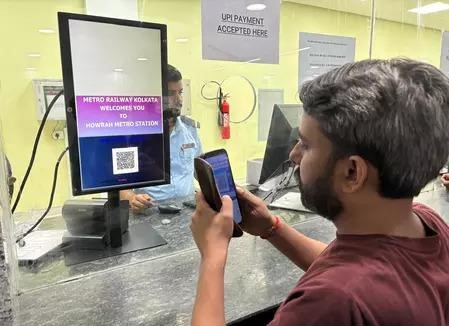
At the same time, India is undergoing one of the most significant state-led infrastructure and digital transitions in its post-independence history. Over the past decade, the Narendra Modi-led government has expanded investments in highways, railways, airports, digital payments, rural housing, drinking water access, financial inclusion and direct welfare delivery systems.
Programmes such as Pradhan Mantri Awas Yojana, Jal Jeevan Mission, Ayushman Bharat, PM-Kisan, Mudra Yojana, Ujjwala, Digital India, Startup India and Skill India have substantially reshaped governance delivery mechanisms across multiple sectors. Public investments in logistics, rail modernisation, renewable energy, semiconductor manufacturing and digital infrastructure have also increased significantly.
Despite global disruptions including the COVID-19 pandemic, geopolitical conflicts and economic uncertainty, India continues to remain among the world’s fastest-growing major economies. International investors, strategic analysts and global institutions increasingly view India as a major long-term economic and geopolitical actor. India’s leadership during the G20 process and its growing engagement with Global South nations have further strengthened that perception.
Against this backdrop, the claim that India’s youth have collectively turned against the political system becomes difficult to establish conclusively. Electoral outcomes across multiple states continue to present a far more nuanced and regionally varied political reality.
The National Democratic Alliance has now secured power at the Union level for three consecutive terms — a relatively rare development in India’s electoral history. In states such as Uttar Pradesh, Madhya Pradesh, Gujarat, Assam, Haryana, Uttarakhand, Goa and Tripura, the BJP and NDA continue to retain substantial organisational strength and voter support.
Political observers note that repeated electoral success across multiple election cycles generally reflects deeper organisational networks, welfare delivery mechanisms, ideological penetration, leadership credibility and long-term voter alignment rather than temporary social media sentiment alone.
West Bengal offers another important political example. For decades, the BJP had only a limited presence in the state. Over the last decade, however, it emerged as the principal opposition force, significantly expanding its electoral footprint and organisational network. Analysts describe this as one of the more notable political realignments in contemporary Indian politics, shaped through long-term mobilisation and cadre expansion rather than digital visibility alone.
Even in states historically considered difficult terrain for the BJP, including Kerala, gradual expansion through local bodies and municipal-level representation suggests evolving political patterns that cannot be explained purely through online narratives.
Perhaps the strongest counterpoint to exaggerated digital conclusions lies in the character of Indian elections themselves. Across several assembly elections, candidates from modest social and economic backgrounds continue to secure public support despite limited social media visibility. Many elected representatives maintain direct grassroots relationships that often matter more electorally than online popularity.
This underlines a broader reality of Indian democracy: voters typically evaluate a combination of welfare delivery, local leadership, governance outcomes, economic opportunity, social trust and perceptions of stability while making electoral choices.
India’s long civilisational continuity also provides historical perspective. The country has navigated invasions, colonial rule, economic crises and political upheavals over centuries while retaining remarkable institutional and social resilience. Many analysts therefore caution against assuming that a few weeks of viral political satire or online mobilisation can fundamentally destabilise a large and deeply rooted democratic system.
Democratic criticism will and should continue. Governments must remain accountable. Yet democracies also require civic responsibility, institutional balance and public trust to function effectively. Persistent political cynicism and blanket institutional delegitimisation can weaken democratic culture over time.
Social media outrage may dominate headlines temporarily. However, governance outcomes, economic performance, public welfare delivery and lived citizen experiences continue to shape long-term political realities. India’s democratic trajectory suggests that while online anger may appear loud and immediate, electoral behaviour on the ground remains considerably more complex, layered and rooted in lived realities.