From Queues to QR Codes: India Emerges as Global Leader in Digital Payments
UPI-driven ecosystem powers financial inclusion, real-time transactions and global fintech leadership New Delhi: India’s digital payments landscape has undergone a transformative shift, evolving from cash-dependent systems to a globally recognised,
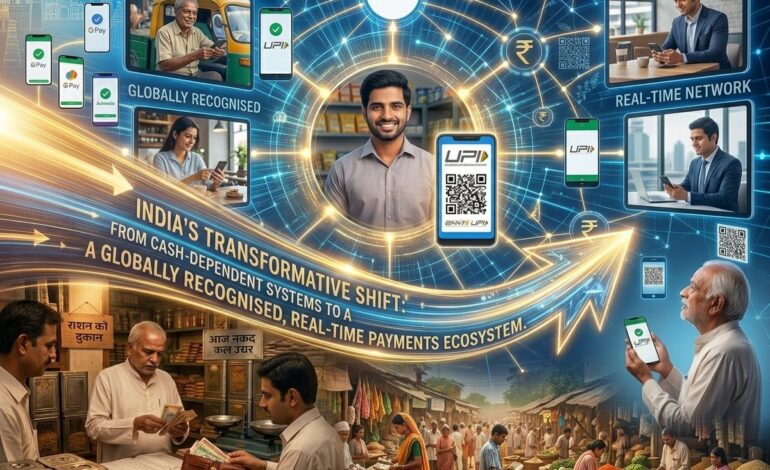
The launch of UPI in 2016 marked a turning point, simplifying transactions through mobile-based interfaces without requiring detailed banking information.

UPI-driven ecosystem powers financial inclusion, real-time transactions and global fintech leadership
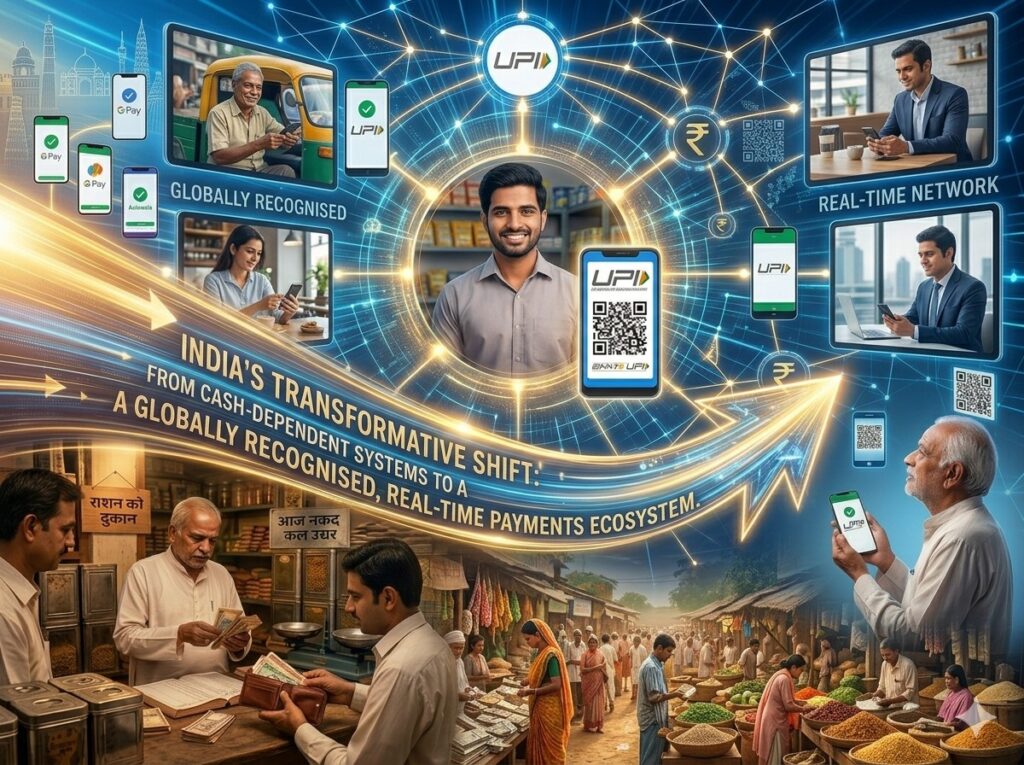
New Delhi: India’s digital payments landscape has undergone a transformative shift, evolving from cash-dependent systems to a globally recognised, real-time payments ecosystem powered by QR codes and the Unified Payments Interface (UPI).
A background note issued by the Union government on Saturday highlights how everyday transactions, once marked by long queues and delays, have become instant, seamless and accessible, reflecting a broader transformation in financial inclusion and economic participation.
The foundation of this transformation lies in the JAM trinity – Jan Dhan accounts, Aadhaar and mobile connectivity – which enabled millions to enter the formal financial system and paved the way for large-scale adoption of digital platforms.
The launch of UPI in 2016 marked a turning point, simplifying transactions through mobile-based interfaces without requiring detailed banking information. Its interoperability across banks and applications has driven rapid expansion, with participating banks growing from 216 in 2021 to 691 by January 2026.
According to the data highlighted in the infographic on page 3, UPI processed 21.70 billion transactions worth ₹28.33 lakh crore in January 2026 alone, accounting for 81 percent of India’s retail digital payments and nearly 49 percent of global real-time transactions.
Beyond convenience, UPI has significantly expanded financial access, enabling small merchants, informal workers and rural populations to participate in the formal economy. From street vendors accepting QR payments to instant transfers across states, the system has reduced dependence on cash and bridged urban-rural divides.
The ecosystem continues to evolve with innovations such as UPI Lite for small-value payments, AutoPay for recurring transactions and credit integration, further deepening financial inclusion and access to formal credit systems.
Security measures have also been strengthened, with the Reserve Bank of India mandating enhanced two-factor authentication for digital transactions from April 2026, reinforcing trust and reducing fraud risks.
India’s digital payments model has gained global recognition, with institutions such as the International Monetary Fund and World Bank acknowledging its scale and efficiency. UPI has expanded internationally, linking payment systems across countries including the UAE, Singapore, France and Nepal, supporting cross-border transactions and remittances.
The transformation underscores India’s emergence as a global benchmark in fintech innovation, where digital payments are not just a convenience but a key driver of inclusive growth and economic progress.