Explained: What the Jan Vishwas Bill 2026 Means for Citizens, Businesses, Governance
Decriminalising minor lapses, the Jan Vishwas Bill marks a decisive shift from punishment to trust-based governance New Delhi: The Jan Vishwas (Amendment of Provisions) Bill, 2026 has been passed by

The legislation represents a major shift in India’s regulatory philosophy, aiming to reduce criminalisation of minor offences and replace punitive legal provisions with a more balanced, trust-based framework.

Decriminalising minor lapses, the Jan Vishwas Bill marks a decisive shift from punishment to trust-based governance
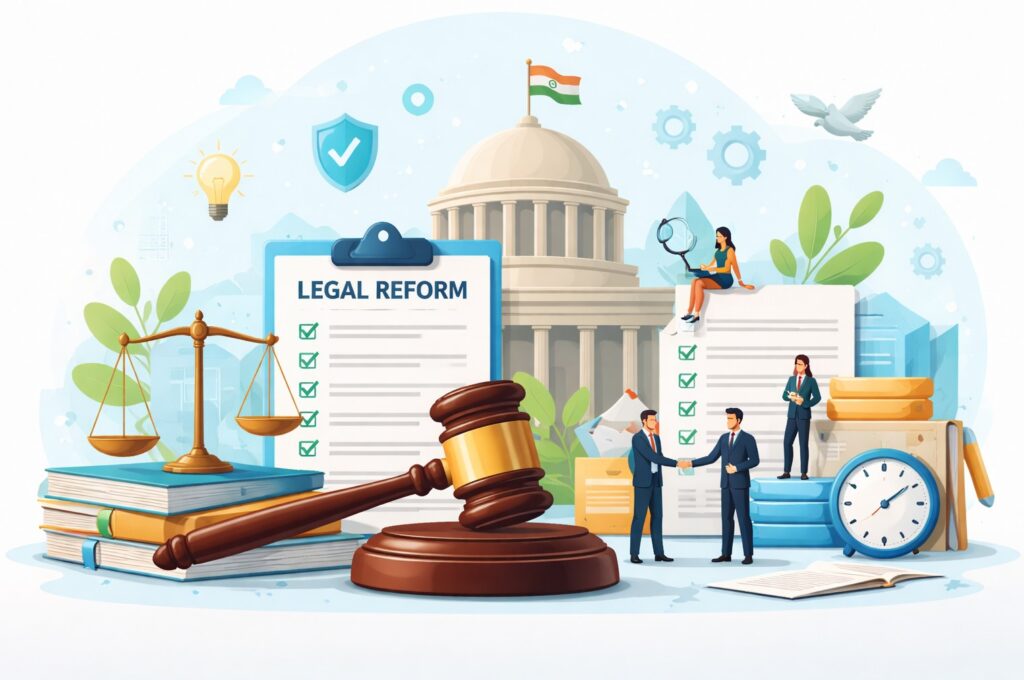
New Delhi: The Jan Vishwas (Amendment of Provisions) Bill, 2026 has been passed by both Houses of Parliament, marking a significant step towards further enhancing ease of doing business and ease of living in the country.
The legislation represents a major shift in India’s regulatory philosophy, aiming to reduce criminalisation of minor offences and replace punitive legal provisions with a more balanced, trust-based framework.
The Bill is part of a broader reform effort to simplify laws and improve both ease of living and ease of doing business. It builds on the earlier 2023 legislation that initiated the process of decriminalising minor procedural violations across central laws.
According to the official background note , the 2026 Bill proposes amendments to 79 Central Acts administered by 23 ministries, covering a total of 784 provisions, of which 717 relate to decriminalisation and 67 aim to improve ease of living.
At its core, the reform addresses a long-standing issue in India’s legal framework—where even minor procedural lapses such as delays in filing returns or documentation errors could attract criminal penalties, including imprisonment.
The new approach shifts the emphasis from punishment to compliance.
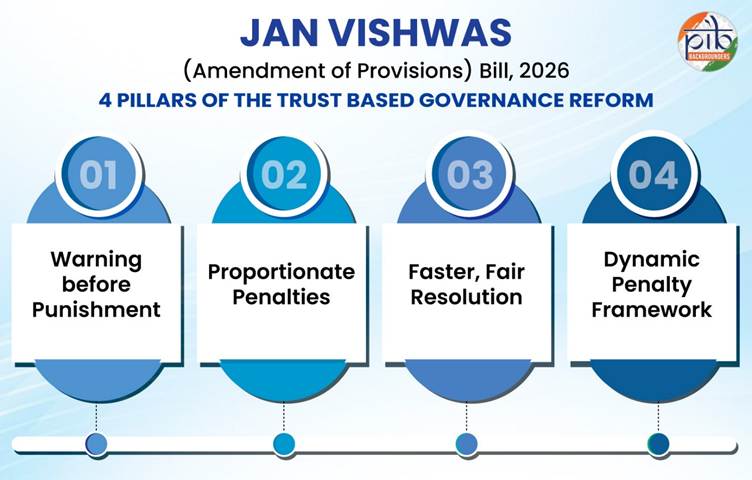
The Bill is built on four key principles. It introduces a “warning before punishment” system, allowing individuals and businesses to rectify minor violations before facing penalties. It ensures proportional penalties aligned with the severity of the offence. It establishes faster and fairer resolution mechanisms through adjudicating officers, reducing dependence on courts. It also introduces a dynamic penalty framework, enabling periodic revision of penalties to keep them relevant.
The scale of reform is substantial. As highlighted in the summary on page 3 of the document, hundreds of provisions involving imprisonment or criminal fines have either been removed, converted into civil penalties, or rationalised. In many cases, first-time violations will now attract only warnings, while repeated offences may lead to graded penalties.
For citizens, the impact is visible in everyday situations. Minor violations that previously attracted criminal action have now been reclassified. For instance, under the Railways Act, refusing to vacate a reserved berth will now result in a civil penalty instead of a criminal fine. Similarly, under the Court Fees Act, non-compliance that earlier carried imprisonment has been converted into a monetary penalty for non-fraudulent cases. In healthcare, small deficiencies in clinics will no longer lead to criminal prosecution but to manageable fines.
The Bill also introduces several ease-of-living reforms. As illustrated in the chart on page 6, driving licences will remain valid for 30 days after expiry, offering a grace period to citizens. Motor accident victims will get extended timelines to claim compensation. Certain colonial-era provisions, such as penalising individuals for being outdoors at night without explanation under the Delhi Police Act, have been removed entirely, aligning the law with modern principles of liberty and evidence-based policing.
Urban governance has also been simplified. Property tax systems under the NDMC have been standardised, while minor civic violations like misuse of public water are now treated as civil offences instead of criminal ones.
For businesses, particularly MSMEs, the Bill is expected to significantly reduce compliance burden. Earlier, minor documentation errors or procedural lapses could expose firms to criminal liability. The new framework introduces graded enforcement—beginning with advisory notices, followed by warnings, and only then penalties for repeated violations.
Examples across sectors highlight this shift. Under the Central Silk Board Act and Tea Act, first-time non-compliance will attract warnings rather than penalties. Under the Copyright Act, imprisonment provisions for administrative errors have been removed. Export-related laws such as the APEDA Act now allow businesses time to correct mistakes before facing penalties.
The Bill also removes outdated provisions that no longer serve regulatory purposes. For instance, obsolete licensing requirements under the Coir Industry Act have been eliminated, easing compliance for small exporters.
MSMEs stand to benefit significantly. As noted in the section on page 9, the Bill introduces mechanisms such as improvement notices under the Legal Metrology Act, allowing small businesses to rectify compliance gaps. It also removes penalties for minor lapses like failure to display licences in certain sectors and replaces imprisonment clauses in laws such as the Mines and Minerals Act with monetary penalties.
At a broader level, the Bill reflects a philosophical shift in governance—from a system based on suspicion and criminal enforcement to one based on trust, facilitation, and proportional regulation.
However, while the reforms aim to reduce harassment and improve efficiency, their success will depend on implementation. The effectiveness of adjudication mechanisms, consistency in enforcement, and awareness among citizens and businesses will be critical in ensuring that the benefits reach the ground.
The Jan Vishwas Bill, 2026 thus represents one of the most comprehensive attempts to modernise India’s regulatory ecosystem, balancing the need for compliance with the imperative of reducing unnecessary criminalisation.