Jan Dhan accounts cross 59 crore as financial inclusion deepens across India
PM Jan Dhan accounts have quadrupled from 14.72 crore in 2015 to 59.09 crore in August 2026, with women accounting for 32.92 crore accounts and deposits reaching ₹3.16 lakh crore.
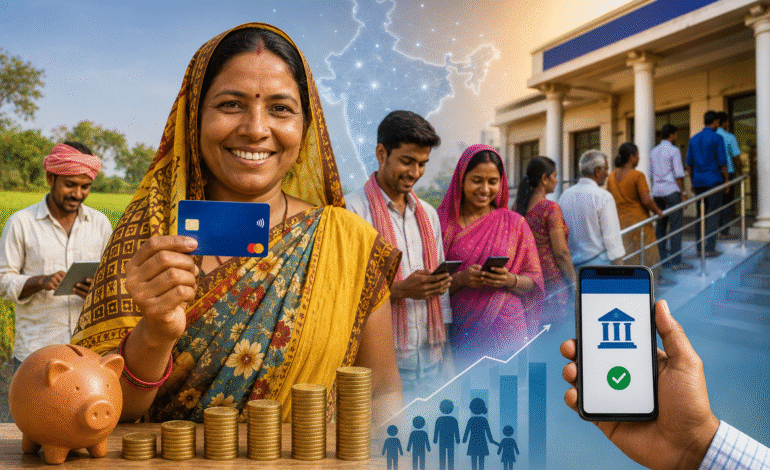
Launched in 2014 as India's national mission for financial inclusion, PMJDY has expanded access to formal banking, credit, insurance, pensions and digital payments, particularly among underserved and low-income communities.

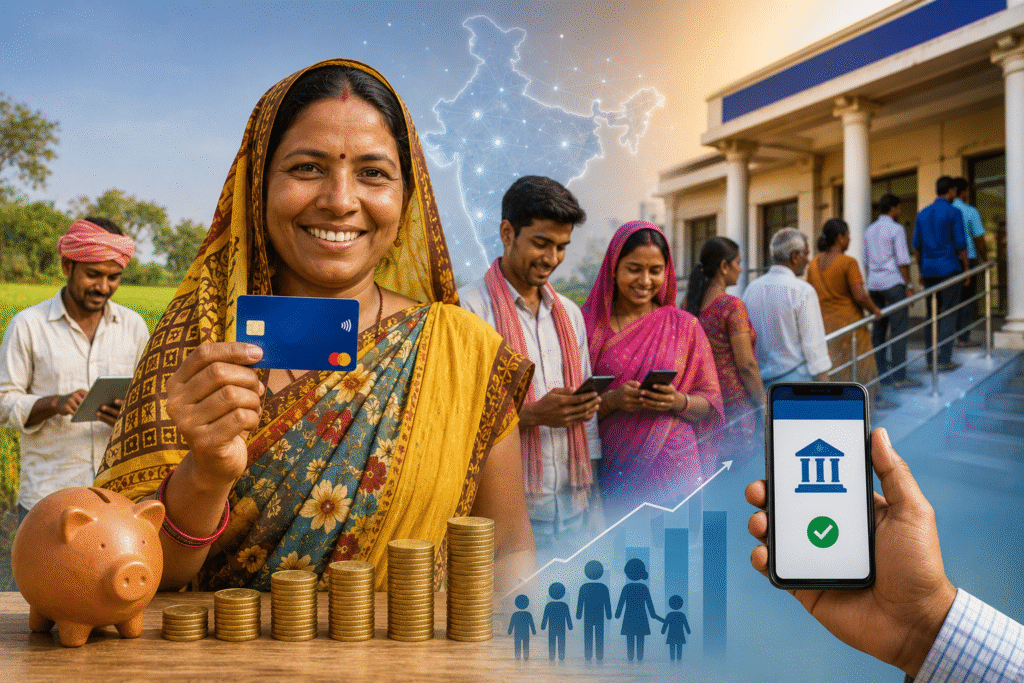
NEW DELHI: The Pradhan Mantri Jan Dhan Yojana (PMJDY) has expanded India’s formal banking footprint significantly over 12 years, with the number of accounts rising nearly fourfold to 59.09 crore as of August 19, 2026, according to a government backgrounder released on the scheme’s 12th anniversary.
Launched in 2014 as India’s national mission for financial inclusion, PMJDY has expanded access to formal banking, credit, insurance, pensions and digital payments, particularly among underserved and low-income communities.
The number of PMJDY accounts has increased from 14.72 crore in 2015 to 59.09 crore as of August 19, 2026. Of the total, 45.95 crore accounts are in rural and semi-urban areas, while 13.14 crore are in urban and metropolitan areas.
Women constitute a substantial share of the programme’s beneficiaries. As of August 19, 2026, there were 32.92 crore female beneficiaries of PMJDY accounts, reflecting the scheme’s growing role in expanding women’s access to formal financial services.
The growth in account numbers has been accompanied by a sharp increase in deposits. PMJDY deposits rose from ₹15,670 crore in March 2015 to ₹3,16,514 crore as of August 19, 2026, representing an increase of about 20 times. The government attributes the rise to growing savings among low-income households, greater trust in formal banking and deeper participation in the financial system.
RuPay debit card penetration has also expanded. As of August 19, 2026, 41.29 crore RuPay debit cards had been issued to PMJDY account holders, supporting greater participation in digital transactions.
The scheme initially focused on providing a bank account to every household. In 2018, the focus was widened to ensure that every unbanked adult could access a bank account. PMJDY provides basic banking services, need-based credit, remittances, insurance and pension facilities to underserved sections of the population.
The government’s Financial Inclusion Index has also risen from 53.9 in 2018 to 67 in 2026, reflecting increased access to credit, insurance, savings and digital payments.
PMJDY accounts provide access to several financial and social-security benefits. These include Direct Benefit Transfer, Pradhan Mantri Jeevan Jyoti Bima Yojana, Pradhan Mantri Suraksha Bima Yojana, Atal Pension Yojana and the MUDRA scheme.
Account holders receive RuPay debit cards, which are accepted at ATMs and most point-of-sale machines. New PMJDY accounts opened after August 2018 carry accident insurance cover of ₹2 lakh without any premium being charged to the beneficiary.
An overdraft facility of up to ₹10,000 is also available to one eligible PMJDY account holder per household after six months of satisfactory operation of the account, subject to applicable eligibility conditions.
The scheme does not require account holders to maintain a minimum balance. Indian citizens are eligible to open PMJDY accounts, with no upper age limit, while an individual can open a basic savings bank account if they are unbanked. Accounts can be opened at bank branches or through Business Correspondents and Bank Mitras.
The government says the expansion of PMJDY has moved financial inclusion beyond simply opening bank accounts by connecting underserved citizens with credit, insurance, pensions and digital payments while strengthening their formal financial identities.
The scale of the initiative was recognised by Guinness World Records in January 2015, when 18,096,130 bank accounts were opened in a single week as part of the financial inclusion campaign led by the Department of Financial Services. The scheme’s contribution to expanding formal banking access has also been highlighted by the International Monetary Fund and World Bank.
After 12 years, the programme’s latest figures point to a broadening financial footprint, with account ownership, deposits and RuPay card issuance all showing substantial growth and women and rural and semi-urban populations accounting for a significant share of its reach.