How Digital Transformation Is Powering India’s Emergence as a Middle-Class Superpower
From cautious consumers to confident contributors, India's middle class is emerging as the driving force behind the country's journey towards developed-nation status
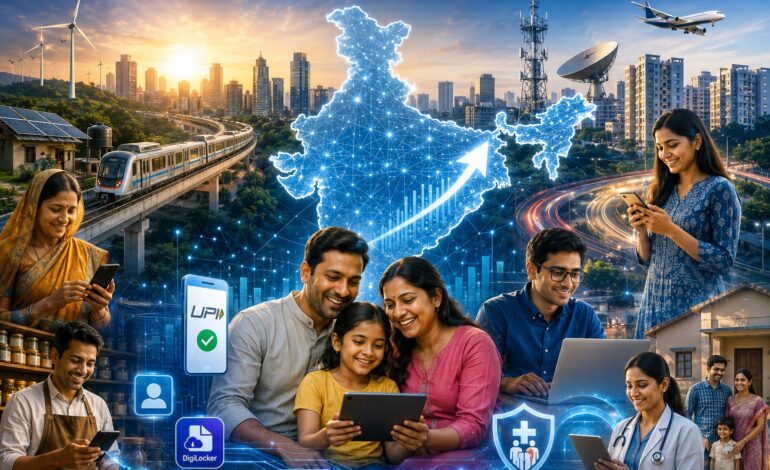
Today, a new middle class is emerging - more digitally connected, financially secure, mobile, ambitious and influential than any previous generation. It is a transformation that mirrors India's own evolution from a developing economy to one aspiring to become a developed nation by 2047.

New Delhi: For decades, the Indian middle class occupied a unique place in the country’s social and economic landscape. It was a segment defined by discipline, careful budgeting, and a constant balancing act between aspirations and affordability.
Buying a home was often a lifetime dream. Higher education demanded years of savings. Healthcare emergencies could derail family finances. Air travel was considered a luxury. Government services frequently involved paperwork, long queues and intermediaries.
That India is changing.
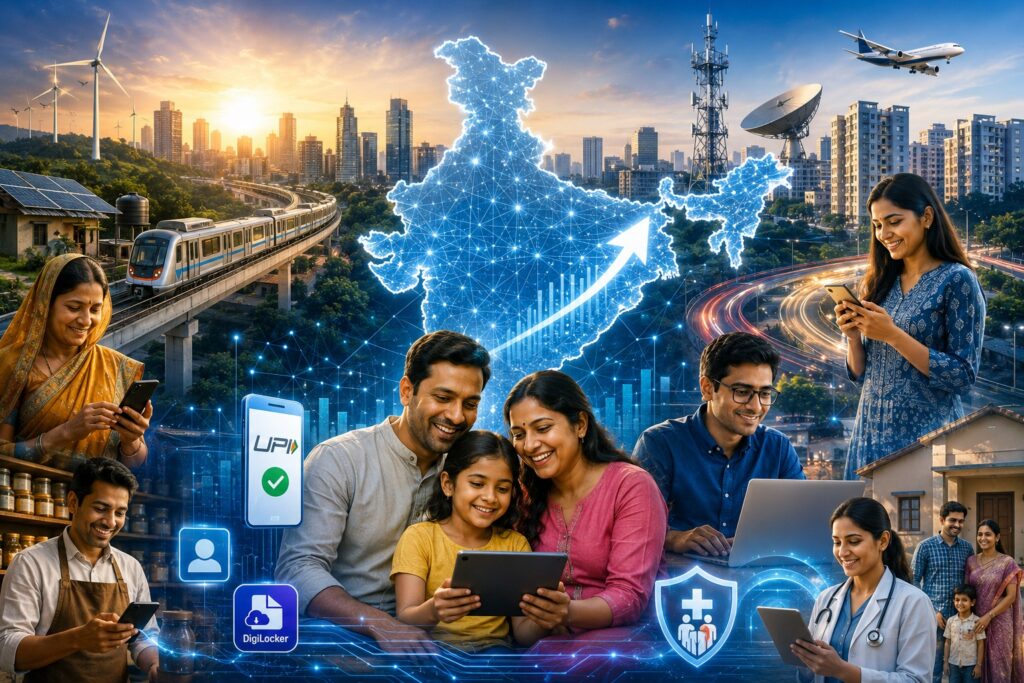
Today, a new middle class is emerging – more digitally connected, financially secure, mobile, ambitious and influential than any previous generation. It is a transformation that mirrors India’s own evolution from a developing economy to one aspiring to become a developed nation by 2047.
The story of India’s middle class is no longer just about survival and stability. Increasingly, it is becoming a story about opportunity, wealth creation, entrepreneurship and upward mobility.
The World’s Next Middle-Class Superpower
The global economic centre of gravity has been steadily shifting towards Asia, and India is becoming one of the biggest beneficiaries of this transition.
According to international projections, India is expected to overtake China in absolute middle-class population during the next decade. Rising incomes, urbanisation, expanding employment opportunities and rapid digitalisation are creating one of the largest consumer classes in human history.
The implications extend far beyond domestic consumption.
A strong middle class generates demand, fuels entrepreneurship, invests in education, drives innovation and contributes significantly to tax revenues. It creates the economic stability necessary for long-term growth while strengthening social cohesion and democratic institutions.
India’s middle class today represents not merely a demographic category but a powerful economic engine that is reshaping markets, industries and public policy.
A Taxpayer’s Journey
Perhaps nowhere is the changing relationship between the state and the middle class more visible than in taxation.
For years, tax relief remained one of the most persistent demands of salaried professionals and small business owners. Rising costs of living often left families with limited disposable income despite increasing earnings.
Recent tax reforms have sought to address this challenge. The increase in the income tax exemption threshold to ₹12 lakh under the new tax regime has significantly altered the financial equation for millions of households.
For a young professional in Bengaluru, a government employee in Hyderabad, or a small entrepreneur in Indore, the additional savings translate into greater spending power, larger investments, improved retirement planning and increased financial flexibility.
The reform reflects a broader shift in policy thinking: viewing the middle class not merely as taxpayers but as key contributors to economic growth whose prosperity can stimulate wider economic activity.
The Homeownership Revolution
Nothing symbolises middle-class aspirations more than owning a home.
For generations, purchasing a house represented financial security, social status and family stability. Yet high property prices, financing challenges and stalled projects often placed this dream beyond reach.
Over the past decade, housing policy has undergone significant transformation.
Affordable housing initiatives, lower interest rates, improved financing mechanisms and intervention in stalled residential projects have collectively expanded access to homeownership.
Programmes such as PMAY-Urban and SWAMIH have sought to address both affordability and delivery challenges. Thousands of homebuyers who once faced uncertainty due to delayed projects have finally received possession of their homes.
Combined with lower mortgage rates compared to a decade ago, these measures have helped transform housing from an aspiration into a realistic goal for millions of middle-income families.
A Nation Connected
A defining characteristic of India’s emerging middle class is mobility.
The expansion of metro rail networks, modernised railway infrastructure and increased air connectivity has dramatically changed how Indians live, work and travel.
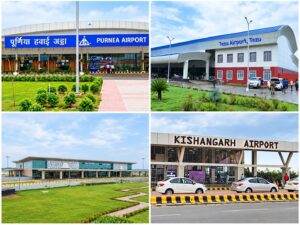
Daily commuting patterns in major cities have evolved as metro systems expand into new urban centres. Railway modernisation has improved safety, speed and passenger comfort. Affordable regional aviation has connected smaller cities that were once isolated from major economic hubs.
For millions of professionals, students and entrepreneurs, distance is no longer the barrier it once was.
A software engineer can work in Pune and visit family in Lucknow over a weekend. A student from a Tier-2 city can pursue higher education in a metropolitan centre. Small business owners can access national markets with greater ease.
Connectivity has become an enabler of opportunity.
Healthcare: From Financial Risk to Financial Protection
One of the most significant shifts in middle-class life has been the gradual reduction of healthcare-related financial vulnerability.
Historically, medical emergencies represented one of the biggest threats to household savings. Out-of-pocket healthcare expenditure often forced families into debt or delayed treatment.
The expansion of health insurance coverage, growth of Ayushman Bharat infrastructure, wider availability of affordable medicines through Jan Aushadhi centres, and investments in medical education have collectively improved access to healthcare.
The rise of preventive health initiatives, digital health platforms and primary healthcare centres is helping shift healthcare from a reactive model to a more proactive one.
For middle-class families, this means greater confidence that healthcare challenges will not automatically become financial crises.
Education: The Gateway to Mobility
If homeownership reflects stability, education remains the most powerful symbol of upward mobility.
Indian middle-class families have traditionally viewed education as the primary route to economic advancement. That belief remains unchanged, but the ecosystem supporting it has expanded dramatically.
The growth of IITs, AIIMS, medical colleges, skill development programmes and vocational institutions has widened access to quality education.
The arrival of foreign universities in India is adding a new dimension to the education landscape, potentially reducing the need for costly overseas study while providing globally recognised qualifications closer to home.
Education financing has also evolved. Digital loan platforms and initiatives such as the Vidya Lakshmi Scheme are helping students pursue higher education without imposing unsustainable financial burdens on their families.
The result is a generation with greater access to skills, qualifications and employment opportunities than ever before.
The Entrepreneurial Middle Class
The traditional image of the middle-class Indian centred around salaried employment.
That image is rapidly changing.
The rise of startup culture, digital commerce and easier access to credit has created new pathways to entrepreneurship.
Initiatives such as MUDRA and Startup India have expanded access to capital for first-generation entrepreneurs. Small business owners who once depended on informal lenders can now access formal financial systems and scale their enterprises.
This shift is particularly significant because entrepreneurship creates a multiplier effect. Every successful small business generates employment, drives local economic activity and contributes to broader prosperity.
India’s middle class is increasingly becoming not just a consumer class, but a creator class.
The Digital Citizen
Perhaps the most profound transformation has occurred in the relationship between citizens and government.
The integration of Jan Dhan accounts, Aadhaar and mobile connectivity has created one of the world’s most extensive digital public infrastructures.
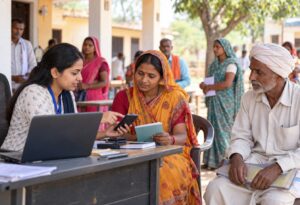
Services that once required multiple visits to government offices can now be accessed through smartphones.
Documents are stored digitally. Benefits are transferred directly into bank accounts. Identity verification is nearly instantaneous. Utility payments, tax filings, education services and pension management can be completed online.
For the middle class, digital governance has reduced transaction costs, increased transparency and saved countless hours previously lost to administrative processes.
Technology has transformed convenience into a public service.
The Road Ahead
India’s middle class stands at the centre of one of the most important economic transformations of the 21st century.
Its growth reflects not only rising incomes but also expanding capabilities, greater access to opportunity and increasing participation in national development.
Challenges remain. Employment quality, urban affordability, healthcare costs, educational competitiveness and environmental sustainability will continue to shape the middle-class experience.
Yet the trajectory is unmistakable.
The Indian middle class of 2026 is wealthier, healthier, more connected, better educated and more digitally empowered than the middle class of 2014.
As India advances towards its vision of becoming a developed nation, the fortunes of the country and the fortunes of its middle class are becoming increasingly intertwined.
The story of India’s future may ultimately be written through the aspirations, achievements and ambitions of the hundreds of millions of citizens who now form the backbone of the nation’s economic and social progress.
The rise of India’s middle class is not merely an economic phenomenon. It is the story of a society in transition—one that is steadily moving from scarcity to opportunity, from access to empowerment, and from aspiration to achievement.