Skyroot’s Vikram-1 set for historic liftoff on July 18, marking India’s first private orbital launch attempt
The Hyderabad-based startup had earlier created history in November 2022 by successfully launching Vikram-S, India's first privately built rocket to reach space.
Authorities have already issued the necessary airspace and maritime notifications, formally designating restricted zones along the rocket's ascent and impact corridor ahead of the launch.

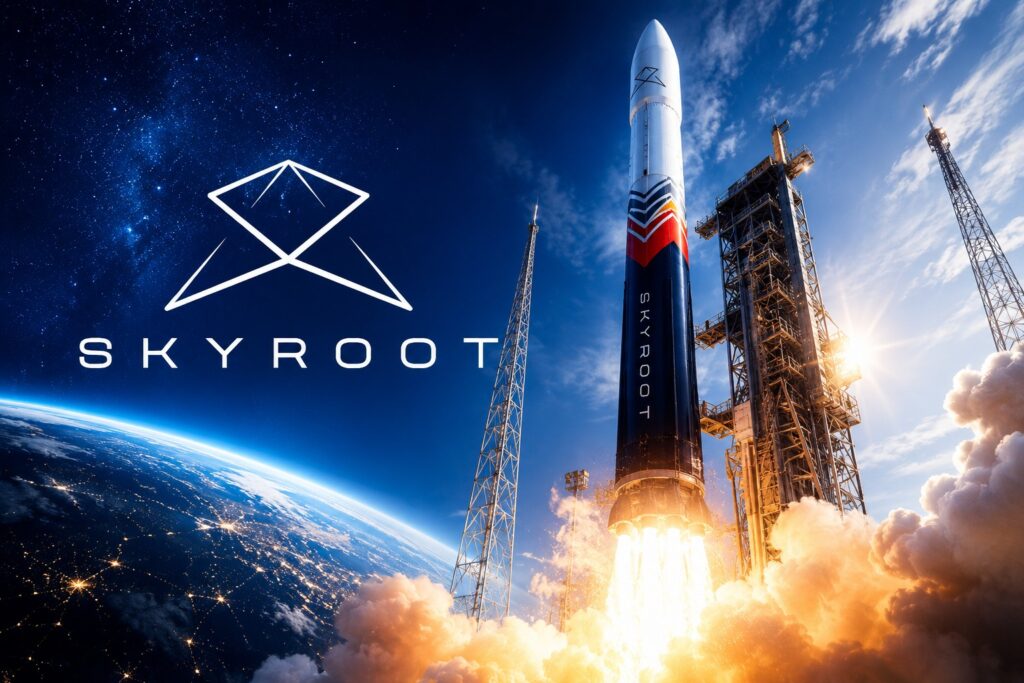
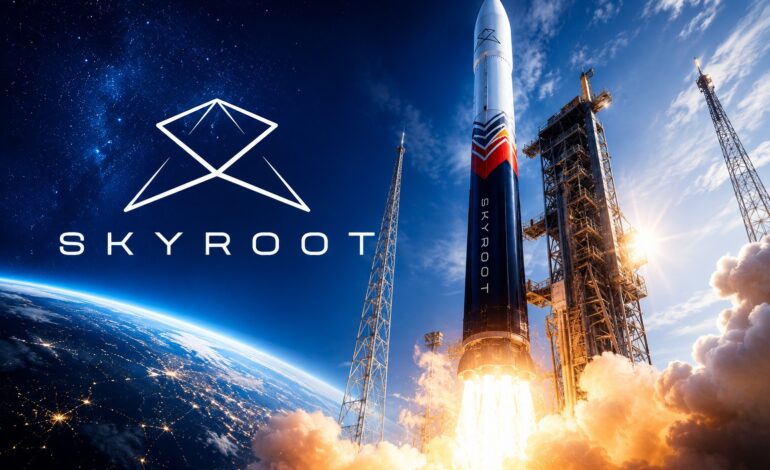
HYDERABAD: India is set to witness a defining moment in its space journey as Skyroot Aerospace prepares to launch Vikram-1, the country’s first privately developed orbital-class launch vehicle, from the Satish Dhawan Space Centre (SDSC-SHAR), Sriharikota, on July 18 at 11:30 a.m.
Named Mission Aagaman – meaning “the arrival” – the maiden test flight represents the first attempt by an Indian private company to launch an orbital rocket from Indian soil, signalling the country’s emergence as a serious player in the global commercial space launch market.
Authorities have already issued the necessary airspace and maritime notifications, formally designating restricted zones along the rocket’s ascent and impact corridor ahead of the launch.
A New Chapter in India’s Space Story
The mission marks Skyroot Aerospace’s transition from suborbital to orbital launch capability.
The Hyderabad-based startup had earlier created history in November 2022 by successfully launching Vikram-S, India’s first privately built rocket to reach space.
Now, Vikram-1 seeks to achieve a far more complex milestone by attempting to place payloads into a 450-km Low Earth Orbit (LEO) with an inclination of 60 degrees, paving the way for commercial satellite launch services.
“This is our first test flight, and we will be getting valuable data from it. We have done everything that could be done to test Vikram-1 on the ground. We are eager to see how it performs in a real flight environment,” said Pawan Kumar Chandana, Co-founder and CEO of Skyroot Aerospace.
He added that the mission would lay the foundation for establishing a regular launch cadence and expanding India’s private launch capabilities.
Designed and Built in India
Standing nearly seven storeys tall, Vikram-1 is a multi-stage orbital launch vehicle engineered almost entirely with indigenous technologies.
The rocket features:
- An all-carbon composite structure for reduced weight.
- High-performance solid rocket boosters.
- In-house developed propulsion systems.
- Advanced 3D-printed rocket engines.
- Capacity to deploy small satellites weighing up to 350 kg into Low Earth Orbit.
Skyroot says the vehicle has been designed for rapid manufacturing, cost efficiency and frequent launch operations to serve the growing global small satellite market.
Carrying Technology Demonstration Payloads
Although the mission is primarily a test flight, Vikram-1 will carry several technology demonstration payloads from Indian and international partners.
These include payloads from:
- Grahaa Space
- Cosmoserve
- DCubed
- Skyroot’s in-house SCOPE platform
The rocket will also carry “Cosmic Bloom”, an artwork by Cosmos Diamonds, along with a micro-art payload, highlighting the growing intersection of science, technology and creative expression in space missions.
Building a Global Launch Company
According to Skyroot, Mission Aagaman represents far more than a single rocket launch.
“What we are aiming to do on 18 July is bigger than a single launch. It represents the hopes and hard work of around 1,000 people, the contributions of over 400 suppliers, and nearly 3,000 days of determination to build a global offering from India,” said Naga Bharath Daka, Co-founder and COO.
He said the in-flight data collected during the mission would enable engineers to refine technologies further and move toward establishing an on-demand commercial launch service for satellite operators worldwide.
Final Preparations Complete
Skyroot confirmed that all stages of Vikram-1 have been successfully integrated and stacked on the launch pad.
The company has completed:
- Integrated vehicle health checks.
- Launch control centre validation.
- Telemetry system verification.
- Tracking radar interface checks.
- Ground station connectivity tests.
With these milestones completed, the rocket has been cleared for its maiden flight.
Expanding India’s Commercial Space Ambitions
The launch comes at a time when India’s space sector is witnessing unprecedented private participation following government reforms that opened the sector to startups and commercial enterprises.
Industry analysts believe the demand for launching small satellites is expected to grow significantly over the coming decade, driven by communications, Earth observation, defence, navigation and Internet-of-Things (IoT) applications.
Skyroot believes this expanding market presents a major opportunity for India to emerge as a competitive launch services provider.
“The small satellite launch market is deeply constrained on the supply side, while demand continues to grow. Mission Aagaman marks the beginning of our aspiration to open space for all,” Chandana said.
A Billion-Dollar Space Startup
Founded by former ISRO scientists Pawan Kumar Chandana and Naga Bharath Daka, Skyroot Aerospace has rapidly emerged as one of India’s leading private space technology companies.
The company is currently valued at over USD 1.1 billion and is backed by prominent global investors, including GIC, Temasek, Sherpalo Ventures and funds managed by BlackRock.
Operating from its 250,000-square-foot Max-Q and Infinity campuses in Hyderabad, Skyroot develops the complete Vikram launch vehicle family along with indigenous Kalam solid motors, Raman liquid engines and Dhawan cryogenic propulsion systems.
Its long-term vision is to make space transportation as routine, reliable and affordable as commercial aviation.