India faces urgent semiconductor talent challenge in AI era
Experts say the convergence of semiconductors and artificial intelligence is reshaping workforce requirements across the electronics industry.
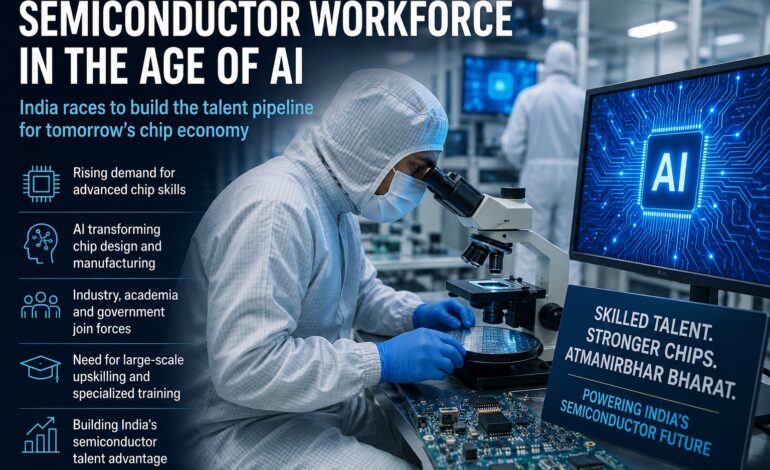
India’s semiconductor growth story will depend not only on infrastructure investments and manufacturing incentives, but also on the country’s ability to build a future-ready workforce capable of supporting chip design, fabrication, packaging, testing and AI-driven semiconductor innovation.

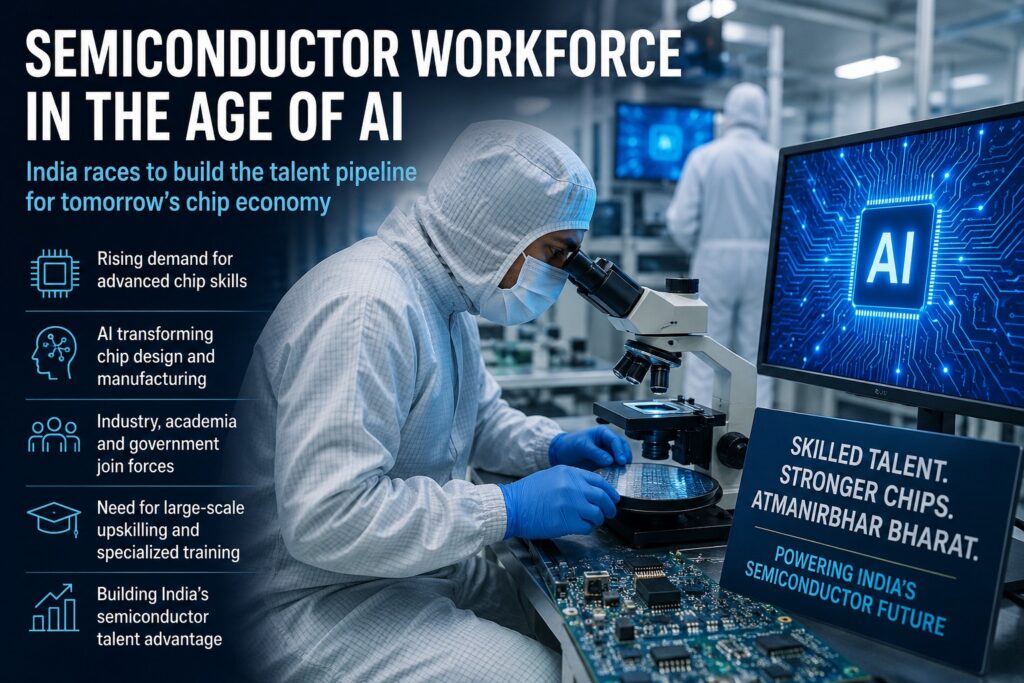
New Delhi: India’s rapidly expanding semiconductor ambitions are creating an urgent demand for a highly skilled workforce as artificial intelligence, advanced electronics and next-generation computing technologies accelerate the global race for chip talent.
Industry leaders and policymakers have stressed that India’s semiconductor growth story will depend not only on infrastructure investments and manufacturing incentives, but also on the country’s ability to build a future-ready workforce capable of supporting chip design, fabrication, packaging, testing and AI-driven semiconductor innovation.
The issue has gained prominence as India deepens investments in semiconductor manufacturing, chip packaging facilities, electronics clusters and AI ecosystems under the India Semiconductor Mission.
Experts say the convergence of semiconductors and artificial intelligence is reshaping workforce requirements across the electronics industry. AI systems require increasingly powerful and specialized chips, while AI tools themselves are transforming semiconductor design, verification and manufacturing processes.
India already holds a strong position in global semiconductor design talent, with thousands of engineers contributing to chip development for multinational companies operating in the country. However, the next phase of growth will require expertise in advanced manufacturing, materials engineering, chip packaging, embedded systems and AI-integrated semiconductor technologies.
The emergence of new semiconductor facilities across states such as Gujarat, Assam and Rajasthan has intensified the need for specialized training programmes, industry-academia collaboration and semiconductor-focused curriculum development.
Industry stakeholders believe India has a significant opportunity to become a global semiconductor talent hub if educational institutions align more closely with industry requirements.
Engineering institutions and skill development agencies are increasingly being encouraged to introduce semiconductor-focused courses covering VLSI design, wafer technologies, embedded AI systems, chip testing and electronic manufacturing automation.
The rise of AI-driven applications including autonomous systems, electric vehicles, telecom infrastructure, robotics and data centres is expected to further increase demand for semiconductor professionals globally.
Government initiatives such as the Design Linked Incentive (DLI) scheme, Semiconductor Mission and electronics manufacturing incentives are also expected to create demand for technicians, engineers, researchers and manufacturing specialists across the semiconductor value chain.
Industry experts note that workforce readiness will play a decisive role in determining whether India can transition from being primarily a semiconductor design destination to becoming a comprehensive semiconductor manufacturing and innovation hub.
With global semiconductor supply chains undergoing major realignments, India is positioning itself as a strategic destination for both chip manufacturing investments and semiconductor talent development in the age of AI.