Parliamentary Panel Calls for AI-Driven Forest Fire Management, Digital Mapping of Eco-Sensitive Zones
Committee recommends better fund utilisation, AI-driven forest fire management, and nationwide environmental education New Delhi: A parliamentary standing committee has raised concerns over the underutilisation of funds by the Ministry

The reconfigured Lok Sabha is expected to come into effect from the 2029 general elections, following necessary constitutional amendments to raise the existing cap on parliamentary strength.

Committee recommends better fund utilisation, AI-driven forest fire management, and nationwide environmental education
New Delhi: A parliamentary standing committee has raised concerns over the underutilisation of funds by the Ministry of Environment, Forest and Climate Change and called for stronger policy action on pollution control, forest fire management and wildlife protection.
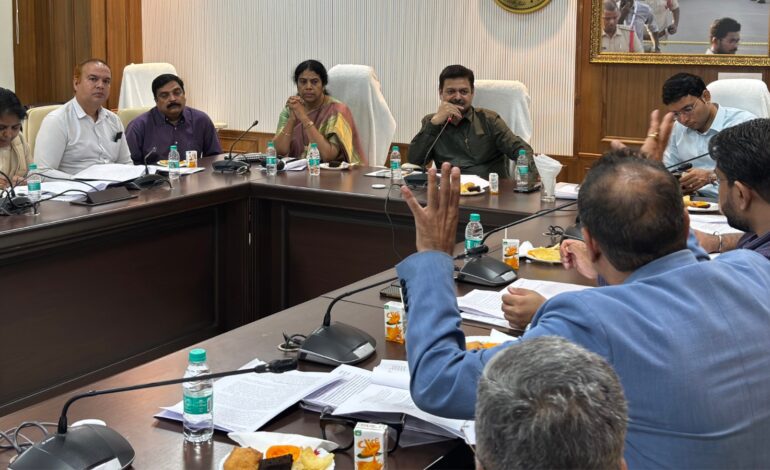
The department-related parliamentary standing committee on science and technology, environment, forests and climate change, chaired by Bhubaneswar Kalita, recently presented its 405th report on demands for grants (2026–27) in parliament.
The committee noted that the ministry utilised only 72.35 percent of allocated funds in 2024–25 and 67.87 percent of the revised estimate allocation in 2025–26 as of January 31, 2026, significantly lower than the 96 percent utilisation recorded in 2023–24.
While the budget estimate for 2026–27 has been increased to ₹3,759.46 crore, about 10 percent higher than the previous year’s allocation of ₹3,412.82 crore, the committee emphasised that optimal utilisation of funds must become a priority for the ministry.
Pollution Control Concerns
The committee highlighted slow spending under the control of pollution scheme, despite rising environmental challenges. In 2025–26, only ₹814.26 crore had been utilised out of the revised allocation of ₹1,300 crore by the end of January.
It also pointed out that air quality in the Delhi NCR region remained in the “poor” category for much of October to February, stressing the need for a comprehensive long-term strategy to tackle air pollution.
Environmental Education and Awareness
The committee recommended that environmental education should be made a national priority, with environmental awareness integrated into school curricula in collaboration with the ministry of education.
According to the report, strengthening environmental awareness from an early stage can help build a generation of environmentally responsible citizens.
Forest Fire Management
Rising forest fires across the country, particularly in Himalayan states such as Uttarakhand, were another major concern highlighted by the committee.
The panel suggested that the ministry adopt AI- and data-driven technologies along with satellite monitoring and drones for early detection and management of forest fires.
It also recommended increased budgetary support for states to deploy advanced technologies for proactive forest fire prevention.
Wildlife Protection and Human-Animal Conflict
The committee observed that the project tiger and elephant programmes are facing growing pressure due to increasing wildlife populations and shrinking habitats.
It recommended additional funding to address rising human–wildlife conflict and suggested building secure forest enclosures for big cats such as tigers and leopards to prevent them from entering populated areas.
Medicinal Plants and Afforestation
The report recommended that at least 25 percent of plantations funded under CAMPA should include medicinal plants, which contribute to biodiversity conservation and provide natural healthcare resources.
Forest Land Encroachment
Expressing concern over forest land encroachment, the committee noted reports indicating that more than 13,000 sq km of forest land across 25 states has been illegally occupied.
It recommended drone surveys of forest land across states and making the data publicly accessible to prevent illegal land transactions and unauthorised conversions.
Digital Mapping of Eco-sensitive Zones
The committee also called for digital mapping of all eco-sensitive zones across the country to strengthen protection of fragile ecosystems and ensure better monitoring.
The panel further recommended that the finance ministry consider the additional financial requirements of the environment ministry to sustain key climate and conservation programmes.