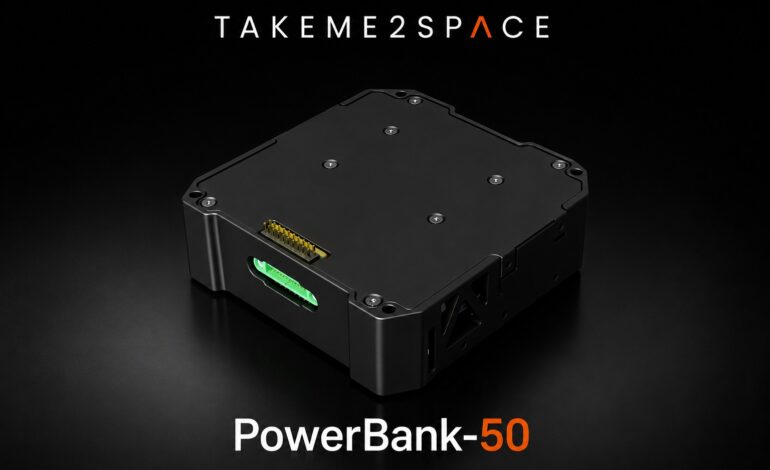
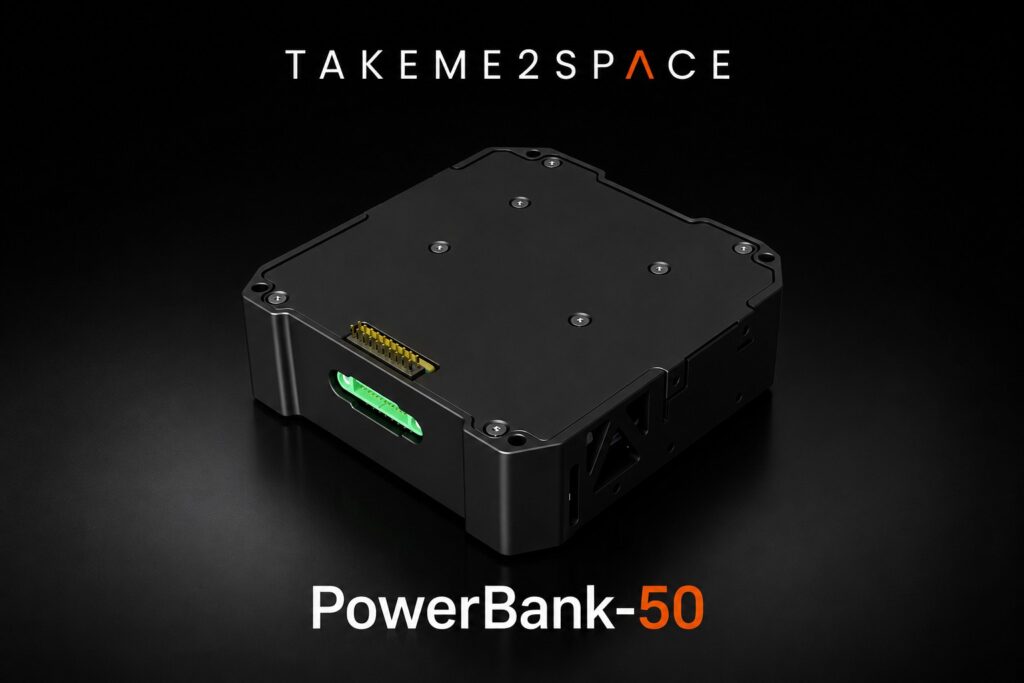
TakeMe2Space’s PowerBank-50 becomes India’s first flight-proven off-the-shelf satellite battery on Vikram-1 mission
The Hyderabad-based spacetech startup's PowerBank-50 successfully powered an experimental payload aboard Skyroot Aerospace's Vikram-1, earning coveted flight heritage and strengthening India's indigenous satellite component ecosystem.
According to the company, the PowerBank-50 operated successfully at an altitude of about 450 km, withstanding the intense launch environment as well as the vacuum, radiation and extreme temperature variations encountered in space.

HYDERABAD: Indian spacetech startup TakeMe2Space has announced that its PowerBank-50 satellite battery pack has successfully completed its maiden space mission aboard Skyroot Aerospace’s Vikram-1 rocket, becoming the country’s first commercially available, off-the-shelf satellite battery to earn flight heritage on a private Indian orbital launch.
The battery-powered Cosmoserve Space’s experimental payload onboard Vikram-1’s Orbital Adjustment Module (OAM) during Mission ‘Aagaman’, which was launched from the Satish Dhawan Space Centre, Sriharikota, on July 18, 2026. The mission marked a historic milestone as Vikram-1 became the first privately developed Indian rocket to successfully reach orbit.
According to the company, the PowerBank-50 operated successfully at an altitude of about 450 km, withstanding the intense launch environment as well as the vacuum, radiation and extreme temperature variations encountered in space. The successful mission upgrades the product from a ground-qualified system to a flight-proven space component—an important credential in the global satellite industry.
“Every satellite mission lives or dies by its power system. Flying on the first private Indian rocket to reach orbit and performing flawlessly at 450 km is the strongest validation a product can earn,” said Ronak Kumar Samantray, Founder and CEO of TakeMe2Space.
The company said flight heritage is one of the most important requirements for satellite manufacturers, launch providers and insurers before adopting new hardware. Batteries, in particular, undergo rigorous scrutiny because they must survive launch vibrations and reliably power spacecraft throughout repeated orbital cycles. PowerBank-50 validated its lithium-ion cells, intelligent battery management system, cell heaters and aluminium flight enclosure under actual spaceflight conditions.
The milestone is expected to reduce dependence on imported satellite battery systems for India’s growing small satellite ecosystem. Until now, many Indian satellite developers relied on imported power systems that involved higher costs and longer procurement timelines. A domestically manufactured, flight-proven battery could help startups, universities and research institutions build satellites faster and more affordably.
PowerBank-50 stores more than 50 Wh of energy in a compact 380-gram package and features onboard battery health monitoring, balancing and thermal management. The battery is designed to support CubeSats as well as microsatellites, with an operational life of up to five years in low Earth orbit. The company said the product is commercially available off the shelf at ₹1,04,900, offering a lower-cost alternative to comparable imported systems.
TakeMe2Space is developing orbital infrastructure focused on in-space computing, orbital data processing and space-based data centres. The successful demonstration of PowerBank-50 represents another step in strengthening India’s indigenous space technology supply chain as private space companies continue to expand their role in the country’s rapidly evolving commercial space sector.