Individual business borrowing grows faster than enterprise lending in Telangana, Andhra Pradesh
A CIBIL–NSIC study identifies 43.4 lakh entrepreneurs across the two states who borrow individually for business purposes but have never accessed credit as enterprises.
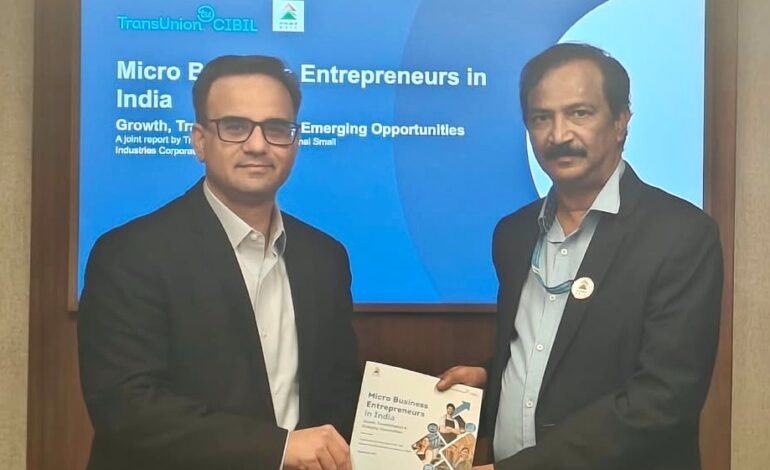
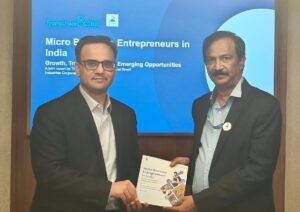
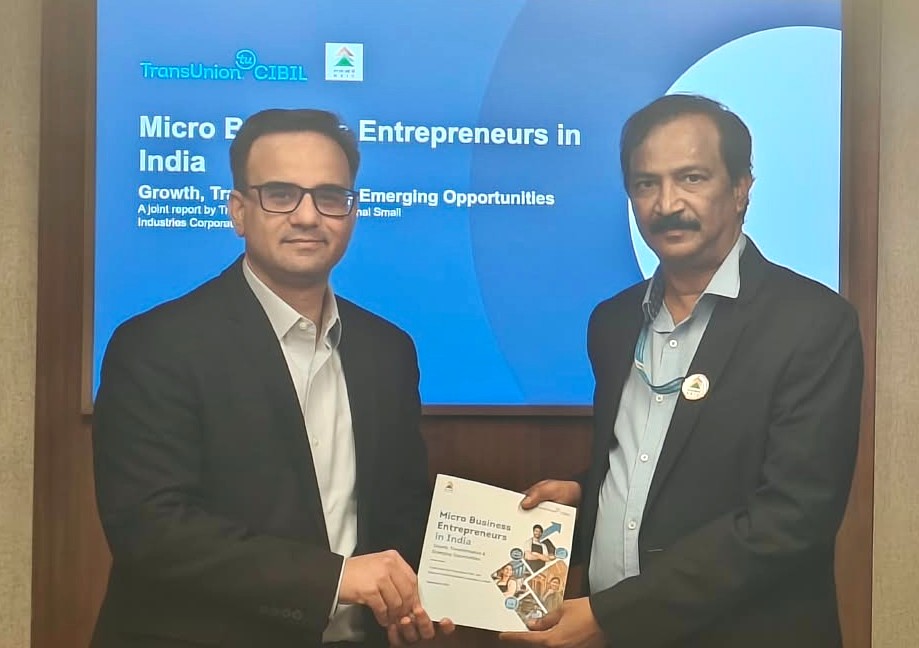
(L-R) Ejaz Nazeer, Chief Product Officer TransUnion CIBIL and Suresh Babu, Zonal General Manager (South Zone), NSIC, at the release event in Hyderabad on Thursday.

HYDERABAD: Business-purpose borrowing by individual entrepreneurs grew at a compound annual rate of 26% in Telangana and 25% in Andhra Pradesh over three years, outpacing growth in lending to micro-business entities.
A joint study by TransUnion CIBIL and the National Small Industries Corporation (NSIC), released on October 29, put the corresponding growth rates for micro-business entities at 13% and 11%, respectively.
The report, “Micro Business Entrepreneurs in India: Growth, Transformation & Emerging Opportunities”, estimated outstanding micro-business entrepreneur credit at ₹1.74 lakh crore in Telangana and ₹1.45 lakh crore in Andhra Pradesh as of June 2026. The segment includes both individuals borrowing for business purposes and micro-business entities.
The study identified approximately 19.6 lakh individual entrepreneurs in Telangana and 23.8 lakh in Andhra Pradesh who had never borrowed as enterprises as of March 2026. These entrepreneurs already borrow in their individual capacity; they are not first-time borrowers.
Among this group, 56% in Telangana and 57% in Andhra Pradesh had at least two years of business borrowing experience. The report said 62% in Telangana demonstrated strong creditworthiness, while 61% in Andhra Pradesh had CIBIL Scores above 730.
The findings point to an opportunity for lenders to offer financing suited to business operations, subject to their underwriting policies and regulatory requirements.
Property-backed lending remains prominent
Loans against property accounted for 53% of outstanding micro-business entrepreneur balances in Telangana—the highest share among the states analysed—and 41% in Andhra Pradesh.
Among micro-business entities, trade accounted for 33% of outstanding balances in Telangana and 43% in Andhra Pradesh. Manufacturing contributed 17% and 18%, respectively.
Non-bank finance companies held nearly 38% of individual business borrower balances in Telangana and 48% in Andhra Pradesh, largely through commercial vehicle and property-backed lending.
Ejaz Nazeer, Chief Product Officer at TransUnion CIBIL, said lenders had an opportunity to assess entrepreneurs’ business cash flows and provide financing that evolves with their enterprises.
He said the transition from individual borrowing to enterprise-level credit could widen access to financial products and support business expansion.
NSIC’s South Zone Zonal General Manager Suresh Babu described entrepreneurs who borrow individually but have not accessed enterprise credit as a “missing middle”. Helping them make the transition could improve access to working capital and growth finance, he said.
National credit portfolio reaches ₹29.6 lakh crore
Across India, micro-business entrepreneurs accounted for ₹29.6 lakh crore in outstanding commercial credit as of June 2026, representing nearly half the commercial credit portfolio covered by the study.
Individuals borrowing for business purposes held ₹19.1 lakh crore, while micro-business entities accounted for ₹10.5 lakh crore. Their outstanding balances grew at three-year compound annual rates of 21% and 12%, respectively.
Nationally, approximately 3.9 crore individual business borrowers had never borrowed in an enterprise capacity as of March 2026. Of these, 54% had at least two years of business-credit experience and 63% had CIBIL Scores above 730.
The study reported improving repayment performance alongside credit growth. Overall delinquency declined from approximately 3% in June 2023 to 1.9% in June 2026.
It identified cash-flow-based assessment, credit guarantees and digital financial information as potential ways to expand access to enterprise financing beyond traditional collateral-backed lending.