Nuclear medicine expansion to improve cancer diagnosis and treatment across India: Govt
The Department of Atomic Energy is expanding nuclear medicine services through indigenous radioisotope production, advanced diagnostic and therapeutic facilities, specialised training and new infrastructure to improve cancer care across the
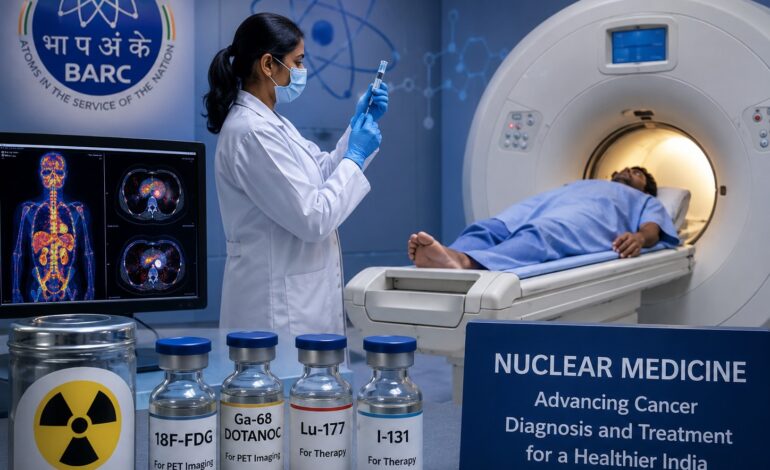
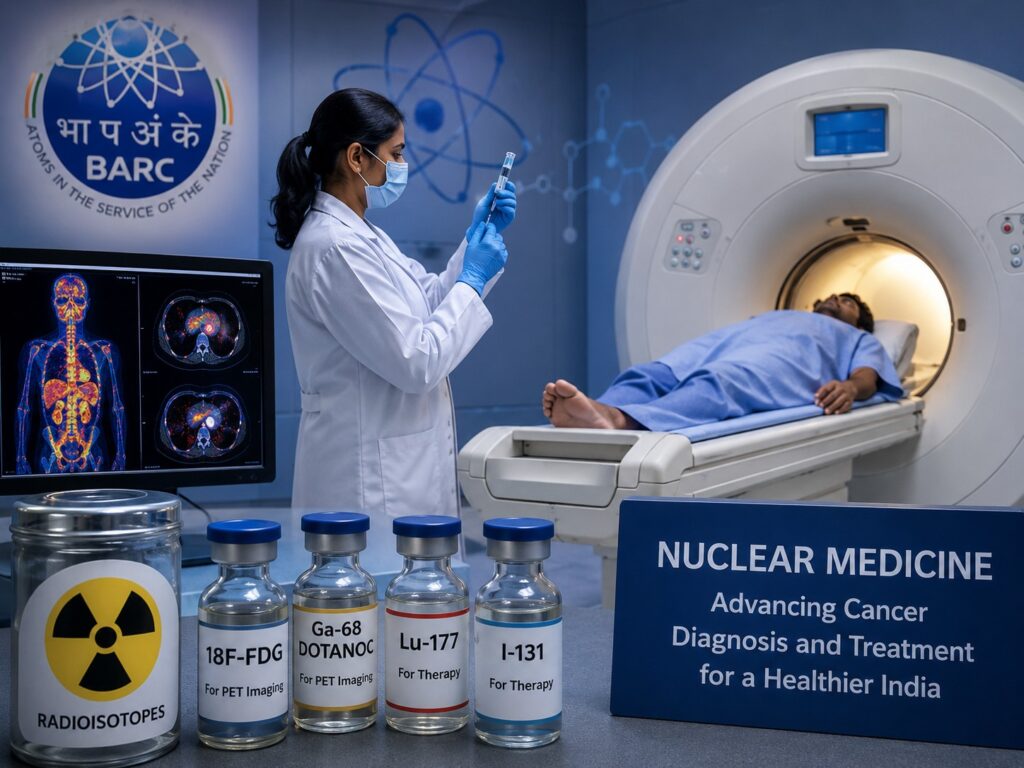
The Bhabha Atomic Research Centre (BARC) currently provides nuclear medicine services through its Radiation Medicine Centre in Mumbai and Radiation Medicine Research Centre in Kolkata, offering diagnostic and therapeutic care for cancer patients. (Representative image)

NEW DELHI: The government has outlined a multi-pronged strategy to expand India’s nuclear medicine capabilities, with a dedicated Isotope Production Reactor (IPR) under construction at Visakhapatnam to boost domestic production of critical medical isotopes used in cancer diagnosis and treatment.
Responding to a question in the Lok Sabha, Union Minister of State in the Prime Minister’s Office, Personnel, Public Grievances and Pensions, Atomic Energy and Space, Dr Jitendra Singh, said the Department of Atomic Energy (DAE) is strengthening nuclear medicine infrastructure through research, isotope production, advanced cancer treatment facilities and specialised training programmes.
The Bhabha Atomic Research Centre (BARC) currently provides nuclear medicine services through its Radiation Medicine Centre in Mumbai and Radiation Medicine Research Centre in Kolkata, offering diagnostic and therapeutic care for cancer patients.
The Variable Energy Cyclotron Centre (VECC), another DAE research institution, operates a 30 MeV medical cyclotron that commercially produces radioisotopes and radiopharmaceuticals. These are supplied regularly to hospitals and nuclear medicine centres across the country for cancer diagnosis and treatment.
The Tata Memorial Centre (TMC), functioning under the administrative control of the DAE, has established comprehensive nuclear medicine facilities, including Gamma Camera imaging systems, PET-CT services and a dedicated high-dose radionuclide therapy ward built in accordance with Atomic Energy Regulatory Board (AERB) safety guidelines.
The centre uses advanced radioactive pharmaceuticals such as Fluorodeoxyglucose (18F-FDG), Gallium-68 DOTANOC, Gallium-68 FAPI, Iodine-131 and Lutetium-177 for diagnosing and treating a wide range of cancers, including lung, breast, prostate, thyroid, neuroendocrine and gastrointestinal cancers.
TMC is also collaborating with BARC and the Board of Radiation and Isotope Technology (BRIT) to develop indigenous nuclear medicine technologies and medical devices. Innovations include 90Y Bhabhaspheres for trans-arterial radioembolization, Blood Irradiators, the Bhabhatron radiotherapy system and radioprotective drugs that have received regulatory approval from the Drugs Controller General of India (DCGI).
At present, India produces medical radioisotopes through research reactors and cyclotrons, while several therapeutic isotopes, including Ruthenium-106, Caesium-137 and Yttrium-90, are recovered through reprocessing of high-level radioactive waste.
To strengthen domestic production capacity, the DAE is constructing a dedicated Isotope Production Reactor at the BARC campus in Visakhapatnam. Once operational, the facility is expected to significantly enhance India’s self-reliance in producing medical radioisotopes and ensure a more reliable supply for hospitals and nuclear medicine centres nationwide.
The government is also investing in skilled manpower development through specialised education programmes. BARC offers postgraduate courses including MD in Nuclear Medicine, MSc in Nuclear Medicine and Molecular Imaging Technology, MSc in Nuclear Medicine Technology and Hospital Radiopharmacy, and Diploma in Radiological Physics. Tata Memorial Centre also conducts MD in Nuclear Medicine, a fellowship in Nuclear Theranostics and an MSc programme in Nuclear Medicine and Molecular Imaging Technology.
Dr Jitendra Singh informed Parliament that while the Department of Atomic Energy has not received any proposal under the National Nuclear Medicine Expansion Programme, ongoing investments in infrastructure, indigenous isotope production, advanced cancer therapies and human resource development are significantly strengthening India’s nuclear medicine ecosystem.