EPFO 3.0 Set to Transform PF Access with ATM, UPI Withdrawals and Faster Settlements
Digital overhaul aims to make provident fund services more accessible for over 7 crore subscribers
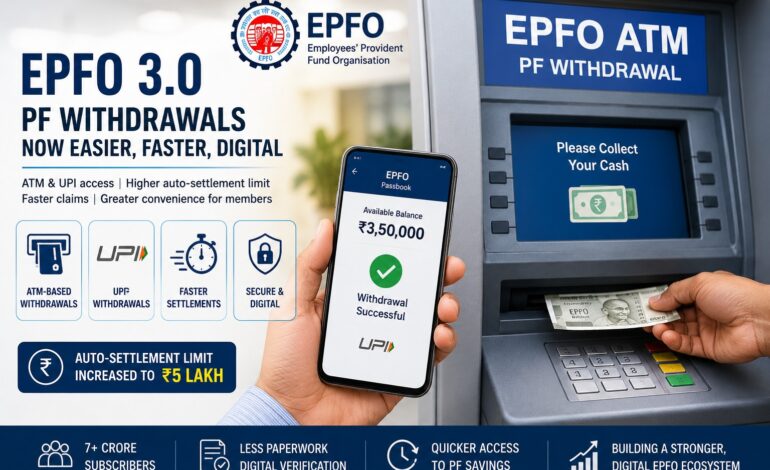
Among the most anticipated features of the proposed framework is the ability for subscribers to withdraw provident fund (PF) balances through ATM-like cards and Unified Payments Interface (UPI), reducing dependence on lengthy claim-processing procedures and physical documentation.

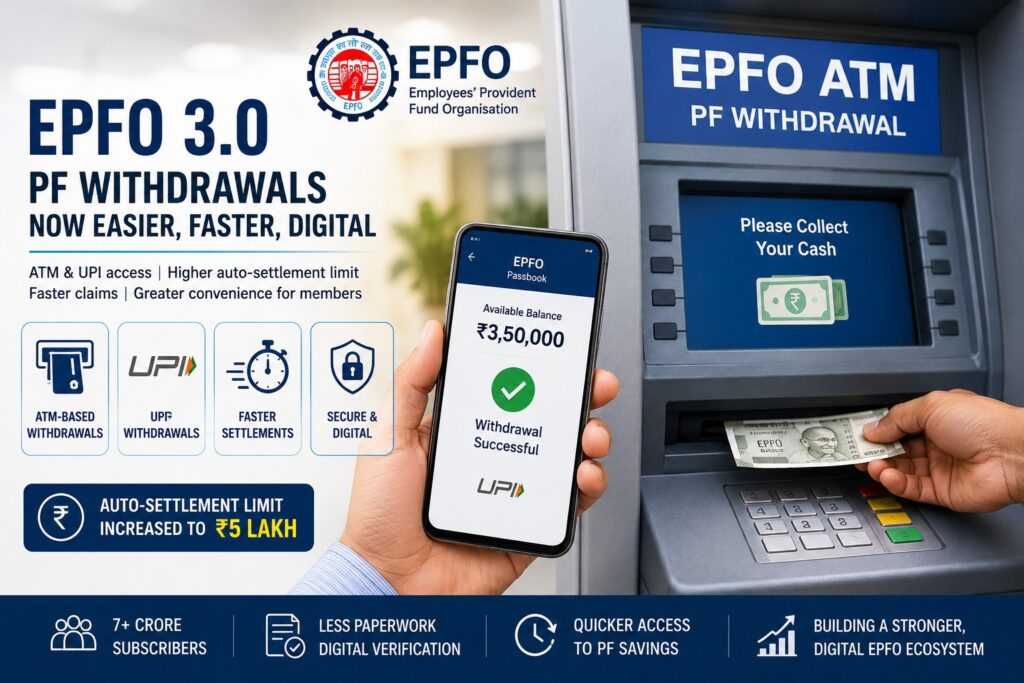
New Delhi: Employees’ Provident Fund Organisation (EPFO) is preparing for one of the most significant upgrades in its history with the rollout of EPFO 3.0, a technology-driven transformation designed to simplify provident fund management and provide faster access to retirement savings.
Among the most anticipated features of the proposed framework is the ability for subscribers to withdraw provident fund (PF) balances through ATM-like cards and Unified Payments Interface (UPI), reducing dependence on lengthy claim-processing procedures and physical documentation.
The initiative is part of EPFO’s broader effort to modernise its systems through a core banking-style architecture, enabling faster claim processing, improved account management and greater convenience for members.
Faster Access to PF Savings
Traditionally, PF withdrawals often involved multiple verification steps and waiting periods that could extend to several days or even weeks. Under the proposed EPFO 3.0 framework, a large share of claims is expected to be processed automatically, significantly reducing settlement times. The auto-settlement limit for advance claims has reportedly been increased to ₹5 lakh from the earlier ₹1 lakh threshold.
The new system is expected to eliminate the need for employer attestation in most routine withdrawal cases, allowing members to access eligible funds more quickly through Aadhaar-based authentication and digital verification.
How ATM-Based Withdrawals May Work
According to reports surrounding the EPFO 3.0 roadmap, subscribers may receive ATM-like cards linked to their PF accounts, enabling withdrawals in a manner similar to banking transactions. UPI-based withdrawals are also expected to be integrated into the system, providing instant digital access to eligible funds.
However, the facility will remain subject to existing withdrawal eligibility conditions prescribed under EPF regulations. The new framework changes the mode of access, not the underlying withdrawal rules.
Withdrawal Limits Remain a Key Consideration
While final operational guidelines are yet to be formally notified, various reports indicate that withdrawals through ATM and UPI channels may be capped at 50% to 75% of eligible PF balances, with a portion of the corpus retained to protect long-term retirement savings.
Industry experts note that maintaining a minimum balance is intended to preserve the retirement-oriented nature of provident fund savings while still providing members access to funds during emergencies, education, housing requirements or other approved purposes.
No Change in Tax Rules
Although access mechanisms are becoming more digital, taxation rules on PF withdrawals remain unchanged. Withdrawals after five years of continuous service continue to enjoy tax benefits, while early withdrawals above prescribed limits may attract tax deduction at source (TDS) and other applicable tax provisions.
Towards a Digital Social Security Ecosystem
The EPFO 3.0 initiative is also expected to introduce enhanced self-service capabilities, easier profile corrections, real-time tracking of claims and AI-enabled member support. The transition aligns with the government’s broader vision of creating a digital-first social security ecosystem for India’s workforce.
With more than seven crore active subscribers relying on EPFO for retirement savings, the proposed reforms could significantly improve user experience while strengthening transparency, efficiency and accessibility across one of the world’s largest social security systems.