Explainer | Why the Telangana High Court ordered the removal of HYDRAA Commissioner AV Ranganath
Contrary to popular perception, the order was not about HYDRAA's anti-encroachment mission itself. The court's concern centred on whether a statutory authority can continue to function after repeatedly violating judicial
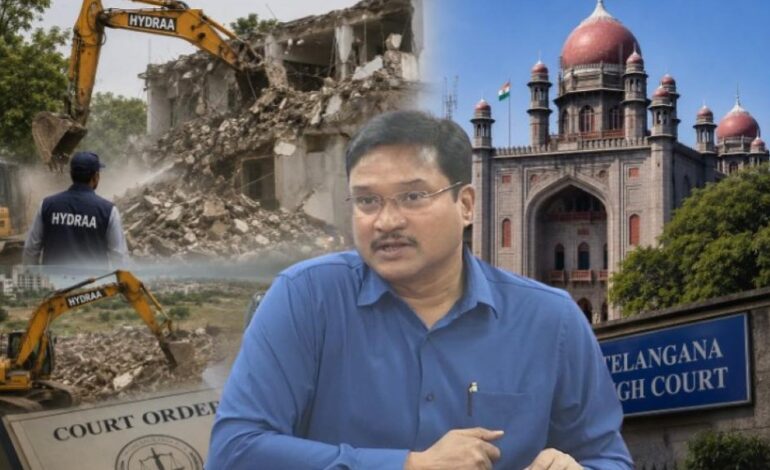
The court observed that an officer facing around 63 contempt of court cases could not continue in such a sensitive public office.

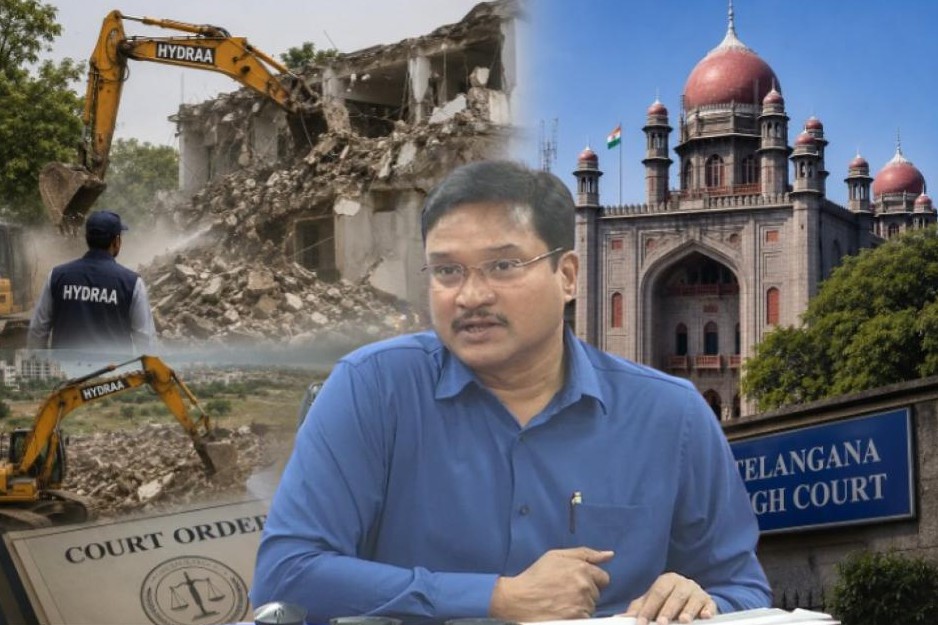
HYDERABAD: The Telangana High Court’s direction to the state government to replace HYDRAA Commissioner AV Ranganath is one of the most significant judicial interventions since the Hyderabad Disaster Response and Asset Protection Agency (HYDRAA) was established in 2024. Contrary to popular perception, the order was not about HYDRAA’s anti-encroachment mission itself. The court’s concern centred on whether a statutory authority can continue to function after repeatedly violating judicial orders.
What did the High Court order?
On July 27, Justice Jukanti Anil Kumar directed the Telangana Chief Secretary to relieve AV Ranganath from the post of HYDRAA Commissioner and appoint another officer of Inspector General rank to head the agency. The court observed that an officer facing around 63 contempt of court cases could not continue in such a sensitive public office. It also rejected Ranganath’s unconditional apology, holding that repeated violations of court orders could not be brushed aside merely by tendering an apology.
What triggered the controversy?
The immediate trigger was a batch of contempt petitions filed by Shanta Sriram Constructions Pvt Ltd concerning nearly 40 acres of disputed land at Lothkunta in Medchal-Malkajgiri district.
The company alleged that despite clear High Court directions restraining interference, HYDRAA officials entered the property, erected fencing and carried out actions affecting possession. The court was hearing whether these actions amounted to wilful disobedience of its earlier orders.
The legal issue was contempt, not encroachment
The proceedings were not intended to determine ownership of the disputed land.
Instead, the court examined whether HYDRAA, while pursuing public interest objectives such as protecting lakes and government land, had ignored binding judicial orders. Under the Contempt of Courts Act, wilful disobedience of a court’s order can attract contempt proceedings irrespective of the merits of the underlying dispute.
The High Court repeatedly stressed that government agencies are bound by judicial directions until they are modified or set aside by a higher court.
Why did the court take such a strong view?
The July 27 order did not arise in isolation.
Over the past several months, different Benches of the Telangana High Court had repeatedly criticised HYDRAA in various land-related matters for allegedly:
- proceeding with demolitions despite status quo orders;
- entering disputed properties while litigation was pending;
- failing to comply with earlier judicial directions;
- delaying implementation of court orders; and
- repeatedly facing contempt petitions.
Justice Anil Kumar observed that the issue had gone beyond an individual land dispute and had become one affecting the administration of justice itself.
Timeline of events
July 2024
The Telangana Government establishes HYDRAA as a specialised agency for disaster response, protection of government assets, lakes and public lands, with IPS officer A.V. Ranganath appointed as its first Commissioner.
2025–2026
Several property owners approach the High Court alleging illegal demolitions, fencing and interference despite pending litigation. Multiple contempt proceedings are initiated against HYDRAA in different cases.
Mid-July 2026
The High Court expresses strong displeasure over alleged violations of status quo orders in the Lothkunta land dispute and seeks explanations from HYDRAA officials.
July 24, 2026
Justice Anil Kumar directs A.V. Ranganath to file an affidavit containing an apology and explanation regarding alleged contempt of court after expressing dissatisfaction with HYDRAA’s conduct.
July 24–25, 2026
The court briefly orders Army protection for the disputed property after expressing loss of confidence in the State machinery, although the direction is subsequently kept in abeyance following assurances by the Advocate General.
July 27, 2026
Rejecting the Commissioner’s apology, the High Court directs the Chief Secretary to replace A.V. Ranganath as HYDRAA Commissioner.
Does the order affect HYDRAA?
No.
The High Court did not strike down HYDRAA or question its statutory mandate.
HYDRAA continues to function as the agency responsible for protecting public lands, lakes and government assets across the Hyderabad metropolitan region. The court’s direction relates specifically to the leadership of the organisation and compliance with judicial orders.
Why is the judgment significant?
The order reinforces an important constitutional principle: no public authority, however important its objective, is above the law.
Courts have consistently held that executive agencies must obey judicial orders until those orders are modified through due legal process. The High Court’s intervention signals that even agencies pursuing environmental protection, anti-encroachment drives or public interest objectives must remain accountable to the rule of law.
For Telangana, the case is likely to become an important precedent on balancing strong executive action with constitutional safeguards, judicial oversight and protection of individual rights.
What happens next?
The State Government is expected to act on the High Court’s direction regarding the appointment of a new HYDRAA Commissioner. Meanwhile, the contempt proceedings and the underlying land dispute will continue before the High Court, which will determine whether any further legal consequences arise from the alleged violations.
Digital India Times Analysis: While HYDRAA’s anti-encroachment campaigns have earned public support for reclaiming lakes and government lands, the High Court has drawn a clear constitutional line: administrative efficiency and public purpose cannot come at the cost of judicial discipline. The case is therefore less about land ownership and more about the supremacy of the rule of law in democratic governance.