BHASHINI showcases multilingual AI for Haryana Assembly to advance language-first legislative governance
Digital India BHASHINI demonstrated AI-powered speech recognition, translation and transcription tools to Haryana Vidhan Sabha, promoting multilingual, accessible and citizen-centric legislative governance.
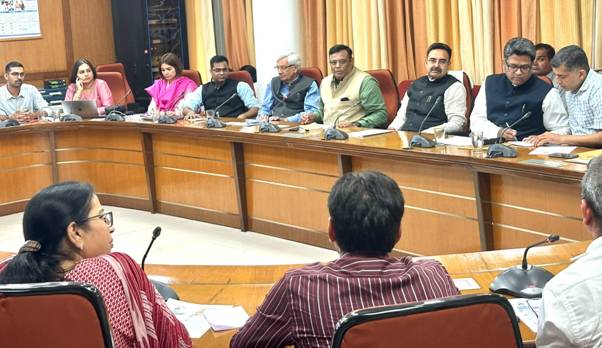
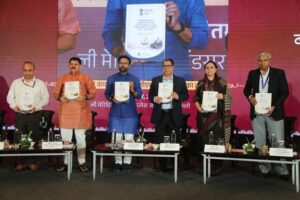
The workshop brought together Members of the Legislative Assembly, officials from the Translation, Publication and Information Technology Wings of the Haryana Vidhan Sabha Secretariat, and other stakeholders to explore the transformative potential of multilingual AI in legislative processes.

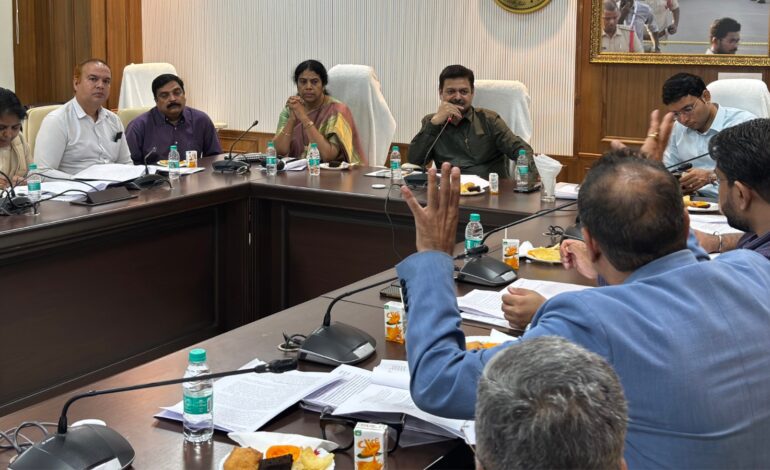
NEW DELHI: The Digital India BHASHINI Division (DIBD), under the Ministry of Electronics and Information Technology (MeitY), has taken another step towards integrating artificial intelligence into democratic governance by conducting a Multilingual AI Workshop for the Haryana Vidhan Sabha Secretariat. The initiative showcased how indigenous language technologies can modernise legislative workflows while making governance more inclusive, accessible and citizen-centric.
The workshop brought together Members of the Legislative Assembly, officials from the Translation, Publication and Information Technology Wings of the Haryana Vidhan Sabha Secretariat, and other stakeholders to explore the transformative potential of multilingual AI in legislative processes. It focused on how language technologies can improve legislative documentation, facilitate seamless multilingual communication and expand public access to legislative information in citizens’ preferred languages.
The Digital India BHASHINI Division demonstrated a range of AI-powered language technologies, including Automatic Speech Recognition (ASR), Neural Machine Translation (NMT), Text-to-Speech (TTS), Optical Character Recognition (OCR), transliteration and multilingual APIs. Live demonstrations enabled participants to experience real-time speech recognition, transcription, translation and document processing, highlighting how these tools can simplify legislative documentation, multilingual publishing, digital record management and citizen engagement.
The workshop also explored opportunities to deploy voice-first AI technologies within legislative institutions to improve multilingual access to Assembly proceedings and official documents. Discussions centred on leveraging language AI to strengthen transparency, accelerate digital transformation and enable broader public participation in democratic processes.
Addressing the participants, Amitabh Nag, CEO of the Digital India BHASHINI Division, said India’s vision of Digital Public Infrastructure must be language-first, ensuring every citizen can access digital public services in the language they understand best. He emphasised that collaboration between governments, technology partners and public institutions would be essential to accelerate the adoption of multilingual AI across governance ecosystems.
Haryana Vidhan Sabha Speaker Harvinder Kalyan said artificial intelligence should complement rather than replace human intelligence. He noted that voice-first multilingual technologies can improve efficiency, documentation and citizen accessibility while preserving human judgment, accountability and the integrity of legislative proceedings.
Rajiv Prashad, Secretary, Haryana Vidhan Sabha, highlighted that AI-enabled tools could significantly simplify transcription, translation and documentation. However, he stressed that human validation would remain indispensable to ensure the accuracy and authenticity of official legislative records.
Ram Narayan Yadav, Advisor to the Speaker, said BHASHINI’s AI-powered transcription and translation capabilities would be valuable for legislative proceedings, while emphasising the need for careful human oversight to ensure factual accuracy, grammatical correctness and appropriate language selection.
The workshop reflects BHASHINI’s broader mission of building Language-First Digital Public Infrastructure, where language barriers no longer restrict citizens’ access to government services. According to the Digital India BHASHINI Division, the platform currently powers more than 800 government websites, has enabled over 8 billion cumulative AI inferences, processes more than 20 million AI inferences every day, and supports 36 Indian text languages, 23 Indian voice languages and 35 international languages. These capabilities are positioning BHASHINI as one of the world’s largest multilingual AI ecosystems for public digital services.
As governments increasingly adopt artificial intelligence to modernise governance, language technologies are emerging as a critical pillar of Digital India. By enabling real-time translation, transcription and multilingual communication across legislative institutions, BHASHINI is helping ensure that governance becomes more transparent, inclusive and accessible to India’s linguistically diverse population, reinforcing the country’s vision of technology-enabled, citizen-first public administration.