Western Region is India’s ‘WEST Engine’ of growth, says Amit Shah
Amit Shah described western India as the “WEST Engine” of growth at the 28th Western Zonal Council meeting, citing its strength in finance, exports, start-ups, semiconductors, tourism and the blue
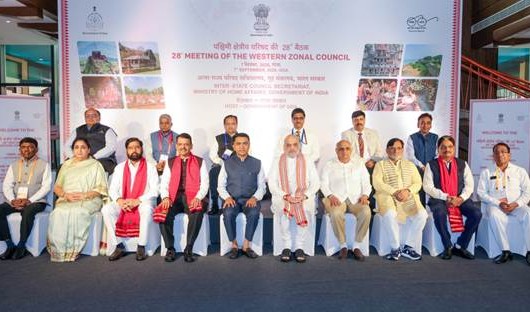
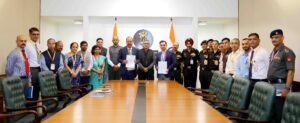
Union Home Minister and Minister of Cooperation Amit Shah chairs the 28th meeting of the Western Zonal Council in Panaji, Goa, in the presence of Goa Chief Minister Pramod Sawant, Gujarat Chief Minister Bhupendra Patel, Maharashtra Chief Minister Devendra Fadnavis and Administrator of Dadra and Nagar Haveli and Daman and Diu Praful K. Patel, along with senior officials, on Monday.

PANAJI: Union Home Minister and Minister of Cooperation Amit Shah on Monday described the Western Region as the “WEST Engine” of India’s economic growth, highlighting its strength in finance, exports, start-ups, semiconductors, tourism and the blue economy.
Shah was speaking while chairing the 28th meeting of the Western Zonal Council in Panaji, Goa, attended by Goa Chief Minister Pramod Sawant, Gujarat Chief Minister Bhupendra Patel, Maharashtra Chief Minister Devendra Fadnavis and Administrator of Dadra and Nagar Haveli and Daman and Diu Praful K. Patel, besides senior officials of the Centre and the member states and Union Territory.
According to the Ministry of Home Affairs, Shah said the Western Region is the country’s largest economic, industrial and financial centre and has made a significant contribution to India’s economic growth.
He pointed to India recording a 7.8% growth rate in the first quarter of financial year 2026-27 despite global turbulence.
‘WEST Engine’ spans finance to tourism
Shah described the Western Region as the “WEST Engine” of India’s economic growth.
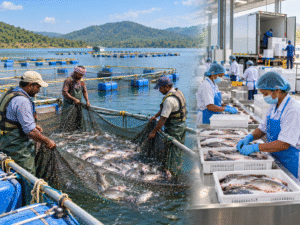
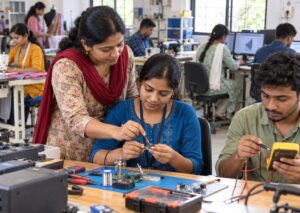
He said W represents wealth and finance, E exports and ports, S start-ups and semiconductors, and T tourism and the blue economy.
The region accounts for major economic assets across these sectors. More than one crore tourists visit Goa annually, including around five lakh foreign tourists, while tourism contributes 16% of Goa’s GSDP.
Maharashtra leads the country with 33,872 start-ups, according to Shah. Dholera in Gujarat has emerged as a semiconductor hub, while Mundra Port handles the highest volume of cargo and Deendayal Port is the largest port in terms of cargo volume.
Mumbai, meanwhile, continues to be the country’s financial capital and is emerging as a major hub for global capital.
Shah also highlighted Goa’s contribution to economic growth through tourism, high per capita income and mining despite the state’s relatively small geographical size.
Zonal Council meetings rise nearly three-fold
Shah said the increased activity of Zonal Councils under Prime Minister Narendra Modi reflected the Centre’s emphasis on cooperative federalism.
Between 2004 and 2014, a total of 25 meetings of the Zonal Councils and their Standing Committees were held. Since 2014, the number has risen to 71 — nearly three times the earlier figure.
A total of 1,893 issues have been discussed in these meetings, of which 1,445 have been resolved, he said.
According to Shah, the Zonal Councils have increasingly evolved from platforms primarily focused on dispute resolution into mechanisms for monitoring the implementation of public welfare schemes.
He said there are no longer disputes among the states of the Western Region and noted that several inter-state river-related disputes have also been resolved through the Zonal Council mechanism.
Focus on welfare and security
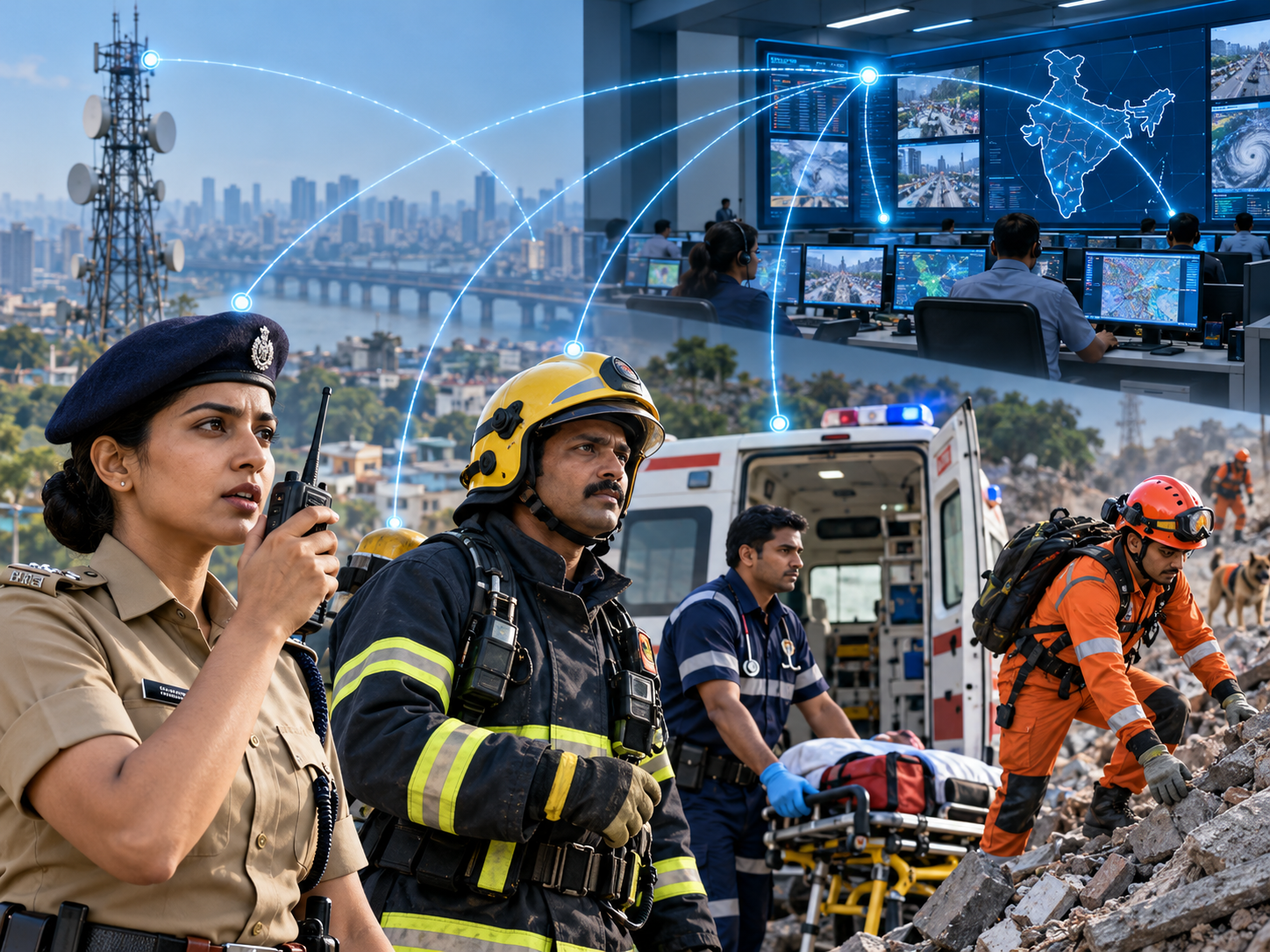
The meeting reviewed issues covering a range of development and public welfare programmes, including Fast Track Special Courts for speedy investigation and disposal of rape cases involving women and children, Emergency Response Support System (ERSS-112), food safety standards, Ayushman Bharat-PM Jan Arogya Yojana, banking facilities in villages, railway development projects and environmental clearances.
Other issues included urban master planning, electricity supply, strengthening Primary Agricultural Credit Societies (PACSs), tackling child malnutrition through Poshan Abhiyaan, reducing school dropout rates and increasing participation of public hospitals in the Ayushman Bharat programme.
Cybercrime and digital infrastructure were also among the issues discussed.
Push for stronger cybercrime response
Shah said Prime Minister Modi was continuously monitoring the strategy against cybercrime through PRAGATI.
He called for cooperative banks to be connected with the relevant financial cyber-fraud response systems and encouraged their integration with MuleHunter AI. He also stressed the need to connect cooperative banks with the Indian Cybercrime Coordination Centre (I4C).
He said the Western Region should play a leading role in implementing the new criminal laws and strengthening India’s fight against drugs.
The region was also urged to take advantage of the Centre’s data-centre policy, while Shah noted that all four members of the Western Zonal Council were leading the country in green energy.
PACS computerisation highlighted
Shah highlighted progress in the computerisation of Primary Agricultural Credit Societies, with Maharashtra achieving 98% and Gujarat 92% computerisation, according to the ministry.
He also called upon states to adopt the Gobardhan model established by Banas Dairy.
Coastal security was another area of focus, with Shah stating that the Ministry of Home Affairs would intensify work on coastal security over the next two years.
The meeting brought together the Western Region’s state and Union Territory administrations with the Centre to review implementation of development, welfare, security and infrastructure priorities.