AI and genomics to reshape healthcare; clinical judgement remains vital: Jitendra Singh
At SRIHER’s convocation in Chennai, the Union Minister called for stronger research partnerships in precision medicine and greater attention to preventing chronic diseases among younger people.
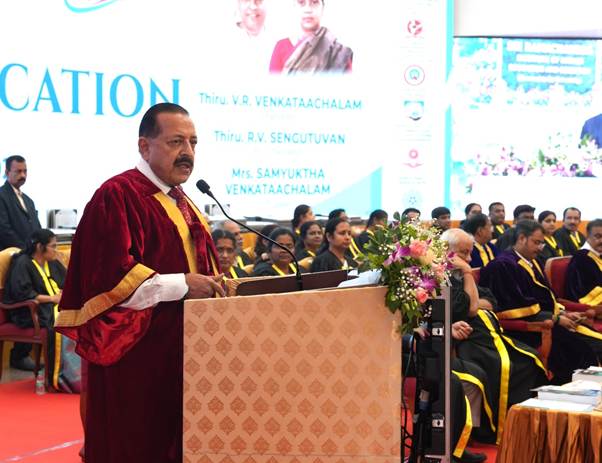
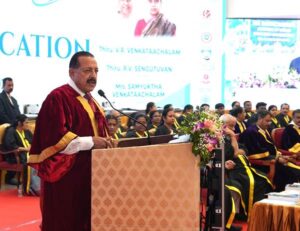
Union Minister Jitendra Singh addresses the 42nd convocation of Sri Ramachandra Institute of Higher Education and Research (SRIHER) in Chennai on Thursday.

CHENNAI: Artificial intelligence and genomics will increasingly shape diagnosis, treatment and personalised healthcare, but doctors must combine these technologies with sound clinical judgement, Union Minister Jitendra Singh said.
Addressing the 42nd convocation of Sri Ramachandra Institute of Higher Education and Research (SRIHER) on October 22, Singh said the next generation of medical professionals would have access to powerful enabling technologies while facing the responsibility of integrating them effectively into patient care.
The world was entering an era of “AI-guided, gene-driven precision medicine”, he said, describing India as an emerging provider of advanced healthcare solutions.
Singh, a physician and professor of medicine and diabetes, said genomic information could help doctors tailor treatment to individual patients by considering their genetic profiles alongside lifestyle and environmental factors. Translating these advances into better clinical outcomes would require collaboration between researchers, hospitals, universities and technology developers.
He invited SRIHER to expand its participation in national research initiatives in genomics, biomanufacturing and nuclear medicine. Partnerships involving government research institutions, healthcare providers and industry could help develop effective and affordable healthcare solutions, he said.
Referring to India’s research capabilities, Singh cited the development of an indigenous DNA vaccine against COVID-19, ongoing vaccine research targeting dengue and malaria, and advances in gene therapy for haemophilia.
He also referred to indigenous drug development, including nafithromycin for community-acquired bacterial pneumonia, and nuclear medicine research involving acute lymphoblastic leukaemia and fatty liver disease. These developments reflected the expanding capabilities of Indian scientific and medical institutions, he said.
Alongside technological advances, Singh identified preventive healthcare as a priority, pointing to the increasing incidence of diabetes and cardiovascular diseases among younger people.
Drawing on nearly four decades of clinical experience, he said healthcare systems continued to face communicable diseases while also managing a growing burden of chronic conditions and the demands associated with longer life expectancy.
A person developing diabetes at 30 could live with the condition for several decades, making early intervention, protection of vital organs and prevention of complications particularly important, he said.
Singh called for sustained attention to prevention and long-term disease management, describing the health of young people as central to India’s future productive capacity.
The convocation was attended by SRIHER Chancellor VR Venkatachalam and senior institutional representatives. Singh presented degrees to medical graduates and congratulated postgraduate and super-specialty students and gold medallists.