NITI Aayog releases framework to guide sustainable data centre growth
States urged to assess power, water and infrastructure readiness before backing projects, as India’s data centre capacity reaches about 1.5 GW amid rising demand for AI and cloud services.

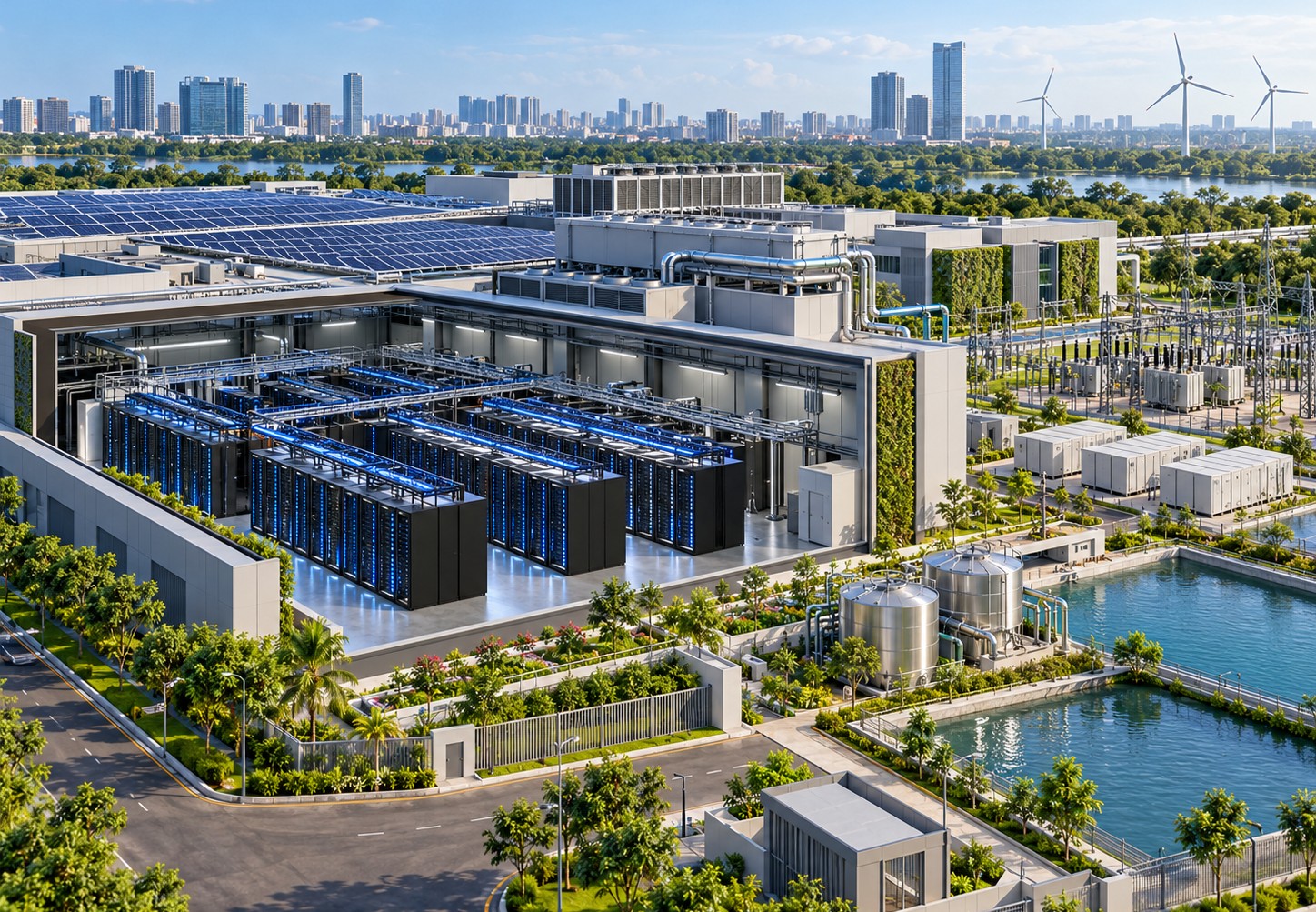
Representational image of a data centre campus integrating renewable energy, cooling systems and water management infrastructure.


NEW DELHI: NITI Aayog’s Frontier Tech Hub has released a Data Centre Evaluation Framework to help states assess infrastructure readiness, resource availability and the long-term economic benefits of data centre investments.
Launched on October 14, the framework encourages states to move beyond attracting investment towards preparing locations that can sustainably support projects, NITI Aayog said in a statement on October 15.
India’s data centre capacity has increased from about 375 MW in 2020 to approximately 1.5 GW, driven by demand for artificial intelligence, cloud computing, high-performance computing and other data-intensive applications, the statement said.
The expansion is increasing pressure on electricity, water, land, connectivity and local infrastructure, making advance planning critical.
Developed with inputs from industry and the ministries of electronics and information technology, power, and commerce, the framework covers five pillars: power and energy; water and cooling; siting and environmental sustainability; economic and strategic value; and policy, governance and implementation.
It recommends assessing grid readiness and net electricity draw, promoting renewable energy backed by storage, and evaluating water stress and the potential impact on public supplies. Other measures include rainwater harvesting, on-site water treatment and storage, and lifecycle plans for electronic waste, batteries and hazardous waste.
To improve economic returns, the framework calls for identifying suitable data centre zones, distinguishing colocation facilities from active computing services, and linking state incentives to measurable outcomes. It also recommends promoting domestic manufacturing across IT and supporting infrastructure, alongside time-bound approvals and clear accountability.
NITI Aayog CEO Anurag Jain said states should assess infrastructure availability, resource requirements and economic benefits before committing support. The framework is intended to improve decisions and project execution without adding another layer of regulation.
NITI Aayog Member Abhay Karandikar emphasised domestic research, industry–academia collaboration and Indian participation in the data centre technology value chain, including advanced cooling, energy efficiency and resource-efficient computing.
The framework is designed as a decision-support tool to identify constraints early, reduce implementation risks and help states turn investment proposals into sustainable capacity.
Access the framework here: https://www.niti.gov.in/sites/default/files/2026-10/Data-Centre-Evaluation-Framework-to-Help-States-Plan-for-Sustainable-Growth.pdf