SIM binding could disrupt messaging access and raise business costs, Esya study finds
A survey of 2,033 consumers and 353 businesses flags concerns over messaging restrictions, but predates the replacement of mandatory six-hour web logouts with a risk-based approach.
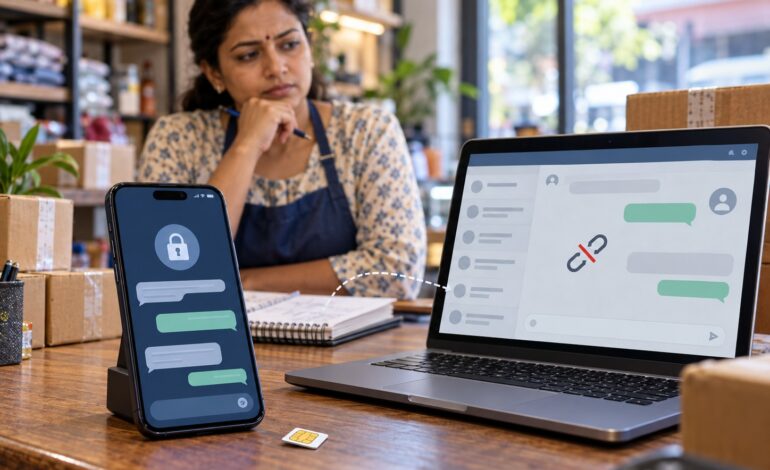
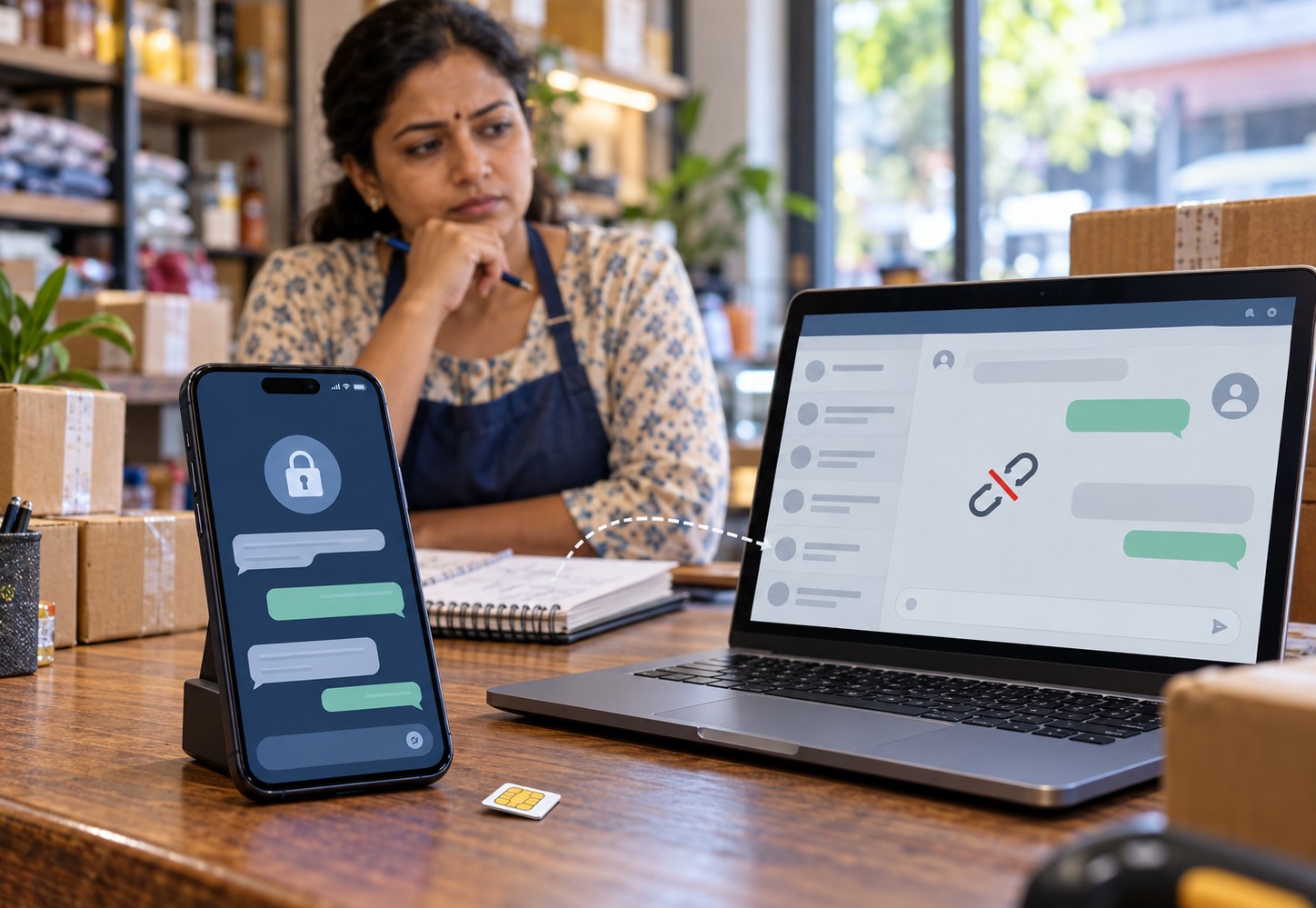
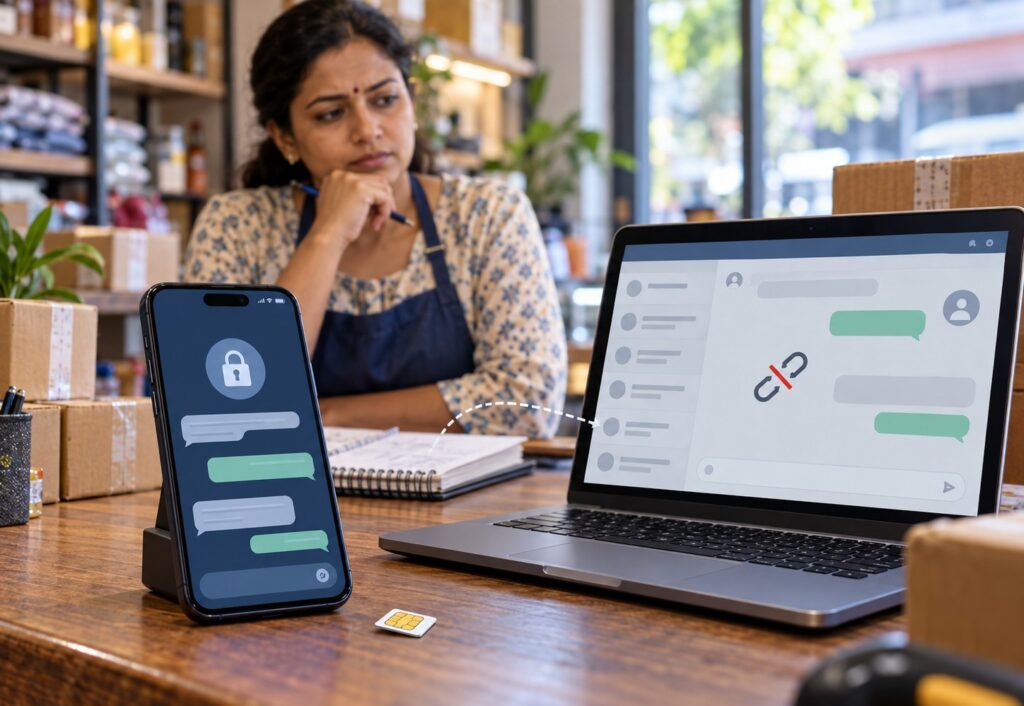
Representative image illustrating SIM-linked messaging access and potential disruptions to small business communication.

NEW DELHI: SIM-linked restrictions on messaging applications could interrupt everyday communication and increase operating costs for small businesses, according to an Esya Centre study that recommends targeted safeguards against cyberfraud while preserving access across devices.
The New Delhi-based technology policy think tank announced the findings on October 14 in its report, “Rethinking India’s SIM Binding Directive: An Empirical Assessment”. The study surveyed 2,033 consumers across 18 cities and 353 businesses across 17 cities.
According to the release, the Department of Telecommunications directed internet messaging applications in November 2025 to keep accounts linked to users’ registered SIM cards. An initial requirement for automatic logout from web sessions every six hours was subsequently replaced with risk-based logouts.
The surveys were conducted between February and April 2026, before that change. The findings therefore reflect anticipated difficulties under access restrictions, rather than observed effects of the revised framework.
Across the consumer sample, 98.8% said losing messaging access while travelling because their primary SIM was inactive would be extremely or moderately inconvenient. The same proportion anticipated inconvenience if internet calling became unavailable during an emergency because their primary SIM could not be used.
Among respondents using messaging applications across multiple devices, 97.7% said forced logouts from companion devices would be extremely or moderately inconvenient.
The study also examined connectivity arrangements among 73 respondents who travel internationally at least once a year. Only about one-third used an Indian SIM with active roaming; the remainder relied on local SIM cards, Wi-Fi or secondary SIM arrangements.
For businesses, messaging services were widely used across devices: around 92% of those surveyed used laptops, desktops or tablets as companion devices, while 86% used the same business number on multiple devices.
When presented with a scenario restricting access to a single handset, approximately 78% anticipated substantial operational disruption and 83.5% expected delays or errors. Separately, 82% said forced logouts would disrupt operations.
Businesses also anticipated additional expenditure on workplaces, equipment and staffing. Overall, 76.3% expected SIM-linked access restrictions to have an extremely or very significant financial impact. These responses describe expectations under the scenarios presented, rather than costs already incurred.
On security, approximately 81% of surveyed businesses and 59% of consumers did not believe SIM binding would meaningfully improve security or make messaging platforms safer. The report noted that these were stakeholder perceptions, not a direct measurement of fraud prevention.
Esya Centre recommended stronger customer verification and SIM issuance safeguards, improved fraud detection and action against mule account networks. It also called for measures addressing credential theft, compromised devices and social engineering, alongside an assessment of regulatory interventions’ security benefits and effects on communication access and business costs.