BHASHINI, Manipur sign MoU to advance multilingual AI in public services
The partnership will identify priority uses, strengthen local language datasets and explore AI tools for education, healthcare, legal services and grievance redressal across the state.
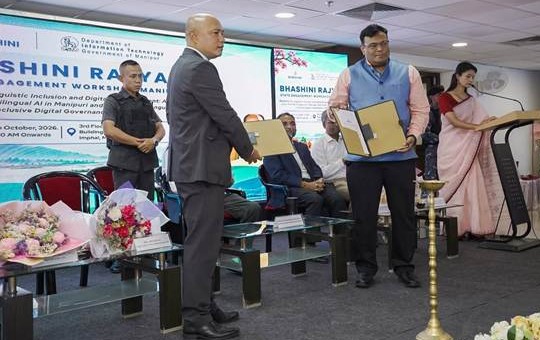
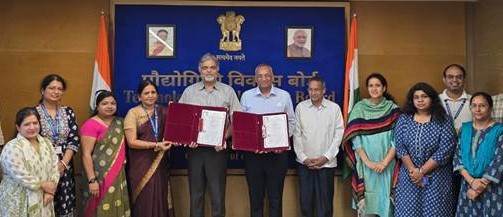
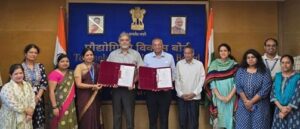
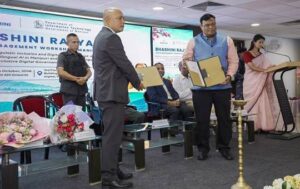
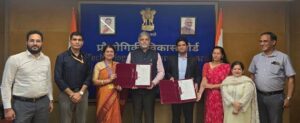
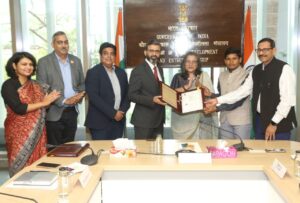
BHASHINI CEO Amitabh Nag and Manipur Information Technology Secretary Somorjit Salam represented the two organisations in signing the agreement. Chief Minister Yumnam Khemchand Singh attended the programme.

IMPHAL: The Digital India BHASHINI Division and the Manipur government have signed a memorandum of understanding to strengthen language technology and explore multilingual access to government and citizen-facing digital services.
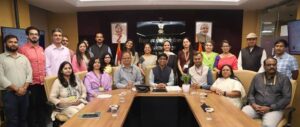
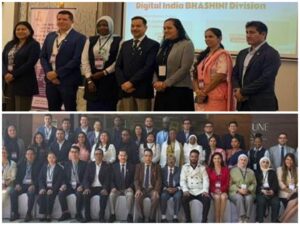
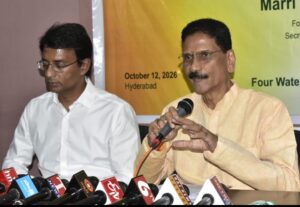
The agreement was signed at the BHASHINI Rajyam Workshop in Imphal on October 14, the Ministry of Electronics and Information Technology said in a statement on October 15. The workshop brought together government representatives and other stakeholders to discuss local language resources and applications of multilingual artificial intelligence.
BHASHINI CEO Amitabh Nag and Manipur Information Technology Secretary Somorjit Salam represented the two organisations in signing the agreement. Chief Minister Yumnam Khemchand Singh attended the programme.
The collaboration will focus on identifying priority use cases, assessing language-data requirements and exploring the integration of BHASHINI technologies into relevant government platforms. Language experts and local communities will be involved in developing and validating solutions suited to the state’s needs.
A live demonstration of real-time English-to-Manipuri translation illustrated the technology’s potential to bridge communication gaps. Discussions also examined applications in education, healthcare, legal services and grievance redressal.
Salam emphasised the need for carefully tested solutions that people can understand and use confidently. Nag said the partnership would seek to expand practical applications and reduce language barriers to digital services.
The workshop highlighted Manipur’s linguistic diversity, including Manipuri, Tangkhul, Thadou, Paite, Hmar and Liangmai. Participants discussed the importance of relevant datasets, local expertise and community participation in improving language models for real-world use.
An interactive BHASHINI Shilpi session introduced developers, students and innovators to its language AI tools and application programming interfaces. The BHASHINI Mitra initiative was presented as a route for institutions and language communities to contribute data.
BHASHINI, which operates under Digital India Corporation, supports language datasets, AI models and applications for multilingual digital services. According to the ministry, it powers more than 800 government websites and supports 36 Indian languages for text and 23 for voice, alongside 35 international languages.