PM Modi inaugurates, launches projects worth over ₹35000 crore in Vadodara
The Prime Minister unveiled and launched development projects worth over ₹35,000 crore in Vadodara, highlighting the 2,800-km freight corridor, manufacturing, AI infrastructure and youth skills.
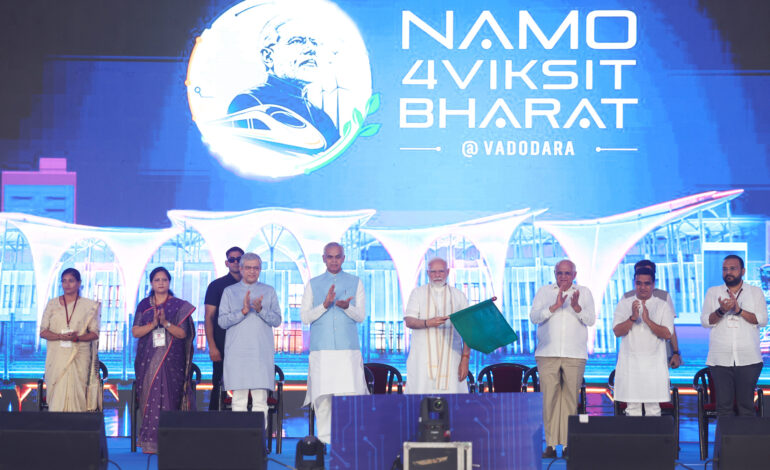
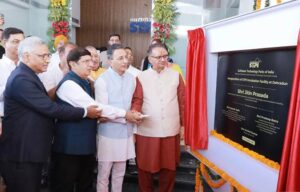
Prime Minister Narendra Modi inaugurates, dedicates to the nation and lays the foundation stones for development projects worth more than ₹35,000 crore in Vadodara on Tuesday.

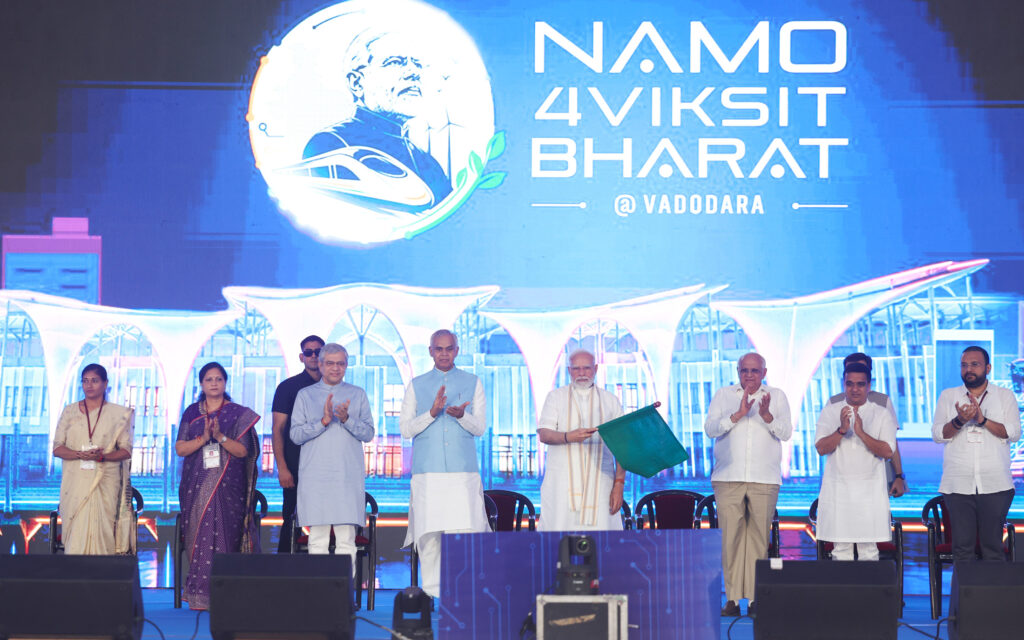
VADODARA: Prime Minister Narendra Modi on Tuesday inaugurated, dedicated to the nation and laid the foundation stones for development projects worth more than ₹35,000 crore in Vadodara, with the completion of the 2,800-km Dedicated Freight Corridor emerging as a key milestone highlighted during the event.
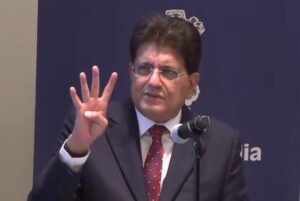
Addressing the gathering at Maharaja Sayajirao University ground, Modi said the infrastructure projects were aimed at accelerating connectivity, creating new opportunities and supporting economic growth as India works towards the goal of Viksit Bharat.
Dedicated Freight Corridor reaches a major milestone
Highlighting the Gati Shakti initiative, Modi said the completion of the 2,800-km Dedicated Freight Corridor marked a historic achievement for 21st-century India.
The Eastern and Western Dedicated Freight Corridors, he said, are transforming the country’s commercial landscape by separating freight and passenger traffic.
According to the Prime Minister, more than 430 cargo trains can now operate daily on the network. He said journeys that earlier took around 30 hours by truck can be completed in 10-12 hours through the freight corridor, reducing travel time, fuel consumption and freight costs while also lowering environmental impact.
The improved logistics network is also benefiting farmers by enabling faster transportation of perishable commodities such as seasonal flowers, vegetables and fruits to larger markets and mandis.
Modi highlighted the operation of a double-stack container freight train from JNPT Port to Vadodara, saying a single such train carried cargo equivalent to more than 250 trucks.
Rail connectivity expands into tribal regions
The Prime Minister also highlighted the expansion of rail services into previously underserved tribal regions of Gujarat, Madhya Pradesh and Maharashtra.
A newly launched train service is expected to benefit commuters travelling to Chhota Udepur and Alirajpur.
Modi said rail connectivity was now reaching parts of the country that had remained without such services for decades.
He also linked investment in railways, roads, metros, airports and gas pipelines to employment creation and the emergence of new industries and businesses around major infrastructure projects.
Vadodara’s manufacturing legacy
Turning to manufacturing, Modi highlighted Vadodara’s industrial evolution over around 150 years, from textiles to petrochemicals, as well as its emergence as a major MSME centre.
He also pointed to the city’s role in India’s aircraft manufacturing capabilities, noting that the first flight of the domestically manufactured C-295 military transport aircraft had taken place in Vadodara.
The Prime Minister cited India’s expanding manufacturing capabilities in railway equipment, saying that since 2014 the country has produced 50,000 modern coaches and introduced nearly 2.5 lakh wagons into the railway network.
From chips to ships
Modi also highlighted India’s growing domestic manufacturing capabilities in renewable energy and other strategic sectors.
He cited the expansion of domestic solar PV module manufacturing and the development of around 200 GW of capacity, along with the Kadana Dam floating solar project.
The PM Surya Ghar Muft Bijli Yojana, he said, has enabled 55 lakh families across the country, including 11 lakh in Gujarat, to become electricity producers while generating employment opportunities.
“India is now writing a new saga of manufacturing from chip to ship,” Modi said.
Building infrastructure for AI
The Prime Minister stressed the need for a robust electricity ecosystem to support emerging technologies such as artificial intelligence and data centres.
He said India was working to secure supplies of uranium, critical minerals and rare earth elements through international agreements, describing these resources and supporting infrastructure as essential to India’s ambition of becoming a global AI power.
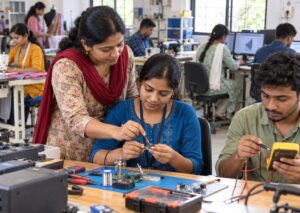
Modi also emphasised the need to equip India’s young population with skills suited to a rapidly changing economy.
He said the National Education Policy is being reoriented towards continuous skill development, with educational and training institutions being adapted to changing global requirements.
Free coaching for competitive examinations
The Prime Minister announced a new initiative to provide free coaching for competitive examinations, aimed at reducing the financial burden on poor and middle-class families.
He said the government would take responsibility for supporting young people preparing for competitive examinations and career opportunities.
Modi also announced plans for a national campaign to build AI capabilities among young people, with applications extending beyond the IT sector to areas such as agriculture, healthcare, robotics and manufacturing.
He said AI skills could improve manufacturing productivity and support the emergence of innovative start-ups.
Calling upon the youth to make the most of India’s demographic advantage, Modi reiterated the goal of transforming the country into a developed nation by 2047.