From Red Tape to Digital Rails: How India is Rewriting the Ease of Doing Business Story
The transformation is reflected in India's rise in global business assessments. The World Bank's Doing Business ranking improved from 142 in 2014 to 63 in 2019, while India's standing in

From startup registration and company incorporation to tax compliance, logistics, land records, environmental approvals and credit access, the government's reforms have sought to reduce friction at every stage of the business lifecycle.

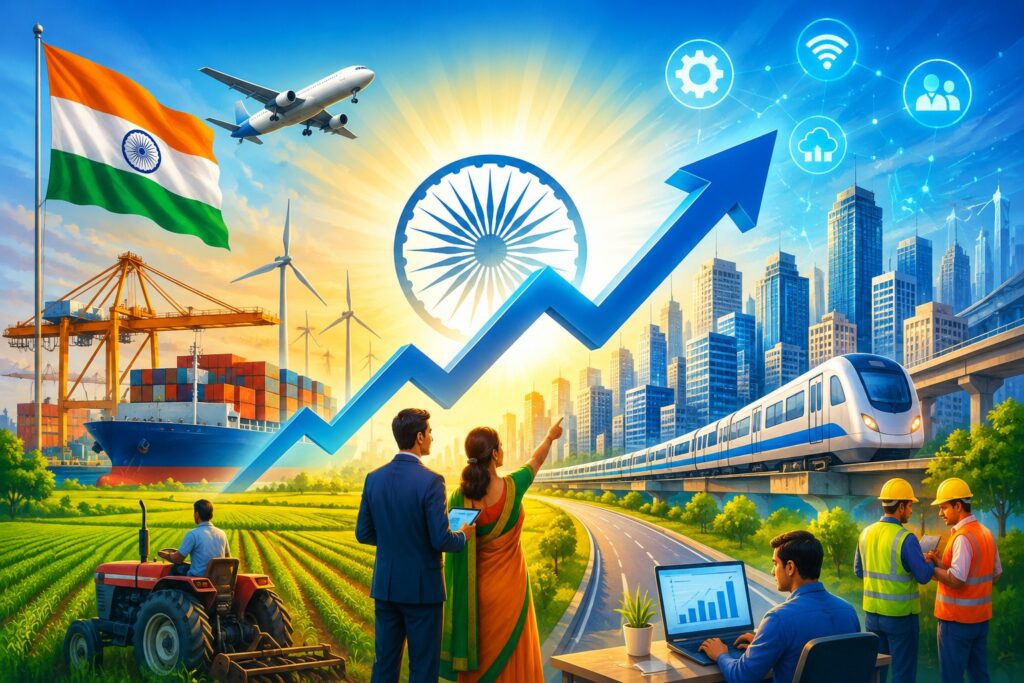
New Delhi: Over the past decade, India has undertaken one of the world’s most ambitious governance transformation exercises, quietly rebuilding the country’s business ecosystem through digital infrastructure, regulatory simplification and trust-based administration.
The results are beginning to show, according to the government sources.
From startup registration and company incorporation to tax compliance, logistics, land records, environmental approvals and credit access, the government’s reforms have sought to reduce friction at every stage of the business lifecycle. The objective has been clear: make it easier to start, operate, expand and close businesses in India while strengthening transparency and accountability.
The transformation is reflected in India’s rise in global business assessments. The World Bank’s Doing Business ranking improved from 142 in 2014 to 63 in 2019, while India’s standing in international competitiveness and digital governance indices has steadily strengthened.
The Startup Revolution
Perhaps nowhere is the impact more visible than in India’s startup ecosystem.
When Startup India was launched in 2016, only 502 startups had been officially recognised, creating just over 300 direct jobs. A decade later, more than 2.23 lakh startups have been recognised, generating over 23.3 lakh direct employment opportunities across the country. Nearly half of these startups have at least one woman founder or director, reflecting a significant shift in entrepreneurial participation.
The ecosystem today is supported by seed funding, credit guarantee mechanisms, investor-connect platforms and policy support designed to encourage innovation-led growth.
Starting a Business in Hours, Not Weeks
India’s company incorporation process has undergone a dramatic transformation.
The introduction of the SPICe+ platform consolidated multiple registrations—including PAN, TAN, GST, EPFO, ESIC, professional tax and bank account opening—into a single digital workflow. What once required multiple forms and visits to government offices can now be completed through a streamlined online process.
Complementing this is MCA21 Version 3, an AI-enabled corporate governance platform that has processed nearly 3.84 crore filings between 2021 and 2025, significantly reducing manual intervention and improving compliance efficiency.
For MSMEs, the Udyam Registration Portal has replaced cumbersome paperwork with a self-declaration-based registration mechanism. Registrations have surged from around 10,000 in 2020 to more than 8.58 lakh by June 2026.
Bringing Land Records into the Digital Age
Property registration and land ownership have historically been among India’s most complex administrative challenges.
The Digital India Land Records Modernization Programme has digitised more than 97 percent of cadastral maps across the country. Citizens in 19 states can now access legally valid digital land records from home, while banks in hundreds of districts can verify mortgages online, accelerating credit approvals.
The introduction of the Unique Land Parcel Identification Number (ULPIN), often described as the “Aadhaar for Land,” has assigned unique identifiers to more than 36 crore land parcels, reducing duplication and improving transparency.
Meanwhile, the National Generic Document Registration System is gradually creating a “One Nation, One Registration” framework for property transactions.
Reducing the Licence Raj
One of the government’s major goals has been to move away from what businesses long described as an “Inspector Raj.”
Labour law reforms have consolidated multiple registrations and approvals into simpler digital processes. A single registration can now replace several separate registrations, while deemed approvals and electronic licensing have reduced procedural delays.
Environmental clearances have also become faster through the PARIVESH portal, which has reduced average environmental clearance timelines to 64 days compared with the earlier benchmark of 105 days.
The National Single Window System has further integrated approvals from dozens of central ministries and state governments into a unified platform, granting more than 8.29 lakh approvals since its launch.
Connecting Businesses to Markets
Ease of doing business is not only about approvals—it is also about access to customers.
The Government e-Marketplace (GeM) has emerged as one of the world’s largest public procurement platforms. The platform has achieved cumulative transactions worth ₹18.4 lakh crore and provides market access to startups, women entrepreneurs, self-help groups and MSMEs. More than 35,000 startups have collectively secured orders worth over ₹51,000 crore through GeM.
Similarly, the Open Network for Digital Commerce (ONDC) seeks to democratise digital commerce by reducing dependence on dominant platforms and creating an open digital marketplace. With sellers spread across more than 600 cities, ONDC is expanding opportunities for small businesses nationwide.
Building a Logistics Backbone
Logistics costs have long been cited as a challenge for Indian industry.
The PM GatiShakti National Master Plan, National Logistics Portal and Logistics Data Bank are helping integrate transportation networks and improve supply chain efficiency. India’s ranking in the World Bank’s Logistics Performance Index improved from 54th in 2014 to 38th in 2023.
The PM GatiShakti platform now brings together 58 central ministries and all states and union territories on a common digital infrastructure planning framework, helping reduce duplication and improve project execution.
Democratizing Access to Credit
For small businesses, access to affordable credit can be the difference between survival and growth.
Government-backed credit guarantee schemes have approved guarantees worth more than ₹9.34 lakh crore for micro and small enterprises. The Emergency Credit Line Guarantee Scheme provided critical support during economic disruptions, with a large share directed toward MSMEs.
The Pradhan Mantri Mudra Yojana has emerged as one of the world’s largest micro-credit programmes, disbursing loans worth over ₹40 lakh crore through more than 57 crore accounts. Notably, women account for nearly 60 percent of loan beneficiaries.
New digital credit assessment models are also helping public sector banks make lending decisions faster using verified digital data.
Simplifying Tax Compliance
The introduction of GST marked one of India’s most significant economic reforms.
By replacing multiple indirect taxes with a unified system, GST has simplified interstate commerce and reduced compliance complexity. The number of registered taxpayers has grown from around 60 lakh in 2017 to more than 1.64 crore in 2026, indicating deeper formalisation of the economy.
Faceless tax assessments, a modern e-filing portal and the e-Way Bill system have further reduced physical interactions, paperwork and delays. E-Way Bill generation has expanded from 15.74 crore in its initial phase to more than 188 crore in FY 2025-26.
Enabling Global Trade
India’s trade ecosystem has also been transformed through digital platforms such as ICEGATE, Trade Connect and the e-Certificate of Origin system.
These initiatives are helping exporters access global markets more efficiently by reducing paperwork, improving customs processing and providing better access to trade information. The Districts as Export Hubs initiative is also encouraging local manufacturers and entrepreneurs to participate in international trade.
The Power of Digital Public Infrastructure
India’s digital public infrastructure has become a global case study.
UPI, which processed more than 24,000 crore transactions worth ₹314 lakh crore during FY 2025-26, is now recognised by the International Monetary Fund as the world’s largest real-time payments system by transaction volume.
Platforms such as cKYC and EntityLocker are further simplifying onboarding, document verification and compliance for businesses.
Moving Toward Trust-Based Governance
Beyond technology, the government has attempted a philosophical shift in regulation itself.
The Jan Vishwas reforms have decriminalised hundreds of provisions across dozens of laws, replacing punitive approaches with trust-based governance. More than 47,000 compliance requirements have been reduced, simplified, digitised or eliminated.
Simultaneously, insolvency reforms have created a more predictable framework for resolving distressed businesses, strengthening confidence among lenders and investors.
The Road Ahead
India’s ease of doing business journey is no longer confined to improving rankings. The broader objective today is to create an ecosystem where entrepreneurs spend less time navigating bureaucracy and more time building products, creating jobs and expanding markets.
From startup registration and land records to logistics, taxation, trade and digital payments, the reforms undertaken over the past decade indicate a clear shift toward a technology-enabled, transparent and facilitative business environment.
As India positions itself as a global manufacturing, innovation and investment destination, the next phase of reforms will likely focus on deepening these gains, strengthening state-level implementation and ensuring that businesses of every size—from rural enterprises to global corporations—benefit from a more efficient and predictable regulatory framework.