Fertilizer Self-Reliance Push: NAAS Calls for Policy Reset, Tech Adoption, and Organic Shift
AI, sensors, and precision farming tools emerge as key drivers to fix India’s fertilizer efficiency crisis New Delhi: The National Academy of Agricultural Sciences has initiated a national-level push for
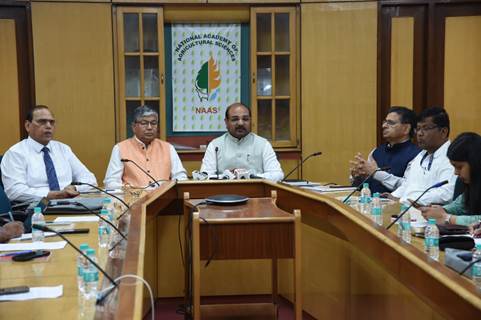
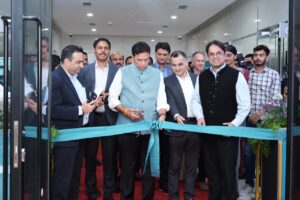
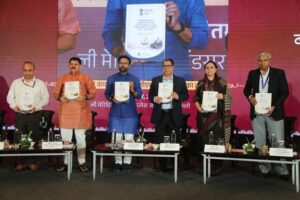
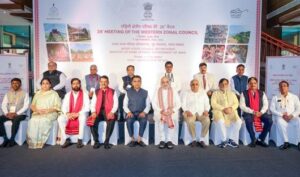
Dr ML Jat, Secretary, Department of Agricultural Research and Education and Director General of Indian Council of Agricultural Research and others at a high-level brainstorming session in New Delhi on Tuesday.

AI, sensors, and precision farming tools emerge as key drivers to fix India’s fertilizer efficiency crisis
New Delhi: The National Academy of Agricultural Sciences has initiated a national-level push for fertilizer self-reliance, calling for a comprehensive policy reset, technological innovation, and a calibrated shift towards organic alternatives to reduce India’s heavy import dependence.
At a high-level brainstorming session involving policymakers, scientists, industry stakeholders, and farmers, in New Delhi on Tuesday, the academy outlined a multi-pronged roadmap aligned with the broader goal of achieving Atmanirbhar Bharat by 2047.
Addressing the gathering, Dr ML Jat, Secretary, Department of Agricultural Research and Education and Director General of Indian Council of Agricultural Research, emphasized that while fertilizers played a transformative role during the Green Revolution, the current challenge lies in their inefficient and imbalanced use.
India currently consumes nearly 33 million tonnes of fertilizers annually, with a substantial portion imported—particularly phosphorus and potassium—leading to significant foreign exchange outflows and a mounting subsidy burden. The fertilizer subsidy alone touched approximately ₹1.71 lakh crore in 2024–25.
The discussions underscored that nutrient-use efficiency remains critically low, with crops utilizing only a fraction of applied inputs. This inefficiency not only escalates production costs but also contributes to soil degradation and environmental stress.
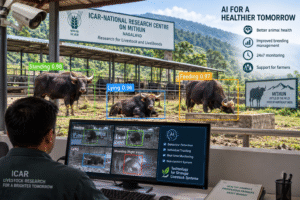
Participants advocated a shift towards precision nutrient management using artificial intelligence, sensor-based systems, and digital platforms such as Bharat VISTAAR. The integration of organic inputs, including compost and biofertilizers, along with recycling agricultural waste, was highlighted as a key strategy to reduce chemical dependency.
A central recommendation was the launch of a mission-mode programme on Integrated Nutrient Supply and Management (INSAM), targeting a 25 percent replacement of mineral fertilizers with organic alternatives within the next three years.
The session also called for structural reforms in fertilizer policy, including bringing urea under the nutrient-based subsidy regime, linking subsidies to soil health indicators, and exploring direct cash transfers to farmers. Experts noted that the availability of cheap urea has been a major factor behind its overuse, resulting in nutrient imbalance in Indian soils.
The roadmap further stressed the need to tap indigenous mineral resources, enhance soil microbiome research, promote crop diversification towards pulses and oilseeds, and strengthen extension services to improve farmer awareness.
The deliberations concluded with a consensus that achieving fertilizer self-reliance will require coordinated action across research, policy, and field-level implementation, with a strong emphasis on sustainability and long-term soil health.