IMD to Roll Out Hyper-Local, Real-Time Forecasting in 4 Metros with 200 Automated Weather Stations This Year
New Delhi: Union Minister of State (independent charge) for Science and Technology and Earth Sciences Dr Jitendra Singh on Thursday announced a major expansion of India’s urban weather observation infrastructure,
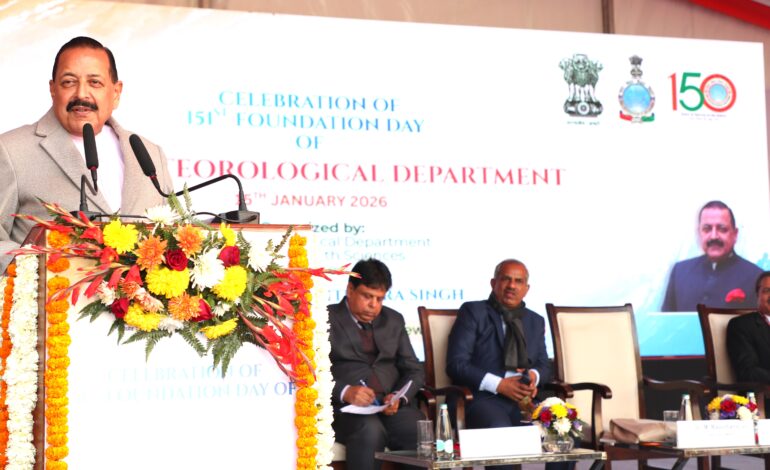
Union Minister Dr Jitendra Singh addresses scientists, senior officials and stakeholders during IMD’s 151st Foundation Day celebrations in New Delhi on Thursday.

New Delhi: Union Minister of State (independent charge) for Science and Technology and Earth Sciences Dr Jitendra Singh on Thursday announced a major expansion of India’s urban weather observation infrastructure, with the India Meteorological Department set to install 200 Automatic Weather Stations (AWS) across four major metropolitan cities in 2026.
Addressing scientists, senior officials and stakeholders during IMD’s 151st Foundation Day celebrations, the minister said 50 AWS each will be deployed in Delhi, Mumbai, Chennai and Pune. He said the move marks a decisive step towards hyper-local, real-time weather forecasting aimed at improving disaster preparedness and urban resilience in densely populated cities.
Singh said a dense network of AWS would provide high-resolution, granular data to enable more accurate prediction of sudden downpours, thunderstorms, heatwaves and rapid pressure changes. He emphasised that city-specific, data-driven forecasting is critical not only for disaster risk reduction but also for sectors such as aviation, agriculture, urban planning and public safety.
Highlighting the transformation in India’s forecasting capabilities, the minister said weather forecast accuracy has improved by over 40–50 per cent in recent years. Cyclone track prediction accuracy has increased by nearly 35–40 per cent, while errors in monthly and seasonal forecasts have declined sharply from around 7.5 per cent to nearly 2.5 per cent. These gains, he said, reflect sustained investment, technological freedom and institutional support over the past decade.
The announcement came as IMD marked 151 years of service to the nation. Singh recalled that last year’s 150th anniversary celebrations, held in the presence of Prime Minister Narendra Modi, had provided a major morale boost to the organisation, accelerating the pace of innovation and reform within IMD.
Referring to the launch of Mission Mausam by the Prime Minister, Singh said it signalled the government’s long-term commitment to advanced meteorological science and climate services. He added that when such initiatives are articulated from national platforms, they send a clear message about the priority accorded to scientific capacity-building and public welfare.
The minister also highlighted India’s growing regional role in meteorological services, noting that IMD now provides disaster-related weather information and satellite-based support to neighbouring countries including Bangladesh, Nepal, Bhutan and Sri Lanka, strengthening regional cooperation in disaster management.
Detailing infrastructure expansion, Singh said the number of weather radars in the country has nearly tripled in the last decade, now covering about 87 per cent of India’s geographical area. He pointed to the expansion of Doppler weather radars, solar radiation and aerosol monitoring networks, micro-radiometers and rainfall monitoring systems extending down to district and block levels. Ultra-short-range forecasts, he added, now allow citizens to make informed decisions within timeframes as precise as three hours.
He said IMD’s growing public credibility is evident from the rising demand for its services, citing a recent instance when heavy public traffic temporarily overwhelmed IMD’s digital platforms following a seismic event. Steps are being taken, he said, to further upgrade digital infrastructure to meet public expectations.
Singh also noted IMD’s alignment with national green energy priorities, stating that its headquarters was among the first government facilities to transition fully to solar energy, resulting in cost savings and surplus power generation.
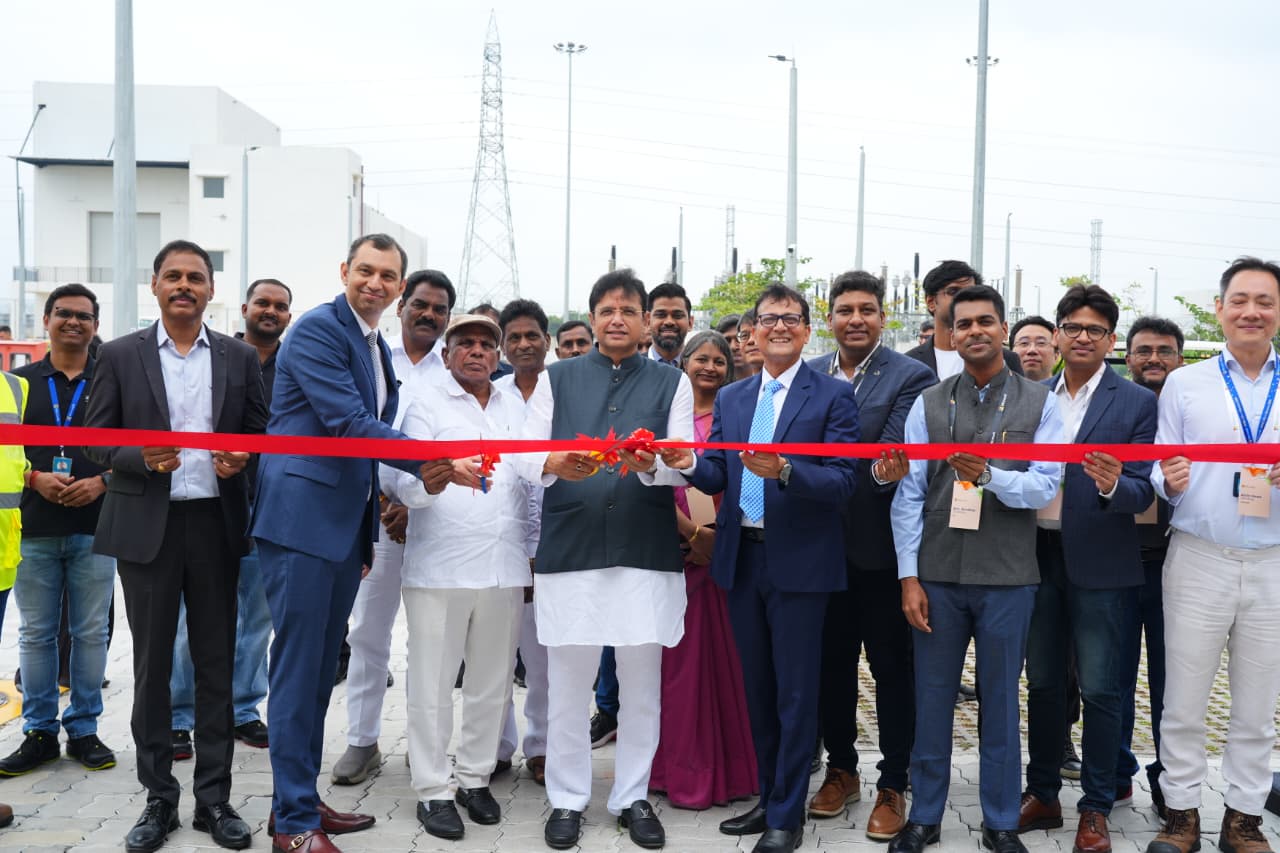
During the event, the minister inaugurated several new facilities at the IMD campus, including a model observatory, a 3D-printed automatic weather station and an agro-automatic weather station, reflecting the push towards indigenously developed, cost-effective meteorological technologies.
Concluding his address, Singh said the government is working on proposals to establish Centres of Excellence and new regional meteorological centres to further expand IMD’s reach. As IMD enters its 152nd year, he said, its credibility, accuracy and public trust will continue to strengthen, reinforcing its role as a cornerstone of India’s disaster preparedness and climate resilience framework.