NITI Aayog Releases Roadmap to Boost MSME Efficiency Through Scheme Convergence
New Delhi: NITI Aayog on Thursday released a comprehensive report titled Achieving Efficiencies in MSME Sector through Convergence of Schemes, laying out a strategic framework to streamline government support programmes
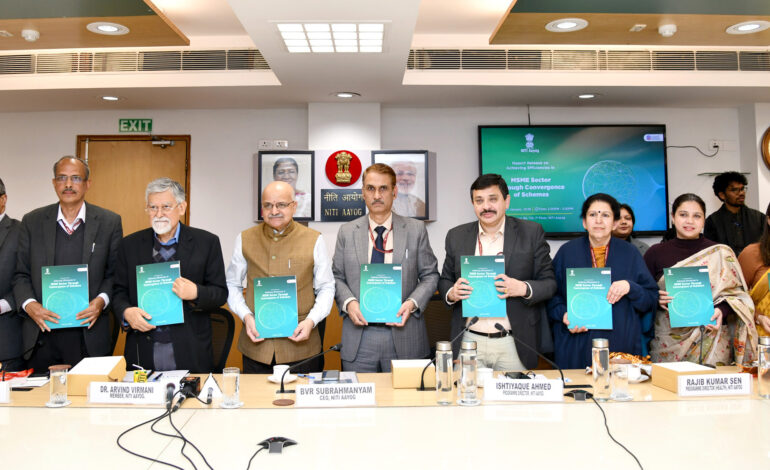
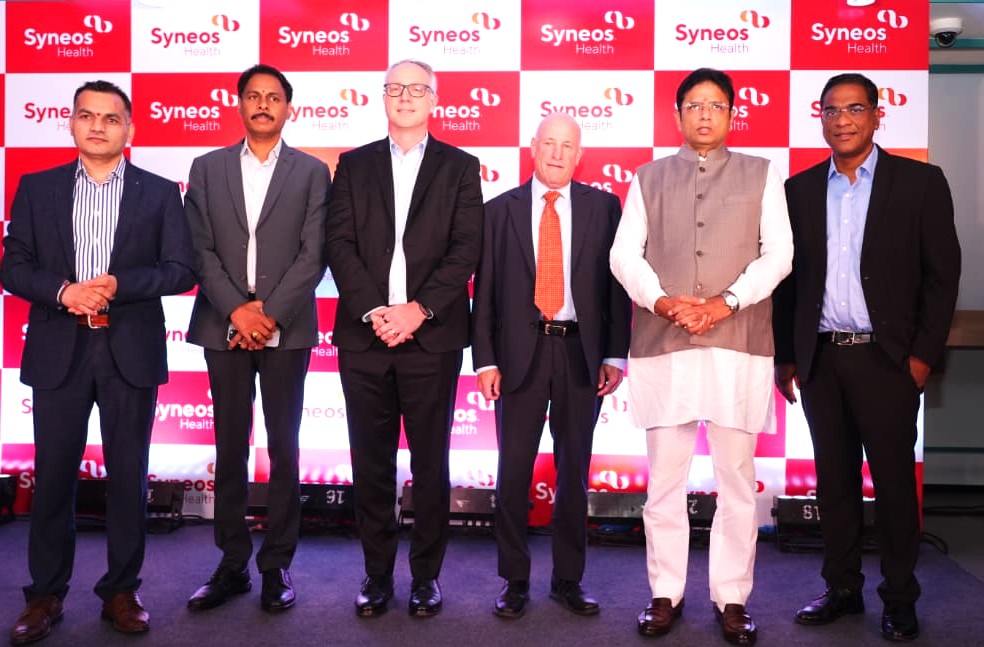
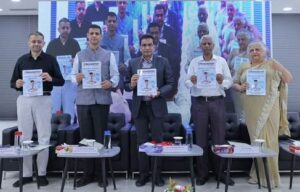
NITI Aayog CEO BVR Subrahmanyam, Member Arvind Virmani and others release the report in New Delhi on Thursday.

New Delhi: NITI Aayog on Thursday released a comprehensive report titled Achieving Efficiencies in MSME Sector through Convergence of Schemes, laying out a strategic framework to streamline government support programmes and enhance their impact on India’s micro, small and medium enterprises.
The report was launched by Arvind Virmani, Member, NITI Aayog, and BVR Subrahmanyam, Chief Executive Officer, NITI Aayog. It outlines a roadmap to improve outcomes for MSMEs by rationalising scheme implementation, strengthening inter-ministerial coordination and improving delivery of financial, skill, marketing and innovation-related support.
According to the report, the Ministry of MSME currently administers 18 schemes covering areas such as credit access, skill development, marketing assistance, innovation and R&D, technology upgradation and infrastructure creation. While these initiatives have supported MSME growth, the report notes that overlapping objectives and fragmented implementation across ministries often result in duplication, inefficiencies and limited outreach. Effective convergence and rationalisation of schemes, it says, can simplify access for beneficiaries and ensure better translation of public resources into tangible outcomes.
The report proposes a two-pronged convergence framework focusing on information convergence and process convergence. Information convergence aims to integrate government-generated data at the central and state levels to improve coordination, governance and evidence-based decision-making. Process convergence, meanwhile, focuses on aligning and unifying schemes to reduce redundancies, streamline operations and improve service delivery through closer collaboration across ministries and states.
A key recommendation is the creation of an AI-powered centralized digital portal for MSMEs. Drawing on global best practices, the proposed platform would integrate information on schemes, compliance, finance and market intelligence, supported by dashboards, AI chatbots and mobile access to provide real-time assistance to enterprises.
The report also calls for convergence of cluster development schemes, proposing the integration of the Scheme of Fund for Regeneration of Traditional Industries with the Micro and Small Enterprises–Cluster Development Programme. It recommends a unified governance structure under MSE-CDP, consolidated funding and a dedicated sub-scheme for traditional industries to preserve crafts and arts while improving scale and efficiency.
In the area of skilling, the report suggests rationalising existing programmes into a three-tier structure covering entrepreneurship and business skills, MSME technical skills, and training for rural and women artisans. This approach seeks to merge overlapping initiatives while retaining targeted interventions to support inclusion, traditional crafts and entrepreneurship.
To strengthen market access, the report proposes the creation of a dedicated MSME marketing assistance wing with domestic and international components. While the domestic wing would support participation in national exhibitions and buyer-seller meets, the international wing would facilitate global exposure through overseas trade fairs and B2B engagements.
On innovation, the report recommends integrating the ASPIRE scheme into MSME Innovative as a special category for agro-rural enterprises, allowing continued support for rural incubators while expanding access to advanced incubation facilities.
At the same time, the report stresses the need to safeguard targeted initiatives such as the National SC/ST Hub and the promotion of MSMEs in the north eastern region. Large flagship schemes like PMEGP and PM Vishwakarma, it says, should remain independent due to their scale and strategic importance.
Emphasising a cautious approach, the report advocates merging schemes with overlapping objectives while preserving the distinct focus of targeted programmes. Where full convergence is not feasible, it recommends enhanced coordination through joint workshops and shared capacity-building for administrators, alongside close monitoring to protect beneficiary interests and ensure sustained impact.