India targets 100 GW nuclear power capacity by 2047 as SHANTI Act opens sector to wider participation
The government says its Nuclear Energy Mission aims to strengthen India's energy security and clean energy transition through indigenous reactors, SMRs and greater public-private participation enabled by the SHANTI Act.
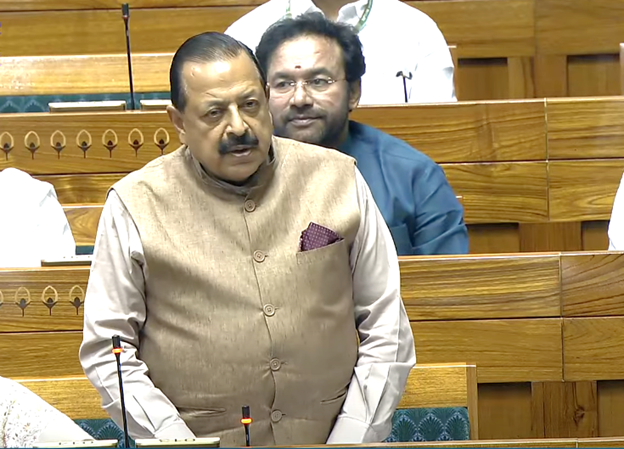
Union Minister of State (independent charge) for Atomic Energy and Space Dr Jitendra Singh

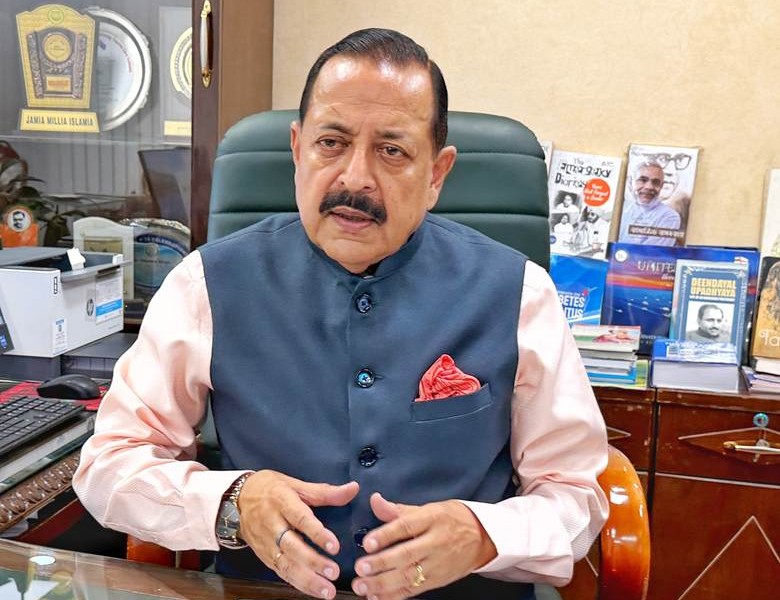
NEW DELHI: The Union Government has reaffirmed its commitment to expanding India’s nuclear power programme with an ambitious target of achieving 100 GW of installed nuclear power capacity by 2047 under the Nuclear Energy Mission for Viksit Bharat. The mission is designed to enhance the country’s energy security, accelerate clean electricity generation and support India’s net-zero emissions commitments.
Responding to a question in the Lok Sabha, Union Minister of State in the Prime Minister’s Office, Personnel, Public Grievances and Pensions, Atomic Energy and Space, Dr Jitendra Singh, said the government has enacted the SHANTI Act to facilitate broader participation from both public and private sector entities in the nuclear power sector.
The minister said the long-term expansion plan envisages a significant contribution from indigenous Pressurised Heavy Water Reactor (PHWR) technology-based nuclear power plants. In addition, the government has announced measures to promote research and development in Small Modular Reactors (SMRs) and other advanced nuclear technologies to diversify India’s nuclear energy portfolio.
As part of efforts to strengthen the country’s fast breeder reactor programme, the government has approved pre-project activities for two 500 MW Fast Breeder Reactors (FBR-1 and FBR-2) at Kalpakkam in Tamil Nadu.
While no new nuclear power projects have been sanctioned during the last three years, the government highlighted several milestones achieved in the sector during the period.
India added 2,100 MW of nuclear generation capacity with the commercial commissioning of Kakrapar Atomic Power Project Units 3 and 4, each of 700 MW, and Rajasthan Atomic Power Project Unit 7 with a capacity of 700 MW.
The Prime Minister also laid the foundation stone for Units 1 to 4 of the Mahi Banswara Rajasthan Atomic Power Project in Rajasthan. The project is being implemented by ASHVINI, a joint venture between Nuclear Power Corporation of India Limited (NPCIL) and NTPC.
Among other achievements, Tarapur Atomic Power Station Units 1 and 2 – the world’s oldest operating nuclear reactors – resumed operations after undergoing extensive refurbishment. Construction activities also commenced at Kaiga Nuclear Power Plant Units 5 and 6 in Karnataka with the first pour of concrete following statutory and regulatory approvals.
The Prototype Fast Breeder Reactor (PFBR) achieved criticality on April 6, 2026, marking another significant milestone in India’s advanced nuclear technology programme.
Dr Singh informed Parliament that once the rules under the SHANTI Act, 2025, are notified, states, industries and research institutions will be able to collaborate with the government in developing nuclear power projects, paving the way for broader participation in India’s expanding clean energy ecosystem.