How Real-World Infrastructure Experience Is Influencing Engineering Curricula
Over the last decade, software systems have become significantly more complex than many traditional engineering curricula were originally designed to address. Modern platforms now process enormous volumes of real-time data,
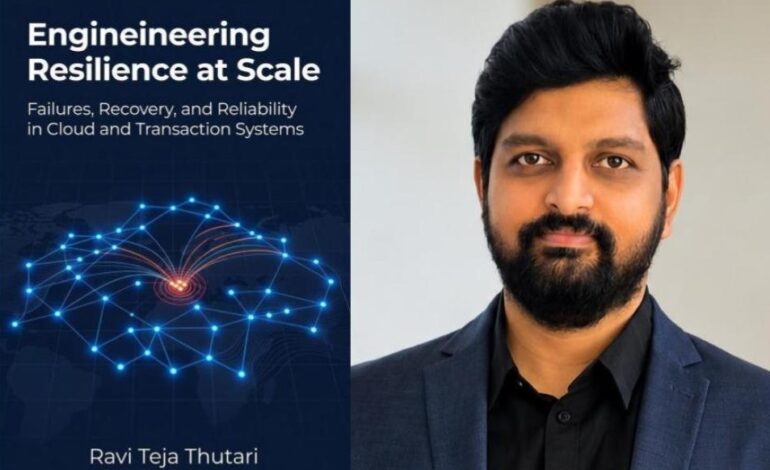
Ravi Teja Thutari, whose work has focused on distributed systems and operational infrastructure across logistics, travel technology, and scalable platform environments, believes modern engineering education often struggles to expose students to the realities of production-scale software systems before they enter the industry.

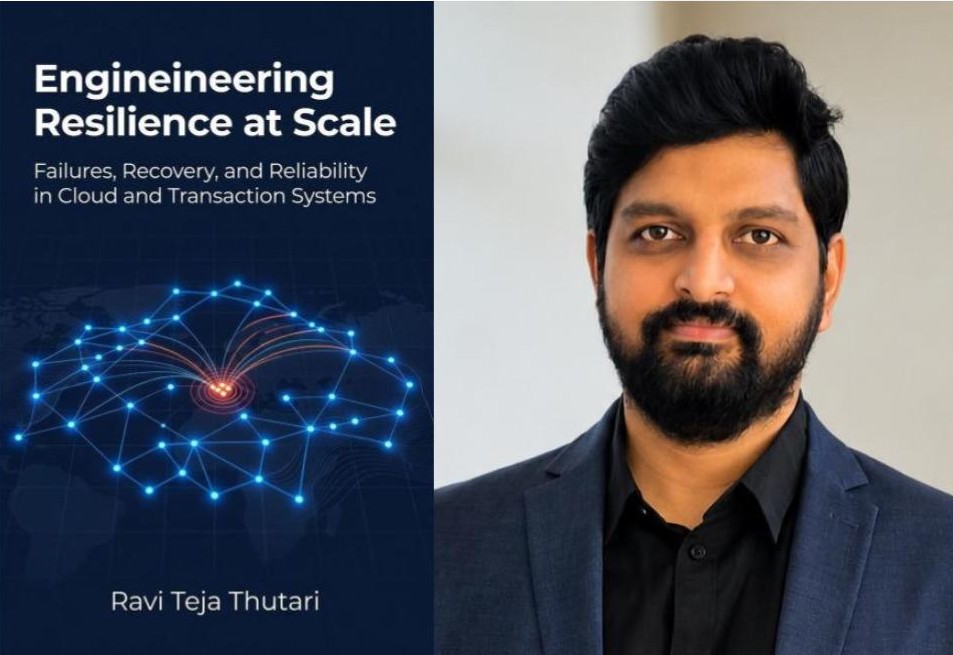
Over the last decade, software systems have become significantly more complex than many traditional engineering curricula were originally designed to address. Modern platforms now process enormous volumes of real-time data, operate across globally distributed infrastructure, and rely on interconnected services that must remain resilient under unpredictable operating conditions.
Yet despite the rapid evolution of production-scale systems, many engineers entering the workforce continue to encounter a familiar challenge: the gap between academic theory and real-world engineering practice.
Engineers working extensively on large-scale production systems have increasingly observed this disconnect firsthand. Ravi Teja Thutari, whose work has focused on distributed systems and operational infrastructure across logistics, travel technology, and scalable platform environments, believes modern engineering education often struggles to expose students to the realities of production-scale software systems before they enter the industry.
While universities continue to provide strong foundations in algorithms, databases, networking, and software architecture, the realities of operating large-scale production systems introduce an entirely different set of engineering considerations. Scalability bottlenecks, cascading failures, distributed coordination issues, observability gaps, and operational trade-offs are frequently learned only after engineers begin working on live systems supporting millions of users and operational events.
Industry observers say this disconnect has created growing demand for educational material written not only from a theoretical perspective, but from direct operational experience inside production environments.
Increasingly, experienced engineers are beginning to document practical lessons from real-world systems in an effort to make engineering education more aligned with modern infrastructure challenges. This shift has contributed to rising interest in practitioner-led books focused on distributed systems, scalable architectures, recommender systems, operational reliability, and production engineering workflows.
Rather than approaching technical writing from a purely academic standpoint, Thutari’s work attempts to bridge theoretical concepts with production-oriented engineering realities. His book, Industrial Recommender Systems: Algorithms, Architectures, and Real-World Applications, explores how recommender systems behave in real production environments where scalability, infrastructure design, event-driven architectures, and operational reliability become just as important as recommendation accuracy itself.
The book has gained traction among both engineering professionals and academic institutions, reflecting broader interest in educational resources grounded in practical system design. According to verified distribution and sales records, the book has achieved circulation exceeding 1,000 copies through a combination of professional readership, academic adoption, and engineering-focused learning channels.
Academic institutions have also begun incorporating practitioner-oriented engineering material into advanced coursework as universities attempt to expose students to production-scale architectural thinking earlier in their education.
At Sreenidhi Institute of Science and Technology (SNIST), the book has been adopted as reference material for graduate and senior-level undergraduate courses covering distributed systems, machine learning systems, and advanced software architecture. Faculty evaluations associated with the adoption noted the book’s emphasis on scalable platform design, event-driven systems, real-world architectural trade-offs, and production engineering considerations.
According to educators, one of the biggest challenges in modern engineering education is helping students understand how theoretical concepts behave once systems begin operating at scale.
“Production systems introduce a level of complexity that is difficult to replicate through purely academic exercises,” Thutari explained. “In real-world environments, engineering decisions are often shaped by operational constraints, failure recovery, observability, latency trade-offs, and scalability considerations that go far beyond isolated algorithmic performance.”
The increasing reliance on cloud-native architectures, distributed event processing, and real-time operational systems has also changed how engineering teams think about software design itself. Systems are no longer built solely to function under ideal conditions. Instead, they are increasingly designed to remain adaptable and recoverable under constantly changing operational environments.
According to Thutari, this evolution has made practical systems thinking more important than ever for engineers entering production-focused roles.
“Many engineering concepts become much clearer when viewed through operational scenarios,” he said. “Understanding how systems behave under scale, how failures propagate across services, or how recovery mechanisms operate in distributed environments gives engineers a much deeper understanding of software architecture.”
Thutari’s broader technical writing has also extended into operational resilience and production-scale infrastructure design. His work has explored how engineering teams approach scalability, recovery mechanisms, and reliability challenges in large distributed environments, particularly in systems where operational continuity becomes critical under high-demand conditions. Through both technical publications and long-form educational content, his focus has remained centered on making production engineering concepts more accessible to practicing engineers and students alike.
Industry experts note that the growing demand for practitioner-led technical education reflects broader changes happening across software engineering as a whole. Organizations increasingly value engineers who not only understand theoretical foundations, but who can also reason about production reliability, infrastructure scalability, and system-level trade-offs.
This shift has contributed to growing interest in engineering resources that combine conceptual foundations with operational context, particularly in areas involving distributed systems, large-scale architectures, machine learning infrastructure, and real-time data processing.
As software systems continue to evolve, many educators and industry professionals believe the relationship between academic learning and production engineering will become increasingly interconnected. The growing adoption of practitioner-authored technical resources suggests that future engineering education may rely more heavily on lessons derived directly from real-world operational systems rather than theoretical models alone.
While technology platforms continue to scale rapidly, the challenge of preparing engineers for production environments remains an ongoing industry conversation. Increasingly, the solution appears to lie not only in advancing theoretical education, but in creating stronger bridges between classroom learning and the operational realities of modern software systems.