DFS Workshop Reviews Impact of IBC Amendments on Banking Sector, Insolvency Resolution
Over ₹4.11 lakh crore recovered through approved resolution plans as insolvency reforms strengthen credit discipline and stressed asset recovery ecosystem
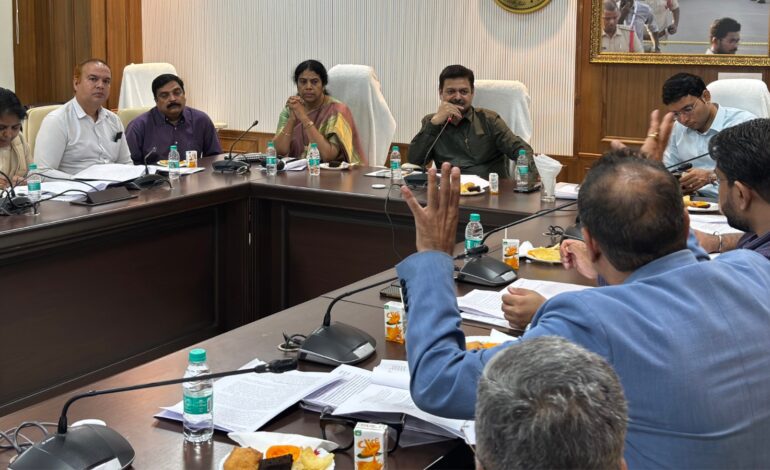
The workshop was chaired by Secretary, DFS, M . Nagaraju and attended by senior officials from the ministry of corporate affairs, Insolvency and Bankruptcy Board of India, public sector banks, legal experts and financial institutions.

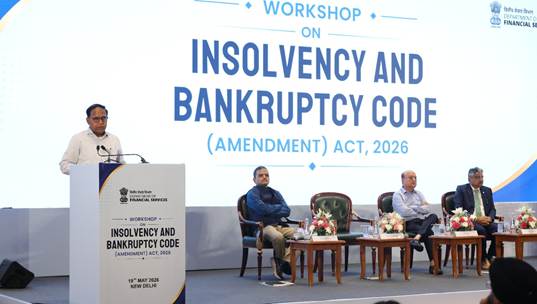
New Delhi: The Department of Financial Services (DFS), Ministry of Finance, organised a half-day workshop on the Insolvency and Bankruptcy (Amendment) Act, 2026 in New Delhi on Tuesday, focusing on the impact of recent amendments to the Insolvency and Bankruptcy Code (IBC) on the banking sector and the broader insolvency resolution ecosystem.
The workshop was chaired by Secretary, DFS, M . Nagaraju and attended by senior officials from the ministry of corporate affairs, Insolvency and Bankruptcy Board of India, public sector banks, legal experts and financial institutions including National Asset Reconstruction Company Limited, India Debt Resolution Company Limited and ASREC (India) Limited.
The discussions centred on the implementation of the amended provisions of the IBC and their implications for creditors, banks and insolvency professionals.
Officials highlighted that till December 2025, more than 8,800 Corporate Insolvency Resolution Processes (CIRPs) had been admitted under the Code. Creditors realised over ₹4.11 lakh crore through approved resolution plans, while more than 4,000 corporate debtors were rescued through resolutions, settlements, withdrawals or appeal-related closures.
Addressing the workshop, M. Nagaraju said the IBC had established a time-bound and creditor-driven insolvency resolution framework in India, helping strengthen repayment discipline and shifting the focus from liquidation towards revival and value maximisation of stressed businesses.
He noted that recent amendments relating to group insolvency, cross-border insolvency and creditor-initiated insolvency resolution processes would further strengthen the insolvency framework and help address delays in resolution.
Ravi Mital said the IBC had played a major role in strengthening institutional capacity, fostering creditor confidence and improving transparency in insolvency resolution processes. He added that the recent amendments would improve stakeholder coordination and ensure that the insolvency framework remains efficient and future-ready.
The workshop also featured detailed presentations by the ministry of corporate affairs and the Insolvency and Bankruptcy Board of India on the operational and legal implications of the amendments for the Committee of Creditors and other stakeholders.
In the concluding session, Sanjay Lohiya said the IBC had significantly accelerated resolution processes, improved recoveries and enhanced asset value maximisation. He also underlined the need to address delays, capacity constraints and prolonged litigation to further strengthen the insolvency ecosystem.
The deliberations concluded with a renewed emphasis on ensuring effective and timely resolution of stressed assets in line with the government’s vision of a transparent, efficient and resilient financial system.