India Tests Cell Broadcast-Based Emergency Alert System, Expands Instant Disaster Warning Network
Nationwide test message sent to mobile users on Saturday as part of indigenous public safety communication rollout
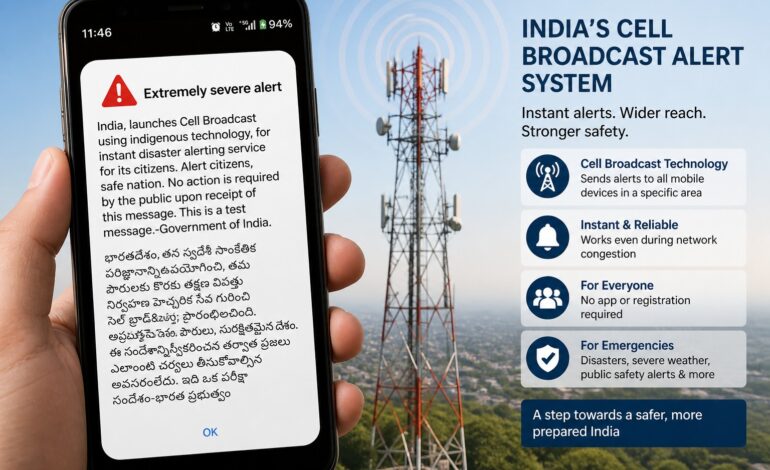
The test message was delivered in multiple languages, including English and regional languages like Telugu, ensuring accessibility across diverse linguistic groups.

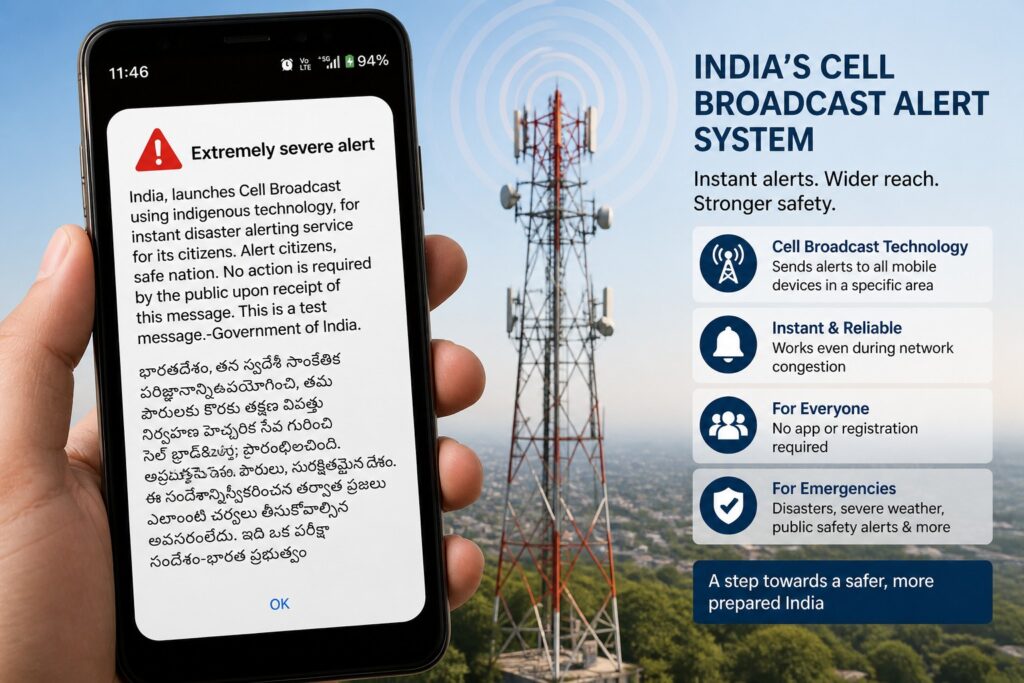
New Delhi: Millions of mobile users across India received an “extremely severe alert” message on their phones as the government conducted a nationwide test of its Cell Broadcast-based emergency warning system, marking a significant step in strengthening real-time disaster communication infrastructure.
The alert, issued by the Government of India, at 11.45am on Saturday, was clearly labelled as a test message and stated that no action was required from the public. It highlighted the deployment of an indigenous technology platform designed to deliver instant alerts during emergencies such as natural disasters, extreme weather events, or other public safety threats.
The system leverages Cell Broadcast technology, which enables authorities to send messages directly to all mobile devices within a specific geographic area, without relying on traditional SMS networks. Unlike SMS, which can face delays or congestion during peak traffic, Cell Broadcast ensures near-instant delivery, making it highly effective in crisis situations.
The test message was delivered in multiple languages, including English and regional languages like Telugu, ensuring accessibility across diverse linguistic groups. This multilingual capability is a critical feature in a country as vast and diverse as India, where timely comprehension of alerts can directly impact public safety outcomes.
Officials indicated that the initiative is part of a broader push to build a robust, technology-driven disaster management ecosystem. The system is being integrated with national and state-level disaster management authorities to enable targeted alerts based on location-specific risks.
The rollout aligns with global best practices adopted in countries such as the United States, Japan, and several European nations, where Cell Broadcast systems are widely used for emergency alerts, including earthquake warnings, flood advisories, and public safety notifications.
From a policy perspective, the initiative reflects India’s growing emphasis on digital public infrastructure beyond governance and financial inclusion—extending into citizen safety and resilience. By adopting indigenous technology, the government is also reinforcing its focus on self-reliance in critical communication systems.
While the test triggered brief concern among some users due to its “extremely severe alert” label and loud notification tone, authorities have been conducting such exercises periodically to familiarise citizens with the system and ensure readiness during actual emergencies.
As climate-related risks and urban vulnerabilities increase, the Cell Broadcast alert system is expected to become a cornerstone of India’s disaster response strategy—delivering timely, reliable, and location-specific warnings directly into the hands of citizens.