
Global Neurosurgery Meets Industry: WFNS Opens Doors to Private Sector in Historic Technology Partnership
First-ever industry collaboration by WFNS Innovation & Technology Committee signals major shift in global neurosurgical ecosystem
“For the first time in the history of the WFNS Innovation Committee, we are opening our doors to the private sector,” said Prof. Dr Iype Cherian, Chairperson of the committee.

Mumbai: In a move that could reshape the future relationship between global medical governance bodies and private healthcare technology companies, the World Federation of Neurosurgical Societies (WFNS) Innovation & Technology Committee has entered into its first-ever formal industry partnership, marking a historic shift in the evolution of global neurosurgical innovation.
The committee announced a landmark collaboration with Time Medical International Ventures (India) Private Limited, a wholly owned subsidiary of Fischer Medical Ventures Limited, to jointly advance innovation in neurosurgical technologies, medical imaging and global clinical training initiatives.
The announcement may appear at first glance to be a routine healthcare partnership. But within the global medical technology and neurosurgical community, it represents something much larger:
the gradual dismantling of traditional barriers separating clinical governance institutions and commercial medical technology ecosystems.
A Historic First for Global Neurosurgical Governance
The WFNS Innovation & Technology Committee itself described the collaboration as unprecedented.
“For the first time in the history of the WFNS Innovation Committee, we are opening our doors to the private sector,” said Prof. Dr Iype Cherian, Chairperson of the committee.
That statement is significant because organisations like WFNS have historically maintained cautious distance from direct industry integration due to concerns involving:
- commercial influence
- ethical conflicts
- medical neutrality
- technology bias
- governance integrity
The new partnership therefore reflects a larger transformation occurring across global healthcare systems:
advanced medicine is increasingly impossible without deep collaboration between clinicians, technology companies, AI systems and medical imaging innovators.
Why Neurosurgery Is Becoming Technology-Driven
Few medical disciplines are as dependent on advanced technology as neurosurgery.
Modern neurosurgical care increasingly relies on:
- intraoperative imaging
- real-time navigation systems
- AI-assisted diagnostics
- advanced MRI platforms
- visualisation technologies
- robotic systems
- neuroimaging analytics
The collaboration specifically focuses on:
- cutting-edge neurosurgical technologies
- advanced medical imaging
- global training programmes
- technology dissemination
- knowledge-sharing platforms
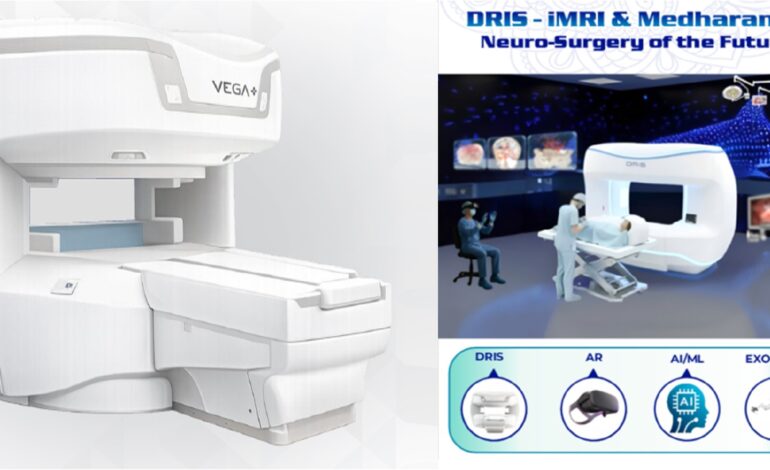
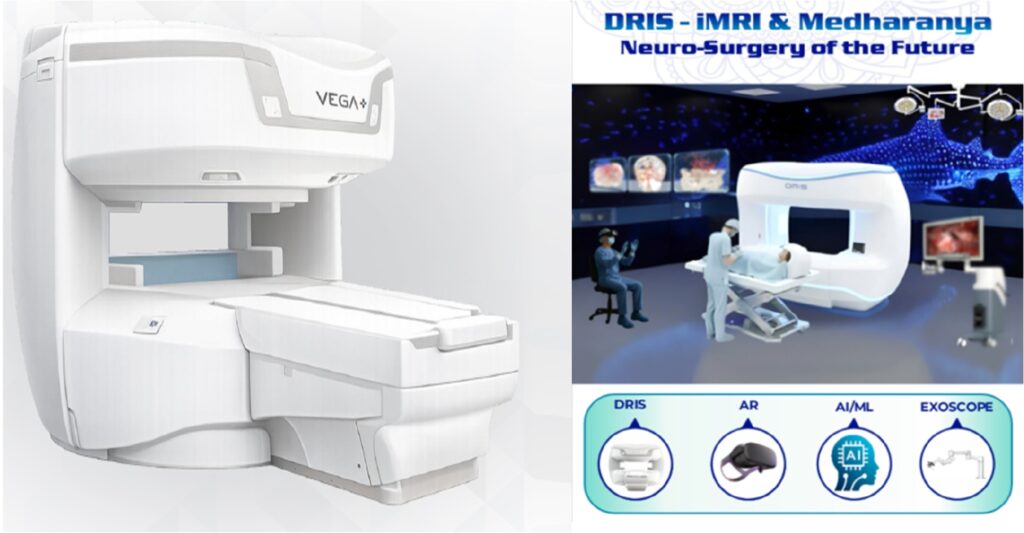
Time Medical India has reportedly developed expertise in:
- single-room intraoperative MRI suites
- exoscope visualisation systems
- specialised MRI screening technologies
- neuroimaging solutions for aneurysm and ICAD detection
These technologies are becoming increasingly critical in precision neurosurgery, where millimetre-level accuracy can determine patient survival and long-term neurological outcomes.
The Emerging Battle for Global Medical Technology Leadership
The partnership also highlights a broader geopolitical and industrial shift underway in healthcare technology.
For decades, advanced medical imaging and neurosurgical technologies were dominated primarily by Western and Japanese multinational giants.
But countries like India are now attempting to move up the value chain from:
- low-cost healthcare delivery
to - advanced medical technology innovation
The involvement of an India-based medical imaging company in a first-of-its-kind WFNS partnership reflects this changing landscape.
It also aligns with India’s growing ambitions in:
- medtech manufacturing
- healthcare AI
- diagnostic imaging
- digital health infrastructure
- advanced biomedical engineering
The Democratisation of Advanced Healthcare Technology
One of the most strategically important dimensions of the partnership is accessibility.
Advanced neurosurgical technologies remain concentrated largely in:
- developed countries
- elite urban hospitals
- high-income healthcare systems
Emerging markets often face severe shortages of:
- advanced MRI infrastructure
- neuroimaging specialists
- neurosurgical training capacity
- high-end surgical equipment
The collaboration explicitly references:
- global dissemination
- training
- technology transfer
- emerging market support
This suggests the partnership is not merely about commercial technology deployment but also about expanding neurosurgical capabilities into underserved regions.
If implemented effectively, such collaborations could help reduce one of the most persistent inequalities in global healthcare:
access to advanced neurological treatment.
The Ethical Tightrope
Yet the partnership also raises important questions.
Medical governance bodies globally have long struggled with the balance between:
- innovation
and - commercial influence
Technology companies naturally seek:
- market access
- product adoption
- institutional credibility
- clinical validation
Meanwhile, global medical organisations must protect:
- scientific neutrality
- evidence-based standards
- patient interests
- ethical integrity
Perhaps recognising these sensitivities, the WFNS repeatedly emphasised that the partnership would remain:
- ethical
- transparent
- impact-driven
The committee described the collaboration as a model for “ethical, innovation-led partnerships” in global neurosurgical governance.
Still, the long-term success of such arrangements may ultimately depend on whether clinical independence can genuinely coexist with expanding industry participation.
Healthcare’s AI and Imaging Future
The collaboration also signals the future direction of advanced healthcare itself.
Medicine is entering a phase where:
- AI
- imaging
- robotics
- molecular diagnostics
- precision surgery
- real-time analytics
are increasingly converging into integrated care ecosystems.
In neurosurgery especially, the next frontier may involve:
- AI-assisted intraoperative guidance
- predictive neuroimaging
- augmented surgical visualisation
- personalised neural mapping
- remote expert collaboration platforms
Partnerships between clinical institutions and technology innovators are therefore likely to become more common globally.
The WFNS-Time Medical alliance may ultimately be remembered not merely as a bilateral partnership — but as an early indicator of how future global medical governance structures will evolve.
India’s Growing Presence in High-End Healthcare Innovation
The announcement also reflects India’s expanding presence in specialised medical innovation sectors traditionally dominated by developed economies.
India has already established strong global positions in:
- pharmaceuticals
- healthcare services
- vaccine manufacturing
- generic medicines
The next strategic frontier appears to be:
- medical technology
- biomedical devices
- healthcare AI
- advanced imaging systems
- precision medicine platforms
If Indian firms successfully move into these high-value domains, the country could emerge not just as the “pharmacy of the world” but as a significant global medtech innovation hub.
A Turning Point for Global Medical Collaboration?
Ultimately, the significance of the WFNS-Time Medical partnership extends beyond neurosurgery itself.
It represents a deeper shift in how global healthcare innovation may increasingly function:
through hybrid ecosystems involving:
- clinicians
- global medical societies
- technology companies
- AI platforms
- imaging innovators
- training networks
The old boundaries between medicine, technology and industry are rapidly dissolving.
The challenge now will be ensuring that this convergence serves not only innovation and commercial growth — but also affordability, ethics, accessibility and patient welfare worldwide.