GSI to adopt advanced data analytics to strengthen India’s critical mineral exploration: New DG Dinesh V. Ganvir
The 55th Director General of GSI has identified critical mineral exploration, advanced geoscientific technologies, stronger laboratory capabilities and offshore exploration among the organisation’s priorities.
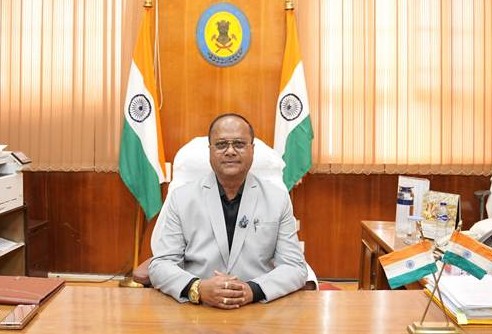
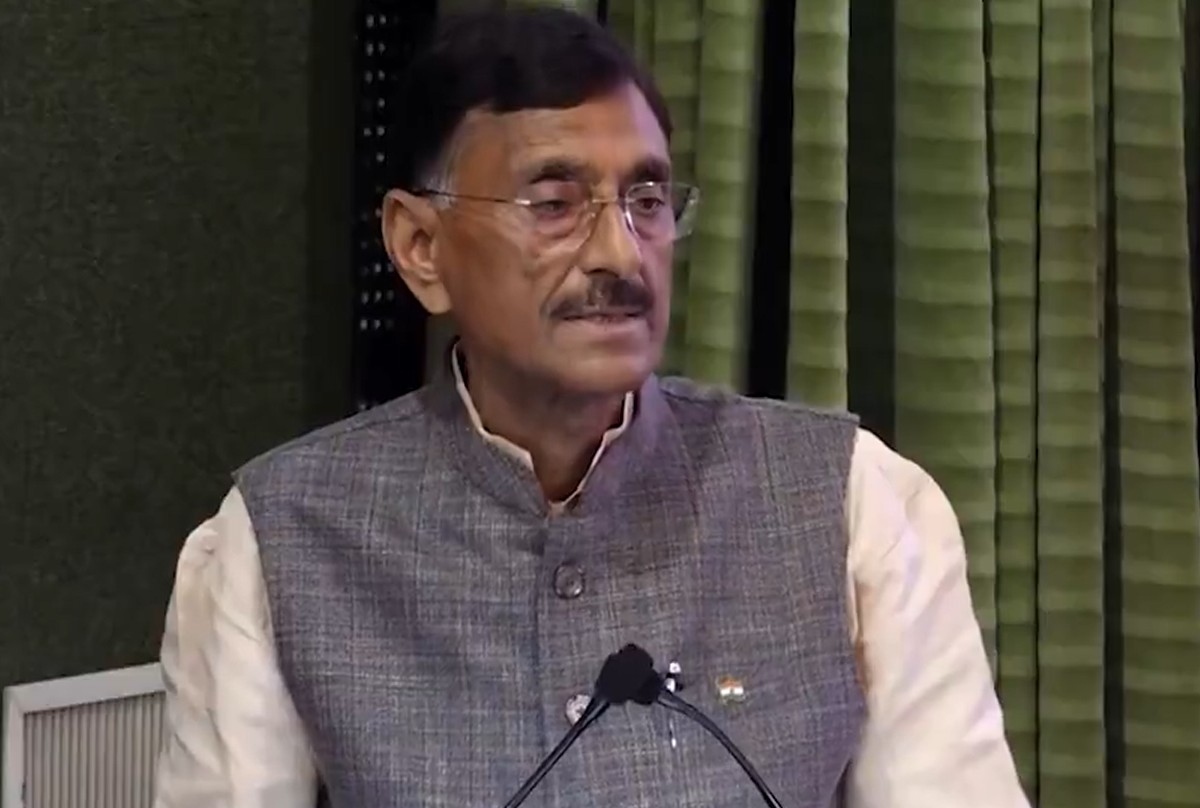
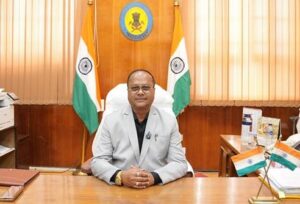
Dinesh V. Ganvir assumes charge as the 55th Director General of the Geological Survey of India.

NEW DELHI: Dinesh Vitthalrao Ganvir has assumed charge as the 55th Director General of the Geological Survey of India (GSI), bringing more than 32 years of experience in geological investigations, mineral exploration, engineering geology and institutional administration.
Ganvir joined GSI on July 1, 1994, after completing his Master’s degree in Geology from RTMNU University, Nagpur. During his career, he has held scientific, technical and administrative positions across the organisation’s Central, North-Eastern and Northern regions.
Before his appointment as Director General, he served as Additional Director General and Head of Department, Central Region, Nagpur, while also holding additional charge as National Mission Head-II.
His professional assignments have included geological mapping in the Western Bastar Craton, gold and diamond exploration in Maharashtra’s Sakoli Fold Belt, and geoscientific studies associated with the conservation of the UNESCO World Heritage Sites of Bhimbetka Rock Shelters and Ellora Caves.
Focus on critical and strategic minerals
As National Mission Head-II, Ganvir was associated with the planning and monitoring of multidisciplinary field programmes and nationwide mineral exploration. The PIB release noted a fivefold increase in investigations for critical and strategic minerals during the recent period.
His tenure also saw the handover of 359 Geological Reports and 377 Geological Memorandums. Of these, 202 blocks related to critical minerals, of which 40 have been auctioned. Under the Exploration Licence regime, 56 blocks were handed over, with 11 subsequently auctioned under Tranches I and II.
On assuming office, Ganvir emphasised intensifying exploration for critical and strategic minerals through integrated geoscientific investigations, advanced mineral prospectivity mapping and the preparation of scientifically robust, auction-ready mineral blocks.
The focus is expected to support India’s efforts to strengthen mineral security, reduce import dependence and advance domestic resource development under the Aatmanirbhar Bharat initiative.
Technology and scientific capabilities
Ganvir also highlighted the role of emerging technologies and advanced data analytics alongside field-based investigations to improve the precision and efficiency of mineral exploration.
Strengthening laboratory infrastructure, upgrading analytical capabilities and expanding offshore exploration are among the other areas identified for attention.
GSI will continue its work in fundamental geoscientific research, landslide early warning, glacial and cryospheric studies, infrastructure-related investigations and hazard assessment. These activities provide scientific inputs for infrastructure planning, disaster preparedness and policymaking.
On institutional priorities, the new Director General stressed empowering scientific personnel, encouraging innovation, recognising merit and performance, and improving coordination among National Missions, regional offices and State Units.
The Geological Survey of India, an attached office of the Ministry of Mines, undertakes geological mapping, mineral resource assessment and other geoscientific investigations. Its work contributes to the identification and development of mineral resources and provides scientific inputs for infrastructure development and natural hazard assessment.