Study finds South Asian gut microbiome follows distinct community-specific patterns linked to diet and lifestyle
Researchers studying 575 healthy adults across 10 South Asian communities found distinct gut microbiome trajectories, opening avenues for region-specific approaches to nutrition and lifestyle disease treatment.
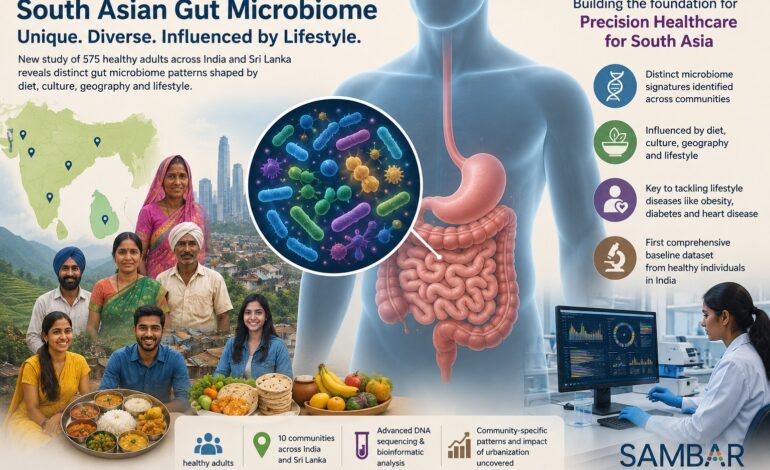
Researchers studied 575 healthy adults belonging to 10 culturally and geographically distinct communities across India and Sri Lanka.

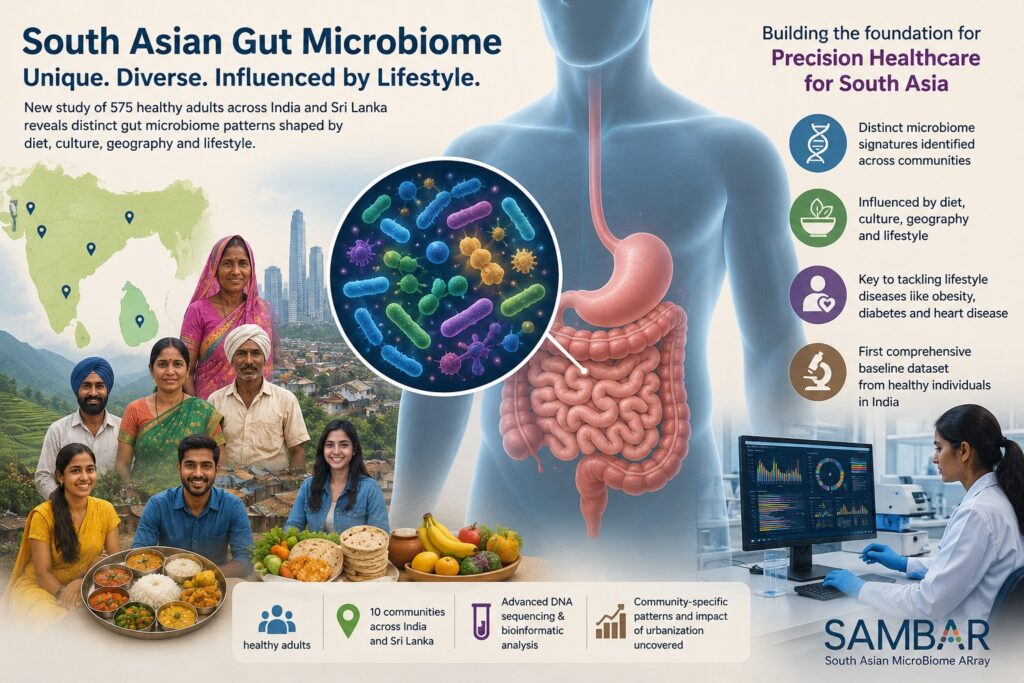
NEW DELHI: A large, geographically diverse study has found that gut microbiomes among South Asian populations are distinct from those reported in other parts of the world, with community-specific patterns shaped by culture, diet, geography and lifestyle.
The findings could provide a scientific foundation for developing microbiome-based diagnostics, personalised nutrition and precision healthcare approaches tailored to South Asian populations, particularly for lifestyle-related disorders.
The study was conducted by scientists from the Birbal Sahni Institute of Palaeosciences (BSIP), an autonomous institution of the Department of Science and Technology (DST), in collaboration with the University of Chicago and research institutions across India, Sri Lanka and the United States.
Researchers studied 575 healthy adults belonging to 10 culturally and geographically distinct communities across India and Sri Lanka. Stool samples were collected along with information on participants’ diet, lifestyle and health.
Using the South Asian MicroBiome ARray (SAMBAR), which was launched in India by BSIP scientists, the team analysed gut microbiomes across the participating communities. The researchers used high-throughput DNA sequencing of bacterial 16S rRNA genes followed by bioinformatic analysis.
The study compared rural and urban participants within individual communities and also examined South Asian microbiomes against global datasets.
The researchers found that each community followed its own gut microbiome trajectory as lifestyles changed, with local culture, diet, geography and lifestyle influencing the microbial composition.
The findings are significant against the backdrop of rapid urbanisation across South Asia and a growing burden of obesity, diabetes and other cardiometabolic disorders. While urbanisation is known to affect the gut microbiome, the study sought to establish whether those changes occur in similar ways across the region’s diverse populations.
South Asia has remained relatively underrepresented in global microbiome research, with much of the existing research having focused on populations in Europe and North America. The new study seeks to address this gap by providing a microbiome resource representing diverse South Asian populations.
The international research programme was led by Dr. Niraj Rai, Group Head, Ancient DNA at BSIP, Lucknow. Field teams worked with local communities in India and Sri Lanka to recruit participants and collect biological samples and lifestyle information.
The researchers adopted a community-engaged approach, including sharing study findings with participating communities. Laboratory analysis, DNA sequencing and computational methods were subsequently used to examine microbial diversity and its associations with geography, diet, urbanisation and metabolic health.
The research team, led by Shreya L. Ramachandran, Nagarjuna Pasupuleti, Richard J. Abdill, Niraj Rai and Maanasa Raghavan, identified both community-specific microbial signatures and common microbial changes associated with urbanisation and metabolic health.
The study, published in the journal Gut Microbes, highlights the importance of including underrepresented populations in global microbiome research.
The researchers said the findings suggest that microbiome-based therapies may need to account for regional and population-specific differences rather than relying exclusively on approaches developed from Western populations.
The SAMBAR resource is expected to support further research into diabetes, obesity, cardiovascular disease and other lifestyle disorders that are increasing across South Asia.
The study’s findings also point towards a broader role for microbiome research in understanding how changing diets and lifestyles interact with local biological and cultural factors, potentially helping researchers develop more population-specific approaches to disease prevention and treatment.